Can a Brake Booster Leak Brake Fluid? Causes, Signs, and Fixes
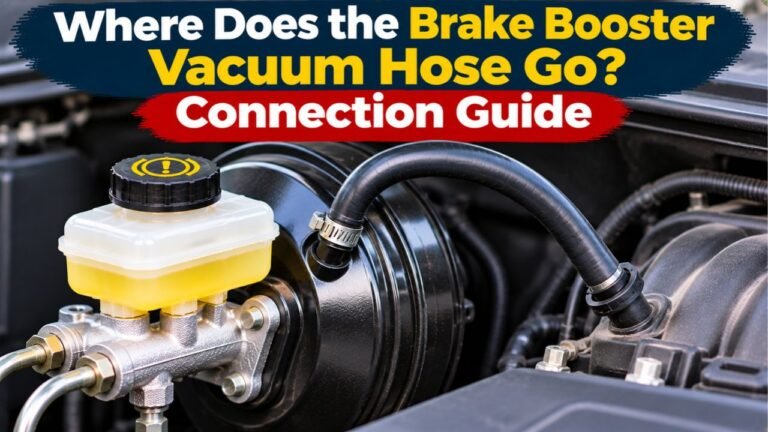
Yes, brake fluid can leak into or onto a brake booster, but a conventional vacuum brake booster does not normally contain brake fluid. The fluid usually comes from a leaking brake master cylinder, especially its rear seal where the cylinder attaches to the booster. A failed seal may let brake fluid enter the booster housing without creating a visible puddle under the vehicle.
This distinction matters because a brake booster and master cylinder do different jobs. The booster reduces the effort needed to push the brake pedal, while the master cylinder creates hydraulic pressure. A fluid leak can damage one or both components and may eventually affect pedal feel or stopping ability.
Not every wet mark near the booster proves that its housing contains fluid. Spilled brake fluid, a leaking reservoir seal, or a loose hydraulic fitting may leave similar stains. This guide explains where the fluid comes from, signs to recognize, checks you can make safely, what a repair shop should inspect, and when replacing the master cylinder and booster is necessary.
Can a Brake Booster Leak Brake Fluid on Its Own?
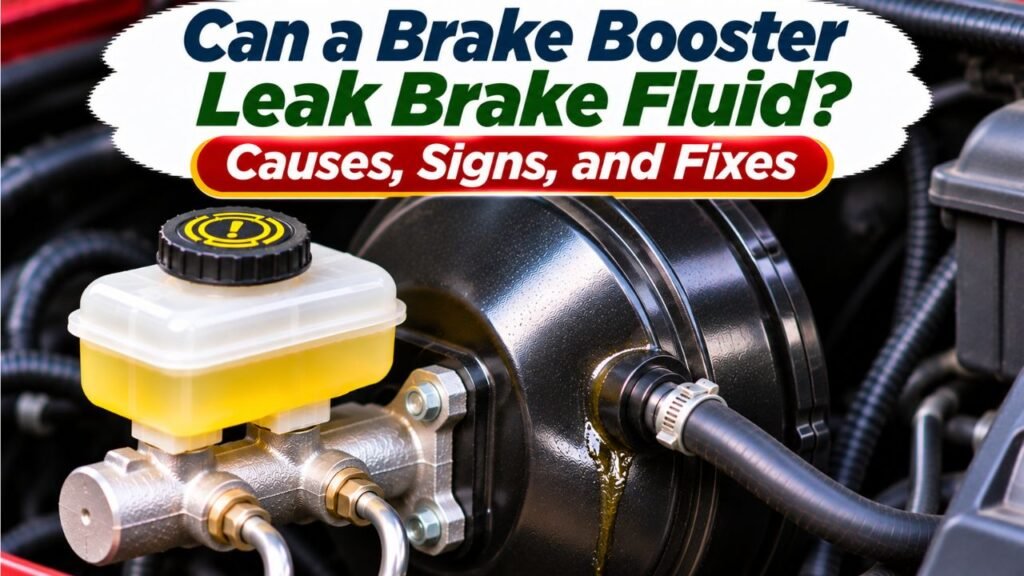
In a traditional vacuum brake booster, the answer is generally no. The booster uses a pressure difference across an internal diaphragm to help transfer force from the brake pedal to the master cylinder. It is not connected to the hydraulic brake-fluid circuit as a working fluid reservoir.
If brake fluid appears at the booster, the first concern is a leak from the neighboring master cylinder or one of its connections. The booster may be collecting or releasing fluid that entered from another component. Saying that the booster is “leaking brake fluid” describes where the liquid is found, not necessarily where the failure started.
There is one important distinction: a hydraulic brake booster, often called Hydro-Boost, uses pressurized hydraulic fluid from a compatible system, commonly the power-steering circuit. That fluid is not necessarily brake fluid. Electric and integrated brake-assist designs also differ from conventional vacuum units, so identify your vehicle’s system before making assumptions.
Why Brake Fluid Gets Into the Brake Booster
A Leaking Rear Master-Cylinder Seal
The most direct route is through the rear of the master cylinder. Its internal pistons and seals are meant to keep hydraulic fluid where it belongs. If a rear seal or related sealing surface fails, brake fluid can escape toward the mounting flange and enter the booster cavity.
Brake-component manufacturer ADVICS’s brake-fluid leak troubleshooting guide identifies damaged master-cylinder seals as a cause of leakage from the rear bore. It also notes that booster input sealing or pushrod alignment can be involved, which is why the adjacent parts should be inspected together.
Damaged Booster Seals or Incorrect Pushrod Alignment
The relationship between the master cylinder and booster is more complicated than two parts touching. Their pushrods must align, and the mounting arrangement must allow the master-cylinder pistons to move and return correctly. A defect involving booster input sealing can contribute to repeated master-cylinder leakage in some designs.
Fluid Spillage or Another External Leak
Brake fluid may reach the booster without passing through the master cylinder’s rear seal. An overfilled reservoir, fluid spilled during service, leaking reservoir grommets, or damaged line fittings can leave liquid on the booster housing.
Fresh wetness directly beneath the reservoir or at a line fitting may point toward an external source. A technician should distinguish old staining from active leakage before replacing expensive components. Never ignore a fresh stain merely because a spill seems possible.
Where Does Leaking Brake Fluid Go?
When fluid passes the master cylinder’s rear seal, it can gather in the recessed area between the master cylinder and booster. Depending on housing design, it may drip down the exterior or enter the vacuum chamber. This explains how a vehicle can lose brake fluid without leaving an obvious spot on the driveway.
Once inside, the liquid may contact diaphragm materials, seals, internal valves, or other components. The consequences depend on the booster design, the amount of fluid, and the length of exposure. In some circumstances the fluid can also move through connected vacuum passages, but this is not a reliable symptom to look for.
Symptoms of Brake Fluid Leaking Into a Booster
Brake Fluid Level Keeps Dropping
A reservoir that repeatedly falls below its expected level is an important clue. Brake pad wear can cause a gradual level change because caliper pistons extend as pads become thinner, but repeated or rapid fluid loss needs inspection for leaks.
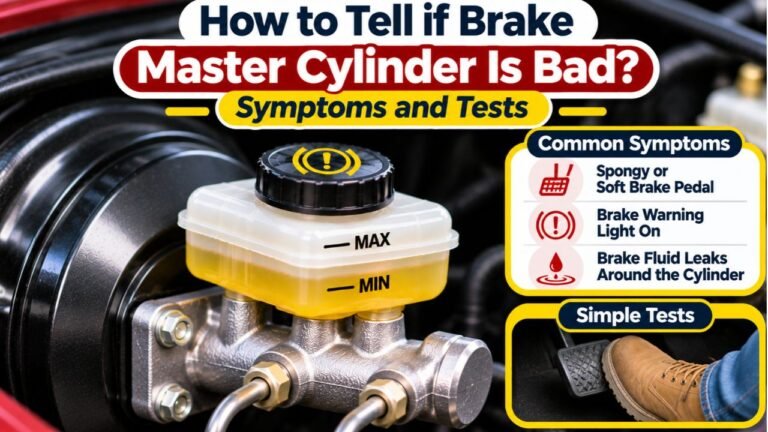
Soft, Low, or Slowly Sinking Brake Pedal
A deteriorated master-cylinder seal can reduce hydraulic pressure or permit fluid loss. A pedal may travel farther than normal, feel soft, or gradually sink while you hold steady pressure. These symptoms can also result from air in the brake system, a leaking hose, or an ABS hydraulic fault.
A sinking pedal is not proof that the booster failed. The booster provides assistance; the hydraulic master cylinder and connected components maintain brake-fluid pressure. Both systems need evaluation when fluid loss and abnormal pedal travel occur together.
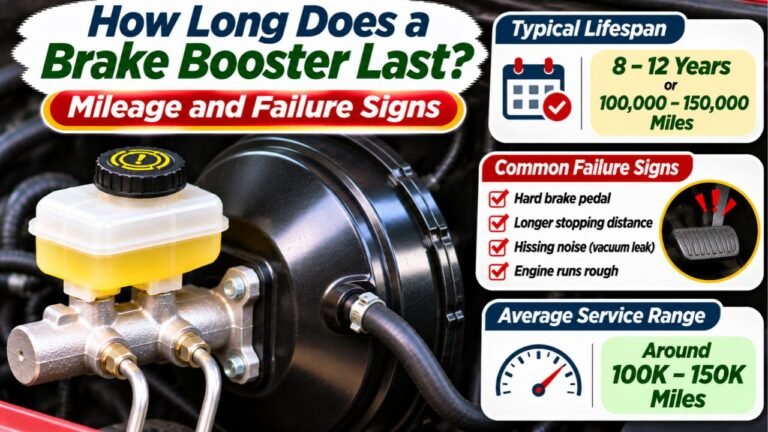
Hard Pedal or Hissing Near the Firewall
A vacuum booster damaged by fluid exposure may lose its ability to seal or provide normal assistance. This can make the pedal unusually hard or cause a hiss when the brakes are applied. However, a split vacuum hose, faulty check valve, or inadequate vacuum source can cause similar problems without any brake-fluid leak.
Fluid Staining or Damaged Paint Around the Booster
Brake fluid can leave wet streaks or damage paint on the booster housing and nearby surfaces. Look at the junction below the master cylinder, around the reservoir base, and at accessible hydraulic fittings without disturbing the parts.
Brake Warning Light or Reduced Stopping Performance
A falling reservoir level can activate a brake-fluid warning on vehicles equipped with an appropriate sensor. A change in hydraulic pressure or assistance may affect pedal response or the effort required to stop.
Warning lamps vary by vehicle, and an ABS light alone does not establish a master-cylinder or booster leak. Any loss of reliable braking, visible active fluid leakage, or pedal movement toward the floor is a reason to stop driving and arrange professional service.
Brake Fluid Leak vs. Vacuum Leak: What Is Different?
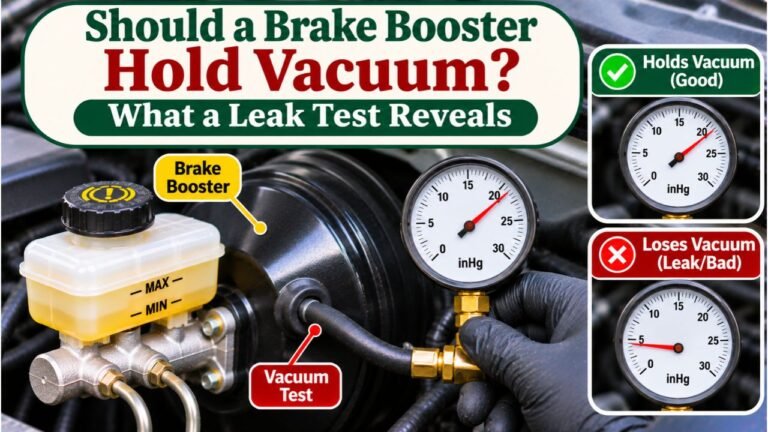
These problems can affect the same area but involve different systems. A vacuum leak releases or admits air where the booster should maintain the specified pressure difference. A brake-fluid leak allows hydraulic fluid to leave the sealed braking circuit.
| What You Notice | Possible Brake-Fluid Leak | Possible Vacuum Leak |
| Reservoir level | May decrease | Usually unchanged |
| Wetness near master cylinder | May appear | Not typical |
| Pedal response | May feel soft, low, or sink | Often unusually hard |
| Hissing during braking | Not a defining sign | More suggestive |
| Engine idle changes when braking | Not a defining sign | Possible on intake-vacuum systems |
| Main concern | Loss of hydraulic fluid or pressure | Loss of brake assistance |
Both faults can exist at once. A damaged booster does not rule out a leaking master cylinder, and fluid inside the booster does not prove that its diaphragm is already defective.
What You Can Check Without Taking the Brakes Apart
With the vehicle parked securely and the engine off, use these observations to describe the problem to a technician.
- Read the reservoir level. Check the MIN and MAX marks without opening the cap if the fluid is visible through the container. An unexpectedly low level needs investigation.
- Inspect accessible surfaces. Look for fresh wetness below the reservoir, around master-cylinder fittings, and where the cylinder meets the booster.
- Note pedal changes. Record whether the pedal is unusually hard, soft, low, or slowly sinking. Do not repeatedly force a pedal that already feels unsafe.
- Check for recent repair work. Reservoir refilling, master-cylinder replacement, or brake-line service may help explain a new stain, although they do not rule out an active leak.
- Identify the booster type. A traditional vacuum unit, Hydro-Boost assembly, and integrated electric brake unit need different diagnostics.
Do not loosen the master-cylinder mounting nuts, disconnect brake lines, or pull a vacuum hose to search for fluid. Those procedures can create leaks, affect pedal function, or require specialized bleeding and testing afterward.
Can Brake Fluid Damage the Brake Booster?
Yes. Brake fluid is not supposed to enter the working chamber of a conventional vacuum booster. Depending on its design, exposure may damage internal seals, reaction components, coatings, or other materials, eventually causing poor assist or a vacuum leak.
The outcome is not identical in every unit. Some designs tolerate limited exposure in particular areas, while others have materials that are sensitive to brake fluid. That is why the repair decision should follow model-specific service instructions rather than a universal rule based on a single drop of fluid.
NAPA’s brake booster replacement guide advises checking the booster where the master cylinder attaches and explains that brake fluid should not be on or inside a conventional booster. It also warns that an unresolved master-cylinder leak can damage a replacement booster.
Does a Brake Fluid Leak Mean Both Parts Must Be Replaced?
Not always, but both should be evaluated. If the master cylinder is leaking, fixing that source is essential. If fluid entered or damaged the booster, that assembly may also require replacement. Replacing only the booster while leaving a leaking master cylinder in place risks repeating the failure.
There are cases where a manufacturer requires replacing both. For certain 2000 Toyota Celica and ECHO vehicles, Toyota’s master-cylinder inspection campaign filed with NHTSA directed dealers to replace the master cylinder and brake booster when specified leakage was confirmed. This is a vehicle-specific instruction, not a universal repair rule for all cars.
If fluid was merely spilled on the exterior, an internal booster replacement may not be needed. Conversely, a booster with internal damage may need replacement even after the master-cylinder leak has been corrected. The manufacturer’s inspection criteria should determine the decision.
How a Repair Shop Confirms the Leak
A technician generally begins by identifying the fluid, checking reservoir level and visible hydraulic connections, and inspecting the pedal response. Other leak locations, including calipers, hoses, wheel cylinders, and lines, must be considered before blaming the booster area.
If the evidence points to the rear master-cylinder seal, the shop may need to separate the master cylinder from the booster using the approved procedure. This allows inspection of the mounting cavity and any fluid contamination. Some vehicles permit more detailed internal booster assessment; others specify assembly replacement.
The shop should also check vacuum supply or the relevant hydraulic/electric assist system, evaluate pushrod fit, and correct any leaks or mechanical alignment problems. If the hydraulic circuit is opened, the brake system must be bled according to the vehicle’s procedure. Some ABS-equipped systems require additional equipment.
How to Reduce the Risk of Another Leak
Follow the vehicle’s brake-fluid service schedule, use only the specified fluid, and monitor unexplained changes in reservoir level. Avoid overfilling the reservoir and have spills cleaned with materials safe for the affected surfaces. When parts are replaced, correct pushrod alignment, compatible seals, and thorough brake-system checks help prevent repeated problems. Address new pedal symptoms promptly instead of relying on repeated fluid top-ups.
Is It Safe to Drive With Brake Fluid in the Booster?
No driving should be attempted when brake fluid is actively leaking, the reservoir is unexpectedly low, or braking feels different from normal. Even if a vacuum booster still provides assistance, the master cylinder may be losing fluid or pressure. A second fault can also be present.
A hard pedal can make emergency stops much more difficult, while a soft or sinking pedal can signal hydraulic failure. Neither should be assessed through trial stops on public roads. Park the vehicle and arrange professional inspection or towing when the system’s integrity is in doubt.
FAQs About Can a Brake Booster Leak Brake Fluid
Can Brake Fluid Get Inside a Vacuum Brake Booster?
Yes. A leaking rear seal on the master cylinder can allow fluid into the adjoining booster cavity. The vacuum booster does not normally use brake fluid, so its presence calls for a master-cylinder and booster inspection.
Can a Brake Booster Leak Fluid Without a Puddle?
Yes. Fluid may collect inside the booster housing or at the hidden mounting surface. A falling reservoir level with no visible puddle does not rule out a leak, though other hidden hydraulic leaks are possible.
Will a Bad Booster Cause Brake Fluid to Disappear?
A vacuum booster does not normally consume brake fluid. Lost fluid usually comes from a hydraulic leak, often at the master cylinder or elsewhere in the brake system. Certain booster seal defects may contribute to master-cylinder leakage in specific designs.
Can Brake Fluid in the Booster Cause a Hard Pedal?
It can if the contamination damages the booster’s sealing or assist mechanism. A hard pedal may also come from a hose, check-valve, or vacuum-supply problem. The symptom alone does not identify the failed component.
Can You Just Drain Brake Fluid Out of a Booster?
Do not assume draining or wiping it out will restore safe operation. The source must be repaired and the booster inspected for damage using model-specific instructions. Some units require replacement after contamination.
Should the Master Cylinder and Booster Be Replaced Together?
Only when the confirmed fault and applicable service procedure call for both. A leaking master cylinder needs repair or replacement, and a contaminated or damaged booster may also need replacement. Verify both before ordering parts.
Why Brake Fluid Around the Booster Needs Prompt Attention
The answer to can a brake booster leak brake fluid is that fluid can appear on or inside a vacuum booster, but the usual source is a leaking master cylinder rather than the booster producing fluid itself. The rear seal is an important place to investigate, particularly when the reservoir level drops without an obvious external leak.
Fluid exposure can damage booster components, and master-cylinder leakage can compromise hydraulic braking even before booster assistance changes. A wet booster housing, sinking pedal, or unexpected loss of brake fluid deserves more than a quick top-up.
Have the entire master-cylinder and booster interface inspected, repair the verified source, and follow the vehicle manufacturer’s criteria for replacing either or both assemblies. Keep the vehicle off the road until the braking system has been checked and confirmed safe.