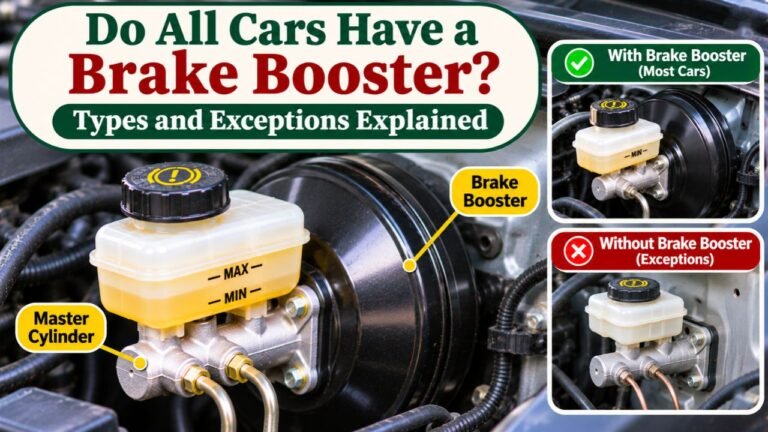
What Are the Symptoms of a Bad Brake Booster? 7 Warning Signs
The most common symptoms of a bad brake booster are a hard brake pedal, increased stopping distance, hissing when the brakes are applied, and an engine that idles roughly or stalls during braking. You may also notice that power assistance disappears after repeated pedal presses or that a brake-assist warning appears on the dashboard. The exact signs depend on whether the vehicle has vacuum, hydraulic, or electronic brake assistance.
A failing booster can leave the hydraulic brakes partly functional, but the force required to slow the vehicle may be far greater than normal. That makes a sudden change in pedal effort especially serious. A soft or steadily sinking pedal, by contrast, often points toward a hydraulic fault rather than a simple loss of assistance.
Knowing which symptom appeared first can help narrow the problem before parts are replaced. This guide covers seven recognizable warning signs, the faults that imitate booster failure, safe checks on a parked vehicle, and when repair or towing is necessary.
What Are the Symptoms of a Bad Brake Booster?
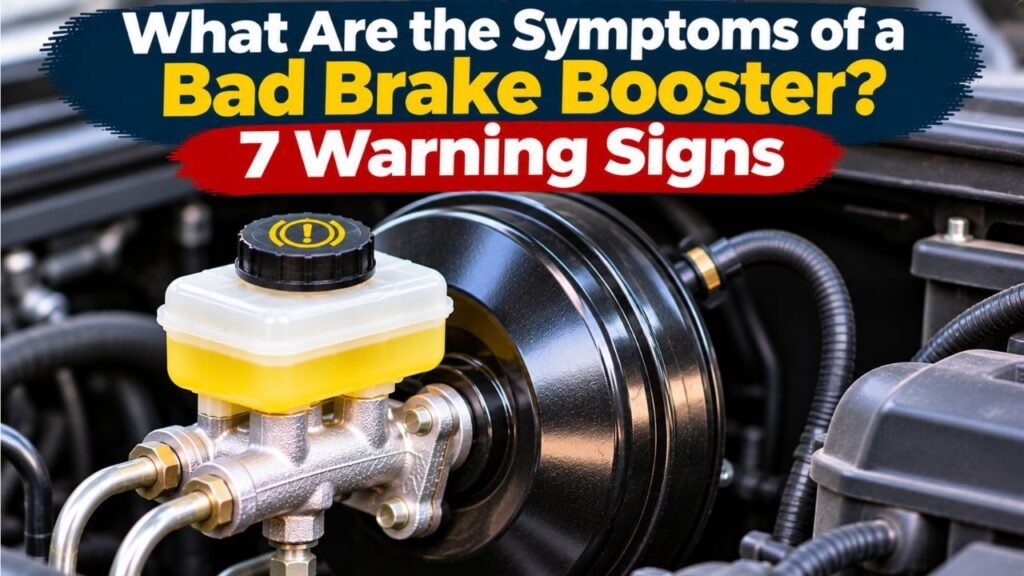
The following signs are most relevant to a conventional vacuum-assisted brake system. Some also occur with hydro-boost and electronically assisted brakes, but their causes and diagnostic procedures are different.
1. Brake Pedal Feels Harder Than Normal
A suddenly stiff brake pedal is the classic sign of lost brake assistance. The pedal may resist movement, and you may need much more leg force to achieve the same braking effect. It can feel like pressing against a solid object rather than the familiar, controlled pedal resistance.
The master cylinder may still produce hydraulic pressure, but the booster is no longer contributing its intended force. A hard pedal while the engine is switched off is not, by itself, evidence of failure: stored vacuum can be used up after several applications. The important change is unusual pedal effort when the vehicle’s assist system should be operating.
2. Vehicle Takes Longer to Stop
When assistance drops, the same foot pressure may produce less hydraulic braking force. The driver presses as usual, but the car does not slow as quickly as expected. This can be particularly noticeable during unexpected stops or when carrying passengers or cargo.
AutoZone’s guide to signs of a bad brake booster identifies harder pedal effort and longer stopping distances among the principal warning signs. Stopping distance also depends on tires, road grip, brake condition, and driver response, so the symptom alone cannot prove the booster has failed.
3. Hissing or Whistling When You Press the Brake
A continuing hiss near the pedal, firewall, or booster housing may indicate escaping air through a damaged diaphragm, control valve, grommet, or vacuum connection. The sound may get louder when the pedal is pressed or held, or it may appear as the pedal is released.
A brief airflow sound can occur during normal operation on some vacuum boosters. What deserves attention is a new, pronounced, or sustained hiss accompanied by altered pedal feel. Air-conditioning ducts and other engine vacuum leaks can produce similar noises, so the sound needs to be located rather than assumed to come from the booster.
4. Engine Idles Roughly or Stalls During Braking
On vehicles using engine manifold vacuum, a leak in the booster circuit can allow unwanted air into the intake. The engine may stumble, idle unevenly, change speed when the pedal is pressed, or occasionally stall as the vehicle comes to a stop. The symptoms may be more apparent at idle than at cruising speed.
This pattern does not occur the same way on every vehicle. Diesel engines, electric vacuum pumps, and newer engine-management systems have different vacuum arrangements. Ignition, fuel-delivery, and unrelated intake leaks can also cause rough idle, so a brake-related engine change is a diagnostic clue rather than proof.
5. Brake Assistance Disappears After Repeated Applications
A conventional vacuum booster stores a limited reserve of assistance, helped by a one-way check valve. If the supply hose, valve, or booster leaks, that reserve may disappear too quickly. One pedal application might feel nearly normal, while the next feels unusually heavy.
The opposite can also happen: the pedal feels hard at first, then assistance returns once sufficient vacuum is available. Inconsistent effort can indicate low vacuum supply, a failing check valve, or an internal booster fault. A vehicle should not be driven to reproduce this pattern; have the assist circuit checked while parked.
6. Brake, Check Engine, or Brake-Assist Warning Appears
Depending on the vehicle, loss of assistance may trigger a brake warning, a brake-assist message, or a check engine light related to an engine vacuum fault. Electronically controlled systems may log faults in the braking or stability-control modules.
A warning light does not identify the booster by itself. Low brake fluid, a parking brake switch, ABS problems, sensor failures, and engine faults can illuminate overlapping warnings. Reading the correct diagnostic trouble codes and checking the vehicle’s service information is more useful than replacing the booster based only on a dashboard message.
7. Unusual Pedal Return or Assist-System Fluid Leakage
A sticking pedal or brakes that do not release normally can sometimes involve a booster mechanism or incorrect pushrod adjustment. Those symptoms also occur with binding pedal hardware, a master cylinder that does not return fully, or stuck wheel brakes. Do not treat a slow pedal return as a booster-only symptom.
On hydraulic-assist systems, leaking power-steering fluid near the assist unit may accompany poor braking assistance and harder low-speed steering. A conventional vacuum booster does not normally contain brake fluid. Brake fluid found inside it often comes from a leaking master cylinder rear seal, which may damage the booster as well.
Why a Bad Brake Booster Changes the Brake Pedal
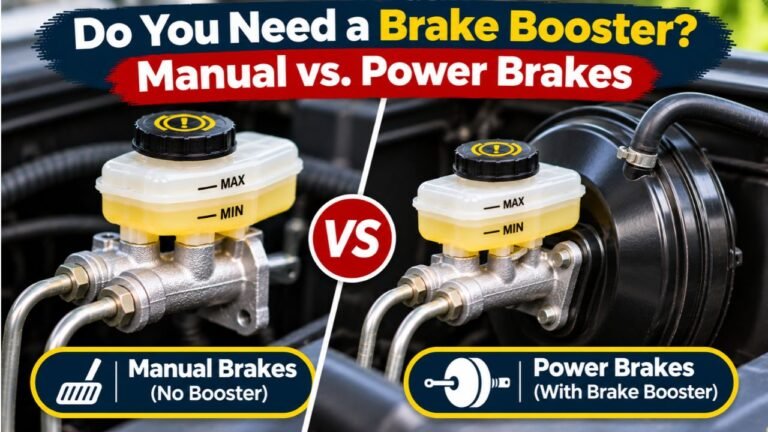
A booster sits between the brake pedal and the master cylinder. In a conventional vacuum design, two chambers are separated by a movable diaphragm. A pressure difference helps drive the output mechanism toward the master cylinder when the driver presses the pedal. The master cylinder then generates hydraulic pressure for the wheel brakes.
Bosch Mobility’s vacuum brake booster overview describes how this pressure difference reduces the force the driver must supply. When the booster or its vacuum supply cannot produce enough assistance, the driver’s leg has to provide more of the work. That is why a hard pedal and reduced braking for the same effort are closely connected.
A failed booster is not necessarily the same as complete hydraulic brake failure. However, a vehicle designed for power brakes may require much greater force than an ordinary driver can apply consistently, especially during an emergency.
What Causes Brake Booster Symptoms Without a Failed Booster?
Replacing the booster before checking its supply and connections can miss the actual fault. Several external components can make a healthy booster seem defective.
Cracked Vacuum Hose or Loose Connection
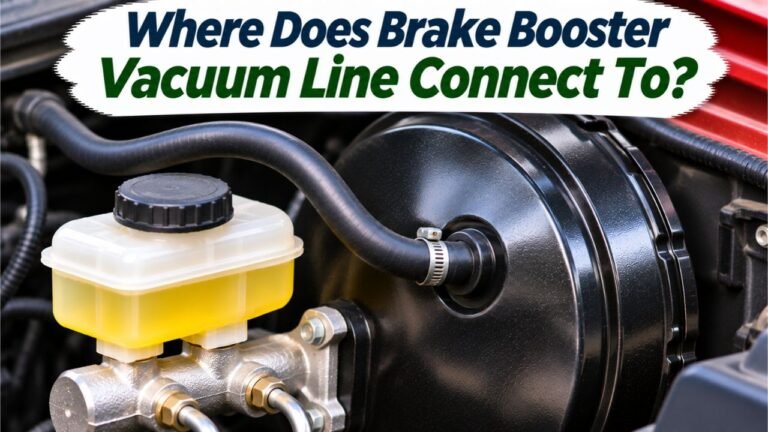
A vacuum hose may become brittle, split near a fitting, collapse internally, or come loose. Any of these problems can reduce the vacuum reaching the booster. A damaged rubber grommet where the check valve enters the housing can cause similar symptoms.
A technician should inspect the hose routing and condition using vehicle-specific information. The correct hose must withstand vacuum without collapsing; a generic replacement that happens to fit is not always suitable.
Defective One-Way Check Valve or Weak Vacuum Source
The check valve helps preserve stored vacuum in a conventional booster. A valve that leaks or sticks can cause the pedal to become hard after the engine stops or after successive brake applications. Low vacuum from the engine or a failing electric vacuum pump can create the same result.
Testing should establish both whether sufficient vacuum reaches the booster and whether the booster holds that vacuum. Without both checks, a new booster may be installed even though the real problem is upstream.
Damaged Diaphragm or Internal Control Valve
If the booster itself leaks internally, assistance can become weak or intermittent and air noise may occur during pedal use. An internal control mechanism can also stick or respond improperly. Because these parts affect braking force, the repair normally involves the manufacturer-approved replacement assembly rather than an improvised patch.
How to Check for Brake Booster Problems While Parked
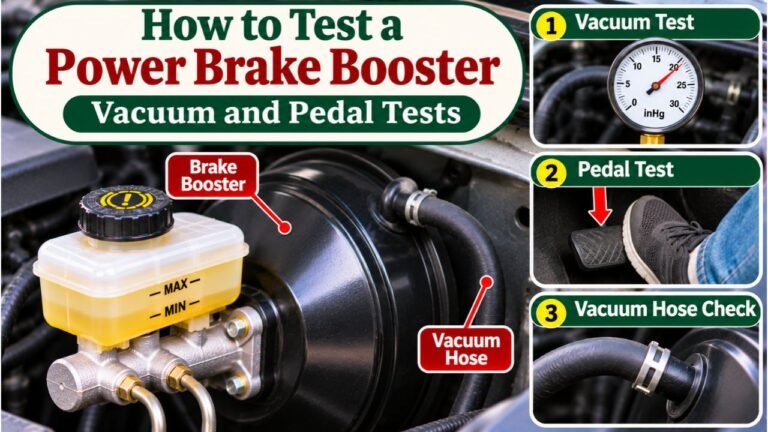
A basic stationary check may help describe the symptoms to a technician, but it cannot certify that the brakes are safe. Use the following only for a conventional vacuum booster when the vehicle manufacturer’s instructions permit it. Do not apply this test to unfamiliar electronic, hybrid, or hydro-boost systems.
- Secure the vehicle. Park on level ground, place the transmission in Park or the appropriate stationary gear, apply the parking brake, and keep the area clear. Do not begin if the pedal is sinking or the hydraulic system is leaking.
- Observe pedal resistance with the engine off. On a conventional system, several gentle presses can use up stored vacuum and leave the pedal firm. That firm pedal after vacuum is depleted is expected, not a stand-alone failure sign.
- Check for assist when the engine starts. With steady, moderate foot pressure on the pedal, start the engine if the service procedure permits. A small downward change in pedal position generally indicates that assistance is becoming available. No noticeable change suggests a problem that still needs confirmation.
- Inspect visible connections without disconnecting them. With the engine off, look for a cracked hose, loose fitting, damaged check-valve grommet, or other obvious defect. Leave pressure and vacuum testing to someone with suitable equipment and model-specific specifications.
A successful pedal-drop check does not rule out an intermittent leak or weak vacuum under different operating conditions. A failed check also does not prove that the booster housing is defective: a disconnected hose, bad check valve, or inadequate source can produce similar results.
Bad Brake Booster Symptoms vs. Master Cylinder Problems
The booster and master cylinder sit together, but their failures usually affect the pedal differently. This comparison helps identify which system requires attention first.
| Symptom | More Suggestive of Booster or Assist Fault | More Suggestive of Hydraulic Fault |
| Very hard pedal with engine running | Yes | Possible with certain restrictions |
| Hissing linked to pedal use | Vacuum leak or booster circuit | Not typical |
| Pedal slowly sinks under steady pressure | Not typical of simple assist loss | Master cylinder bypass or fluid leak |
| Spongy pedal | Not typical of simple vacuum failure | Air or another hydraulic problem |
| Brake fluid level keeps dropping | Not typical of booster failure alone | External leak, including master cylinder |
| Pedal effort changes when assist activates | Possible | Other faults still possible |
A master cylinder can leak brake fluid through its rear seal into the vacuum booster, which may hide the leak from view. Conversely, a booster vacuum leak can make the pedal difficult to press without reducing reservoir fluid level. Both problems require a careful inspection; one symptom may have more than one cause.
Do Hydraulic and Electronic Boosters Have Different Symptoms?
Yes. A hydro-boost system uses hydraulic assistance rather than manifold vacuum. A failure may produce a hard pedal alongside power-steering problems or fluid leakage, depending on how the vehicle supplies hydraulic pressure. A vacuum-style hissing noise is not the main warning sign in that setup.
Electronic and electrohydraulic brake-assist systems may display warnings, store fault codes, or enter a reduced-assistance operating mode. Their pedal feel can also be affected by regenerative braking controls. A technician may need a capable scan tool and model-specific service information rather than a traditional vacuum gauge.
RepairPal’s guide to failing brake boosters distinguishes signs associated with vacuum, hydro-boost, and electrohydraulic designs. Identifying the actual system before testing prevents misleading results and unnecessary parts replacement.
Can You Drive With Symptoms of a Bad Brake Booster?
Do not continue driving with suspected brake-assist failure or an unexpected change in stopping performance. A car may retain some hydraulic braking after assist is lost, but the extra pedal effort can make normal stopping distances unpredictable. A working manual-brake system is engineered differently from a power-brake system with failed assistance.
If symptoms begin while moving, ease off the accelerator, increase the space ahead, and stop in a safe location. Avoid abrupt steering or unnecessary repeated braking. Once parked, arrange towing and inspection rather than making a test drive to see whether the symptoms return.
The repair may involve a hose, check valve, vacuum pump, complete booster, or a separate hydraulic component. Diagnosis should come before replacement, followed by a check of pedal operation and braking performance using the manufacturer’s procedure.
FAQs About What Are the Symptoms of a Bad Brake Booster
Will a Bad Brake Booster Make the Pedal Soft?
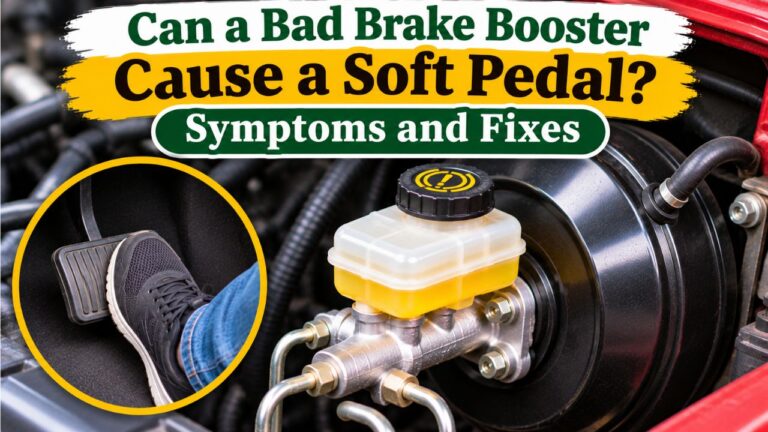
Usually not on a conventional vacuum system. Lost assistance normally makes the pedal harder to press. A soft or spongy pedal more often suggests air in the hydraulic system, a leak, or another hydraulic problem.
Can a Bad Brake Booster Cause a Check Engine Light?
Yes, on some vehicles. A booster-related vacuum leak may affect engine operation or trigger a monitored vacuum fault. Many unrelated engine problems can turn on the same light, so diagnostic codes and system checks are necessary.
Can a Brake Booster Fail Without Making Noise?
Yes. A weak vacuum supply, failed check valve, or internal fault may cause heavy pedal effort without an obvious hiss. Noise is only one possible clue, not a requirement for diagnosis.
Does a Hard Pedal With the Engine Off Mean the Booster Is Bad?
No. A conventional vacuum booster has a limited reserve, and the pedal commonly becomes firm after that reserve is exhausted. A hard pedal while the assistance system should be active is much more concerning.
Is a Bad Brake Booster the Same as a Bad Master Cylinder?
No. The booster adds pedal assistance, while the master cylinder develops hydraulic pressure. A failed booster commonly increases pedal effort; a failing master cylinder may cause pressure loss, leakage, or a sinking pedal. Either fault can compromise braking.
Recognize Brake Booster Warning Signs Before Braking Gets Worse
If you’re asking what are the symptoms of a bad brake booster, the most useful signs to watch for are a pedal that suddenly feels hard, longer stops for the same effort, and a new hissing sound during braking. Rough idle, fading assistance, or brake-related warning messages can strengthen the suspicion, particularly on vacuum-assisted vehicles.
Those clues do not automatically mean the booster itself needs replacing. A hose, check valve, vacuum source, or another brake component may be responsible, and hydraulic and electronic assist systems require different checks.
Treat an unexpected change in pedal effort or stopping response as a reason to stop driving and arrange professional diagnosis. Confirming the failed component before repair protects both braking performance and the cost of the fix.