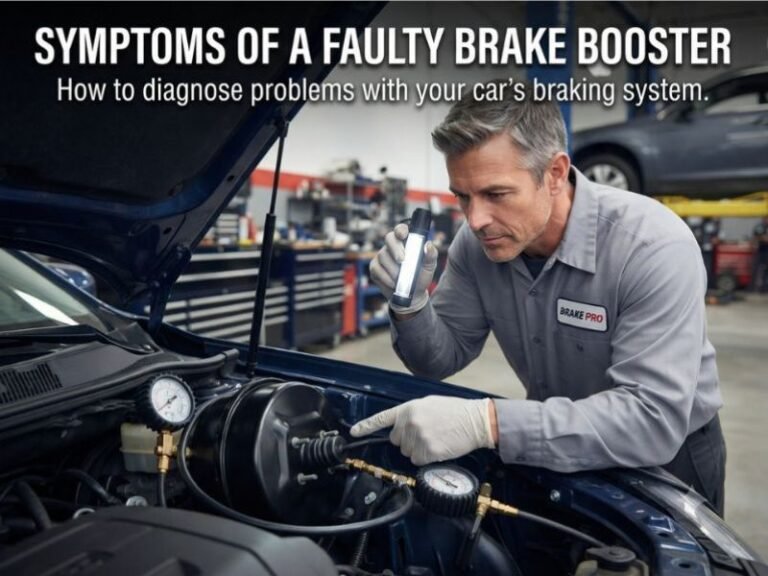
How to Diagnose a Bad Brake Booster: 6 Simple Tests to Try
A brake booster makes it easier to stop a vehicle by using vacuum or another form of power assistance to multiply the force applied to the brake pedal. When the booster fails, the pedal can become unusually hard, braking may require much more effort, and the vehicle may also develop vacuum-related engine symptoms.
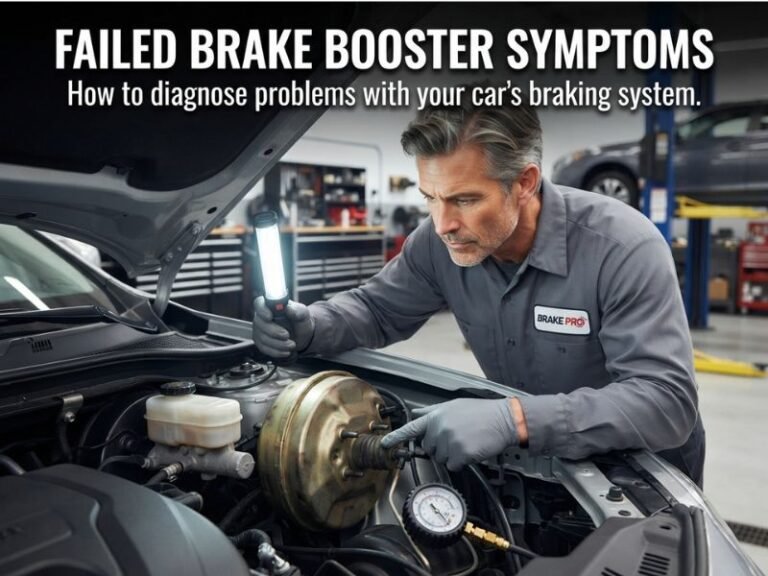
If you notice a change in brake pedal feel, you may wonder how to diagnose a bad brake booster without immediately replacing the part. Fortunately, several basic tests can help identify whether the booster is providing the expected assistance.
The important thing is to distinguish a bad booster from problems such as a damaged vacuum hose, faulty check valve, or bad master cylinder. These components can create similar symptoms, so testing the system before replacing parts can save both time and money.
How to Diagnose a Bad Brake Booster
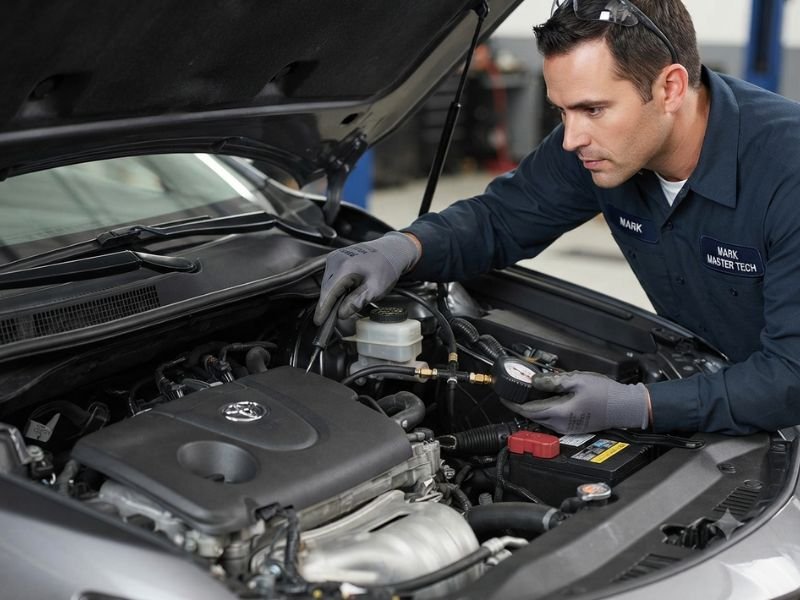
Diagnosing a brake booster starts with observing the brake pedal and then performing a few simple checks.
A potentially faulty booster may cause:
- A hard brake pedal
- Increased pedal effort
- Hissing noises
- Reduced braking assistance
- Longer or more difficult stops
- Rough engine idle
- Engine stalling when braking
Before performing any test, park the vehicle safely on level ground and make sure it cannot move unexpectedly.
These tests can help identify a potential problem, but they do not replace a professional inspection when braking performance is significantly affected.
Signs That Your Brake Booster May Be Bad
Before testing the booster, pay attention to how the vehicle behaves during normal braking.
Hard Brake Pedal
A hard brake pedal is one of the strongest clues of a potential brake booster problem.
A functioning booster reduces the force required from your leg. If the booster loses power assistance, the pedal may feel much harder than usual.
You may notice that you have to press the pedal significantly harder to slow the vehicle.
Hissing Noise When Braking
A noticeable hissing sound when pressing the brake pedal can indicate a vacuum leak.
The source may be the booster itself, the vacuum hose, check valve, or another connection in the vacuum system.
A brief sound can occur during normal operation on some vehicles, so the important clue is an unusual, persistent, or loud hissing noise combined with other symptoms.
Increased Stopping Effort
If you suddenly need much more force to stop the vehicle, the booster may not be providing normal assistance.
The hydraulic brakes can still operate when power assistance is lost, but the driver has to provide substantially more pedal force.
This becomes particularly important during emergency braking.
Engine Runs Roughly When Braking
Many vehicles use engine vacuum to operate the brake booster.
If the booster develops an internal vacuum leak, it can introduce additional air into the engine’s intake system. This may result in rough idle, hesitation, or even stalling when the brake pedal is pressed.
How to Diagnose a Bad Brake Booster at Home
You can perform several basic tests without removing the booster.
Test 1: Engine-Off Brake Pedal Test
This is one of the simplest preliminary tests.
- Turn the engine off.
- Press the brake pedal several times.
- Continue pumping until the pedal becomes firm.
- Keep steady pressure on the pedal.
As the stored vacuum assistance is used, the pedal should become progressively harder.
This test helps prepare the system for the next step.
Test 2: Engine-Start Pedal Drop Test
This test checks whether the booster provides assistance when the engine starts.
- Turn the engine off.
- Pump the brake pedal several times until it becomes firm.
- Keep your foot firmly on the pedal.
- Start the engine.
- Observe the brake pedal.
With a functioning vacuum-assisted booster, the pedal will normally move slightly downward when the engine starts and vacuum assistance becomes available.
If the pedal does not move at all and remains unusually hard, there may be a problem with the brake booster, vacuum supply, or check valve.
This test is one of the most useful basic checks, but it should be interpreted along with the vehicle’s other symptoms.
Test 3: Vacuum Leak Listening Test
A vacuum leak can prevent the booster from working properly.
Start the engine and listen carefully around the brake pedal and booster area while applying the brakes.
Pay attention to any:
- Continuous hissing
- Unusually loud air noise
- Noise that changes when the pedal is pressed
A significant hissing sound can indicate a leak.
However, the noise may come from a vacuum hose or check valve rather than the booster itself.
Test 4: Inspect the Vacuum Hose
Before replacing the booster, inspect the vacuum hose that connects it to the engine.
Look for:
- Cracks
- Splits
- Brittle rubber
- Loose connections
- Damaged fittings
- Collapsed or damaged sections
A damaged hose can cause the same hard-pedal symptoms as a failed booster.
If the hose is visibly damaged, it should be repaired or replaced according to the vehicle manufacturer’s specifications.
Test 5: Check the Vacuum Check Valve
The vacuum check valve helps maintain vacuum inside the brake booster.
If the valve is defective, the booster may lose vacuum even when the booster itself is working correctly.
A technician can test the valve to determine whether it is allowing vacuum to flow correctly and whether it is preventing unwanted reverse flow.
Because check-valve designs vary, use the appropriate procedure for the specific vehicle rather than assuming every valve can be tested the same way.
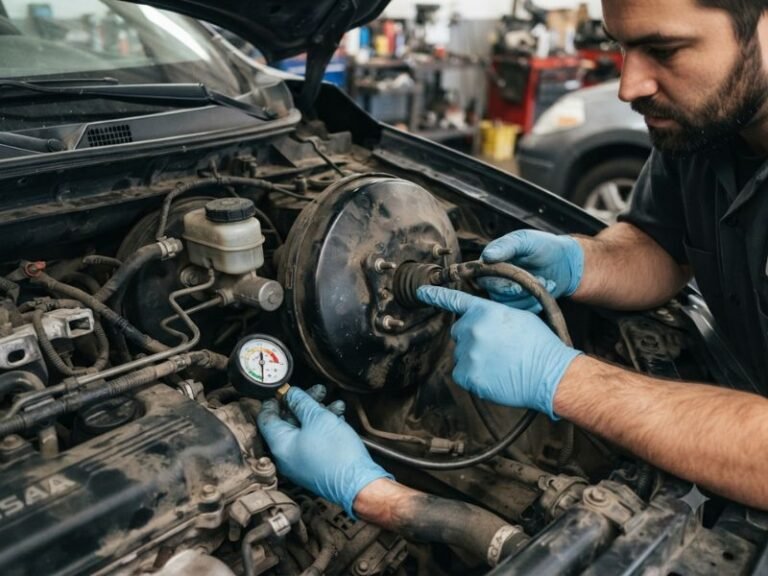
Test 6: Check Vacuum With a Gauge
A vacuum gauge can provide more detailed information about the vacuum system.
The test can help determine whether the booster is receiving and retaining the expected vacuum.
However, the correct vacuum specification depends on the vehicle and braking system. A reading should therefore be compared with the manufacturer’s specifications.
If vacuum is present at the engine but not reaching the booster correctly, the hose or check valve may be the problem.
If the booster receives proper vacuum but cannot maintain or use it correctly, the booster itself may be faulty.
How to Tell if the Brake Booster or Vacuum Hose Is Bad
A booster problem and a vacuum hose problem can look very similar.
| Symptom | Bad Booster | Vacuum Hose |
| Hard pedal | Common | Possible |
| Hissing | Common | Common |
| Rough idle | Possible | Common |
| Visible cracks | No | Possible |
| Loss of brake assist | Common | Possible |
| Engine stalling | Possible | Possible |
A visible crack in the vacuum hose is a strong clue that the hose needs attention.
If the hose and connections appear healthy but the booster fails the appropriate tests, the booster itself becomes a more likely cause.
Bad Brake Booster vs. Bad Master Cylinder
The master cylinder and brake booster perform different jobs, and their failures often produce different pedal symptoms.
Symptoms of a Bad Brake Booster
A booster problem commonly causes:
- Hard brake pedal
- Increased pedal effort
- Loss of power assistance
- Hissing or vacuum-related noises
- Possible engine vacuum symptoms
The key characteristic is usually that the pedal becomes harder to press.
Symptoms of a Bad Master Cylinder
A master cylinder problem is more likely to cause hydraulic pressure issues.
Possible symptoms include:
- Soft or spongy pedal
- Pedal slowly sinking while pressure is maintained
- Inconsistent hydraulic pressure
- Reduced braking performance
A sinking or soft pedal should not automatically be diagnosed as a booster problem.
What Causes a Brake Booster to Fail?
Understanding the possible causes can help you diagnose the problem more accurately.
Internal Diaphragm Failure
Many vacuum brake boosters use an internal diaphragm.
If the diaphragm becomes damaged or develops a leak, the booster may lose its ability to provide proper assistance.
An internal leak can also create vacuum-related engine symptoms.
Vacuum Leak
A vacuum leak can occur inside the booster or in the external vacuum system.
A leaking hose, loose connection, or damaged fitting can prevent the booster from receiving sufficient vacuum.
Faulty Check Valve
A defective check valve can prevent the booster from retaining vacuum properly.
This can lead to inconsistent or reduced brake assistance.
Damaged Seals or Internal Components
The booster contains internal seals and mechanical components that can wear or fail.
When these components no longer operate correctly, the booster may not provide the expected assistance even when the external vacuum connections appear normal.
When Should You Replace the Brake Booster?
A booster should not be replaced simply because the brake pedal feels different.
First, the relevant vacuum components should be inspected and tested.
Replacement may be appropriate when:
- The booster fails the appropriate tests
- The booster has an internal vacuum leak
- The vacuum hose and check valve are functioning correctly
- Brake assistance remains significantly reduced
- The booster has internal mechanical damage
Using the correct replacement component and following the manufacturer’s installation and adjustment specifications is important.
Can You Drive With a Bad Brake Booster?
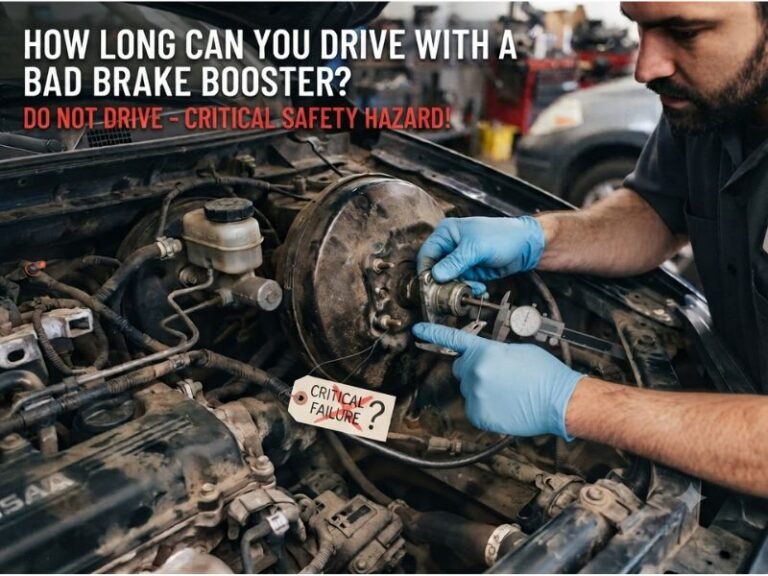
You should avoid normal driving if the brake booster has been confirmed to be faulty and braking assistance is significantly reduced.
The hydraulic brakes may still work without power assistance, but the pedal can require much more force.
This can make emergency braking difficult and increase the risk of an accident.
Do not continue driving if:
- The pedal is extremely hard
- The vehicle is difficult to stop
- Braking performance has changed suddenly
- The engine stalls when braking
- You are not confident that the vehicle will stop safely
If the braking system is seriously compromised, towing the vehicle is safer than driving it to a repair facility.
Frequently Asked Questions
How do I know if my brake booster is bad?
Common signs include a hard brake pedal, increased pedal effort, hissing noises, reduced brake assistance, and sometimes rough engine operation. The engine-start pedal test can provide a useful preliminary indication.
What is the easiest way to test a brake booster?
The engine-start pedal drop test is one of the simplest checks. Pump the brake pedal with the engine off, hold pressure, and start the engine. A functioning booster will normally cause the pedal to move slightly downward.
How do I test a brake booster without a vacuum gauge?
You can perform the engine-off and engine-start pedal tests and listen for unusual vacuum hissing. You can also inspect the vacuum hose and check valve. These tests provide clues but cannot always confirm the exact fault.
Can a bad brake booster cause a soft pedal?
A bad booster typically causes a hard pedal rather than a soft one. A soft or sinking pedal is more commonly associated with hydraulic problems such as air in the brake lines or a master cylinder issue.
Can a bad brake booster cause a vacuum leak?
Yes. An internal booster failure can create a vacuum leak, particularly when the internal diaphragm or seals fail.
How much does it cost to replace a brake booster?
The cost varies by vehicle, replacement part, labor time, and related components. A damaged vacuum hose or check valve can be much cheaper to repair than replacing the entire booster.
Final Thoughts on How to Diagnose a Bad Brake Booster
Learning how to diagnose a bad brake booster starts with recognizing the difference between a hard pedal caused by lost power assistance and a soft pedal caused by a potential hydraulic problem.
The engine-off pedal test, engine-start pedal drop test, vacuum leak inspection, hose inspection, and check-valve testing can help narrow down the cause. A vacuum gauge can provide additional information when basic tests are inconclusive.
Do not immediately replace the booster without checking the vacuum hose, check valve, and other related components. If braking performance is significantly reduced or the pedal becomes extremely hard, avoid driving the vehicle and have the brake system professionally inspected.