Can You Paint Brake Calipers Without Removing Them? Guide
Yes, you can paint brake calipers without removing them, as long as you clean and mask the brake components carefully and keep paint away from all moving and friction surfaces.
If you want cleaner, more colorful brake calipers but do not want to disconnect brake hoses or completely remove the calipers from the vehicle, painting them in place can be a practical DIY option. In fact, many home mechanics use this method because it avoids opening the hydraulic brake system, bleeding the brakes afterward, and performing a more involved caliper removal and reinstallation.
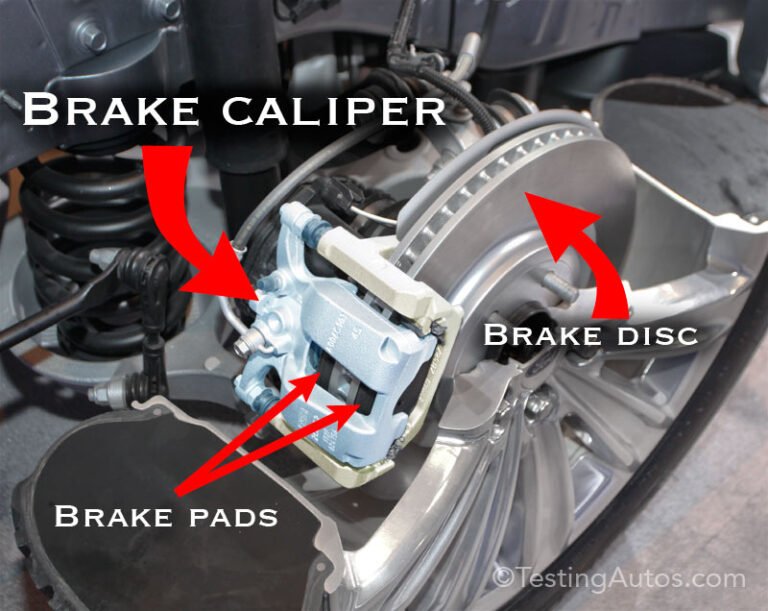
The important part is preparation. When asking can you paint brake calipers without removing them, the real issue is not whether paint will stick while the caliper remains installed. It is whether you can properly clean, mask, and reach the visible surfaces without getting paint on the brake rotor, brake pads, slider pins, piston boots, bleeder screw, brake hose, or other functional components.
For a basic cosmetic refresh, leaving the caliper mounted can work very well. However, removing the wheel is necessary, and partially unbolting the caliper may sometimes make cleaning and painting easier. A complete caliper removal is generally more useful when you want professional-level coverage, powder coating, major rust restoration, or a full brake rebuild.
This guide explains how to paint brake calipers without completely removing them, what supplies you need, which areas must remain paint-free, how to prepare rusty calipers, and when removing the caliper is the better choice.
Can You Paint Brake Calipers Without Removing Them Safely?
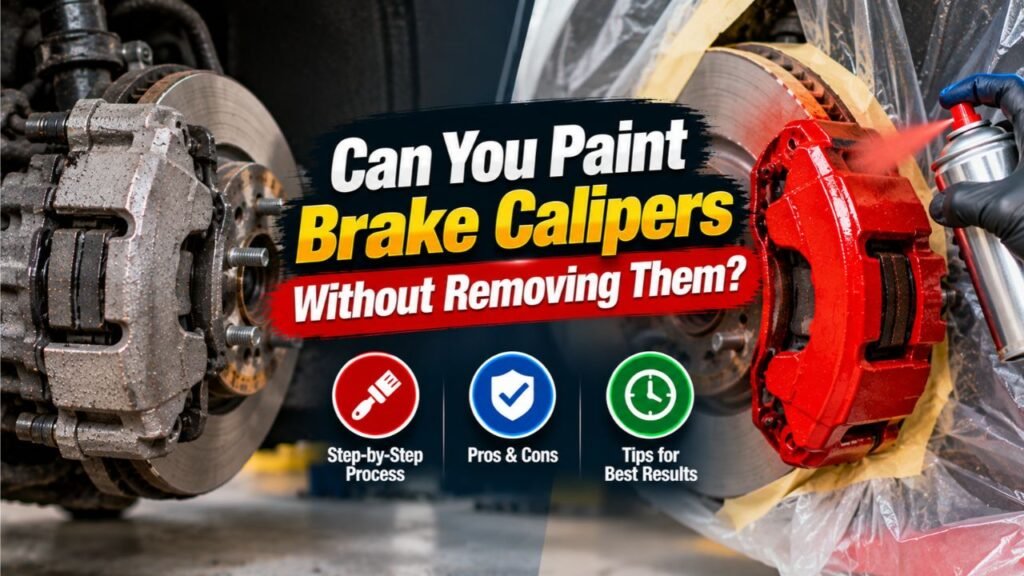
Yes. You can paint brake calipers without removing them from the vehicle if the calipers are in good mechanical condition and you carefully protect every functional brake surface.
The process usually involves removing the wheel, cleaning the exposed caliper thoroughly, masking nearby components, and applying a coating designed for brake-caliper temperatures.
You generally do not need to disconnect the brake hose.
Keeping the hydraulic system closed has several advantages:
- No brake fluid is intentionally released
- Brake bleeding is normally unnecessary
- There is less risk of introducing air into the hydraulic system
- The job requires fewer mechanical steps
- Reassembly is simpler
However, painting a mounted caliper gives you less access to the back, underside, and areas hidden by brackets.
For many daily-driven vehicles, that tradeoff is acceptable because the visible outer portion is usually what matters cosmetically.
Do You Need to Remove the Wheel?
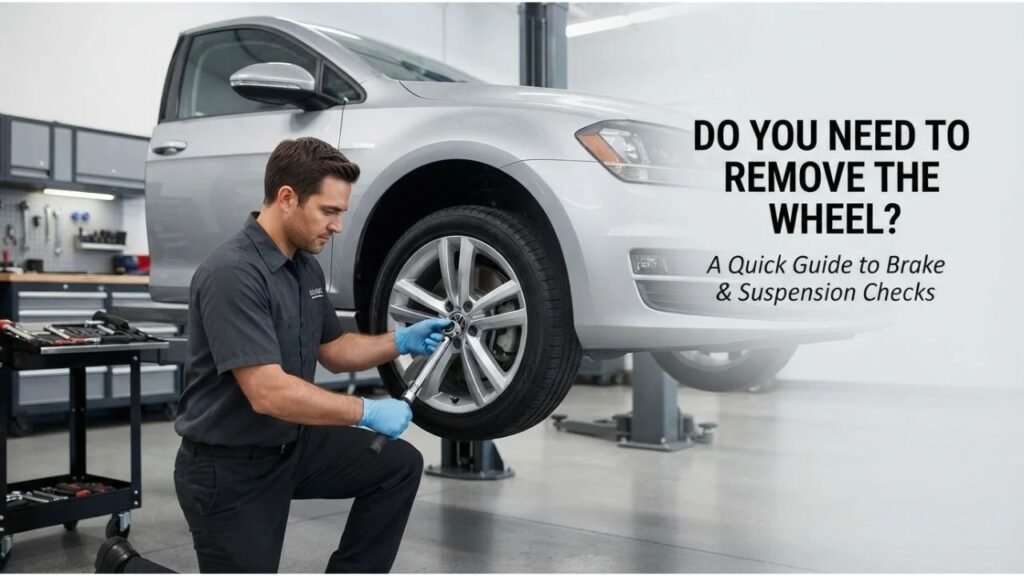
Yes.
Although the caliper itself can remain installed, the wheel must be removed to properly clean, mask, inspect, and paint the brake caliper.
Trying to spray paint through wheel spokes is not a good method.
Doing so can result in:
- Overspray on the wheel
- Paint on the rotor
- Poor surface preparation
- Uneven coverage
- Missed rust and dirt
- Contamination of brake components
Raise and support the vehicle using appropriate lifting points and jack stands or another manufacturer-approved support method. Never rely solely on a hydraulic floor jack while working around a wheel or brake assembly.
Should You Remove the Brake Pads Before Painting?
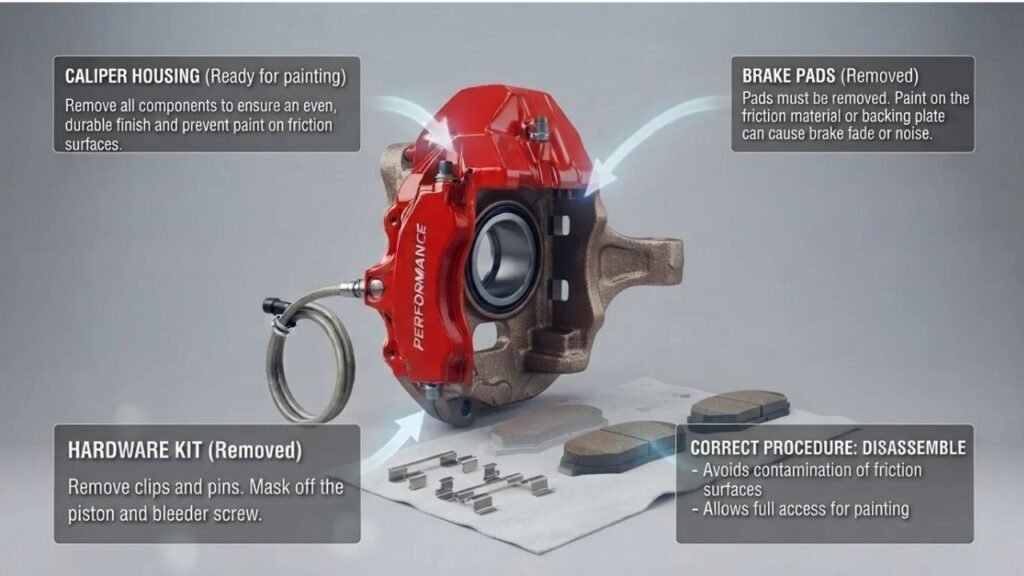
Not always.
You can leave the brake pads installed if they can be completely protected from paint and cleaning chemicals.
However, removing the pads can provide better access to certain parts of the caliper.
If you are unfamiliar with brake service, leaving the pads and caliper assembled may reduce the chance of incorrect reassembly.
Whichever method you choose, never allow paint onto the brake pad friction material.
Even a small amount of contamination can reduce braking performance.
What You Need to Paint Brake Calipers Without Removing Them
The exact supplies depend on whether you use brush-on or spray paint, but a typical project may require:
- Brake caliper paint
- Brake cleaner or another manufacturer-approved cleaner
- Wire brush
- Small detailing brush
- Shop towels
- Masking tape
- Plastic sheeting or masking paper
- Disposable gloves
- Eye protection
- Jack and jack stands
- Lug wrench
- Basic hand tools
- Fine abrasive pad or suitable sandpaper if needed
Choose a coating specifically intended for brake calipers or high-temperature automotive use.
Ordinary household paint may not tolerate the combination of heat, road contamination, brake dust, water, and automotive chemicals.
Brush-On vs. Spray Caliper Paint
Both types can work while the caliper remains mounted.
Brush-On Caliper Paint
Brush-on paint is often the easiest option for an in-place job because there is very little overspray.
Advantages include:
- Easier masking
- Better control in tight spaces
- Less risk of coating the rotor
- No airborne paint mist around suspension parts
The disadvantage is that brush marks may remain if the coating does not level smoothly.
Several thin coats usually look better than one thick coat.
Spray Caliper Paint
Spray paint can provide a smooth, uniform finish, but masking becomes much more important.
You need to protect surrounding areas such as:
- Rotor
- Pads
- Wheel hub
- Suspension
- Brake hose
- Fender area
- Wheel well
Spray overspray can travel farther than expected.
If you are painting calipers in place for the first time, brush-on caliper paint can be easier to control.
How to Paint Brake Calipers Without Removing Them
The key to a durable finish is not applying more paint. It is properly preparing the caliper first.
1. Park on a Safe, Level Surface
Work on a solid, level surface.
Apply the parking brake when appropriate for the axle you are servicing, follow the vehicle manufacturer’s lifting instructions, and use wheel chocks where needed.
If painting rear calipers with an integrated parking brake, understand the vehicle’s parking-brake system before beginning.
2. Loosen the Lug Nuts
Slightly loosen the wheel’s lug nuts before lifting the vehicle.
Do not fully remove them while the vehicle is still supporting its weight.
3. Raise and Support the Vehicle
Lift the vehicle at an approved jacking point.
Place it securely on appropriate jack stands.
Confirm that the vehicle is stable before removing the wheel.
4. Remove the Wheel
Remove the lug nuts and wheel.
You should now have direct access to the caliper, rotor, and surrounding brake components.
5. Inspect the Brake Caliper
Before painting, look for problems such as:
- Brake fluid leaks
- Torn piston boots
- Severe corrosion
- Damaged brake hoses
- Seized slider pins
- Uneven pad wear
- Loose components
Painting should not be used to hide a mechanical brake problem.
Repair or replace defective components before applying a cosmetic coating.
How to Clean Brake Calipers Before Painting
Surface preparation is one of the most important parts of the entire job.
Brake calipers accumulate:
- Brake dust
- Road dirt
- Rust
- Grease
- Oil
- Old coating
- Corrosion
Paint applied over contamination may peel or flake prematurely.
Remove Loose Dirt
Begin by removing loose debris with a brush.
Avoid aggressively disturbing brake dust unnecessarily.
Modern brake systems are generally asbestos-free, but older or unknown brake components should be handled cautiously. Do not use compressed air to blow brake dust around the workspace.
Remove Rust
Use a wire brush or suitable abrasive material to remove loose surface rust.
You do not necessarily need to grind the caliper to perfectly bright bare metal unless the paint manufacturer specifies that level of preparation.
Focus on removing:
- Flaking corrosion
- Loose coating
- Scale
- Unstable surface material
Stable, properly prepared metal provides a much better surface for paint.
Degrease the Surface
Use an appropriate cleaner to remove oil and contamination.
Allow the caliper to dry fully before applying paint.
Read the coating manufacturer’s instructions because some products specify particular cleaning and preparation procedures.
What Parts Should Be Masked Before Painting?
Correct masking is critical when the caliper stays on the vehicle.
Paint should be limited to suitable exterior caliper surfaces.
Protect the following areas carefully.
Brake Rotor
Do not paint the rotor’s friction surface.
Brake pads require clean rotor surfaces to generate predictable friction.
Cover the rotor using plastic, paper, or another suitable masking method.
Brake Pads
Do not get paint on the pad material.
If the pads remain installed, carefully mask all exposed pad areas.
Piston and Dust Boot
Avoid painting:
- Piston surfaces
- Rubber dust boots
- Piston seals
Paint can interfere with movement or damage rubber components depending on the coating chemistry.
Slider Pins and Boots
Floating brake calipers need their slide pins to move correctly.
Do not paint slider pins, rubber boots, or sliding contact areas.
Bleeder Screw
Do not cover the opening or functional portion of the bleeder screw.
The bleeder may need to be opened during future brake service.
Brake Hose and Fittings
Avoid painting the flexible brake hose and hydraulic fittings.
Paint can make future inspection more difficult and is unnecessary on these parts.
Brake Pad Hardware
Clips, springs, and pad contact points generally should not be coated unless the brake or coating manufacturer specifically permits it.
Paint can change clearances or interfere with pad movement.
Should You Paint Over Rust on Brake Calipers?
No. Loose or flaky rust should be removed before painting.
Paint does not permanently solve active corrosion underneath an unstable surface.
If you paint directly over heavy rust, the coating may eventually:
- Bubble
- Crack
- Flake
- Separate from the caliper
Light surface corrosion can usually be cleaned and prepared, but severely corroded calipers deserve closer inspection.
Deep corrosion around hydraulic components, bleeder screws, mounting points, or structural sections may indicate that replacement is more appropriate than cosmetic painting.
How Many Coats of Caliper Paint Should You Apply?
Follow the specific coating manufacturer’s instructions.
Many products perform best when applied in multiple thin coats rather than one heavy layer.
Thin coats generally:
- Dry more evenly
- Reduce runs
- Reduce sagging
- Produce better coverage
- Cure more predictably
Allow the recommended flash or drying time between coats.
Do not add another coat simply because the surface feels slightly tacky unless the product instructions permit it.
How Long Should Brake Caliper Paint Dry?
Drying and curing times vary considerably between products.
Some coatings may become touch-dry relatively quickly but require many hours or even longer before reaching full hardness.
There is an important difference between:
Dry to the touch: The surface no longer feels wet.
Ready for handling: The coating can tolerate limited contact during reassembly.
Fully cured: The coating has reached its intended final hardness and chemical resistance.
Always follow the manufacturer’s curing instructions.
Installing the wheel or driving too early may damage a finish that appears dry but has not fully cured.
Can You Paint All Four Calipers in One Day?
Often, yes, depending on:
- Paint system
- Number of coats
- Preparation needed
- Rust condition
- Drying requirements
- Available workspace
Preparation usually takes longer than the actual painting.
If the calipers have significant corrosion, expect cleaning and masking to consume much of the project time.
Do not rush curing simply to finish all four wheels faster.
Should You Paint One Caliper at a Time?
For beginners, working on one side or one caliper at a time can make the process easier to control.
This method reduces the chance of:
- Mixing hardware
- Leaving multiple areas exposed
- Forgetting how parts fit
- Rushing preparation
If you are only removing wheels and not disassembling the brakes, doing several calipers at once may be practical if the vehicle is supported safely.
Never support a vehicle in an unstable configuration simply to speed up the painting process.
Can You Spray Brake Calipers While They Are Still Installed?
Yes, but extensive masking is required.
Spray paint can easily reach the rotor and nearby suspension components.
Before spraying, cover everything that should not receive paint.
Use several controlled light passes rather than attempting complete coverage in one heavy spray.
Brush-on coating is often more convenient if you only want to paint the visible caliper exterior without removing it.
Can You Paint Brake Calipers Without Removing the Brake Line?
Yes.
In most in-place caliper painting projects, you do not need to disconnect the brake hose.
This is one of the biggest benefits of painting the caliper while mounted.
Leaving the brake hose connected means the hydraulic system remains closed, so brake bleeding is normally unnecessary.
If you completely remove the caliper and disconnect its hydraulic line, the system must be properly serviced and bled before driving.
Can You Unbolt the Caliper but Leave the Brake Hose Connected?
Sometimes this is a useful middle-ground approach.
A caliper can sometimes be unbolted from its bracket while remaining connected to the brake hose, giving you better access to hidden surfaces.
However, never let the caliper hang by the brake hose.
Support it using an appropriate hook or other secure method.
The flexible brake hose is not designed to support the weight of the caliper.
If you do not need additional access, leaving the caliper fully mounted is simpler.
Painting Calipers On the Car vs. Removing Them
Both methods have advantages.
| Painting Method | Advantages | Disadvantages |
| Caliper stays installed | Faster, no hydraulic disconnection, usually no bleeding | Limited access to hidden areas |
| Caliper partially unbolted | Better access while keeping brake line connected | More disassembly required |
| Caliper fully removed | Best access and preparation | Hydraulic system opened and bleeding required |
| Caliper disassembled for powder coating | Most complete refinishing potential | Requires major brake service and proper rebuilding |
For an ordinary cosmetic upgrade, leaving the caliper installed is often sufficient.
For restoration or professional refinishing, removal may produce better results.
When Should You Remove Brake Calipers Before Painting?
Removing the caliper may be worth the extra work when:
- Corrosion is extensive
- You want complete 360-degree coverage
- The caliper needs rebuilding
- You are replacing seals
- You are powder coating the caliper
- Several hidden areas need restoration
- You want a show-quality finish
Powder coating usually requires much more disassembly than ordinary brush-on or spray caliper paint because heat-sensitive seals, boots, and other components need proper handling.
Does Painting Brake Calipers Affect Braking Performance?
Properly painting suitable exterior caliper surfaces should not improve or reduce braking performance.
The paint color itself is cosmetic.
Problems occur when paint reaches functional components.
Paint contamination can interfere with:
- Brake pad friction
- Rotor friction
- Piston movement
- Caliper sliding
- Rubber seals and boots
- Brake hardware
Careful masking is therefore much more important than choosing the color.
What Is the Best Paint for Calipers?
Use a coating specifically designed for brake calipers or one whose manufacturer explicitly approves it for the application.
A suitable coating should tolerate:
- Brake-system temperatures
- Road debris
- Water
- Brake dust
- Automotive cleaning products
- Repeated heating and cooling
Popular color choices include:
- Red
- Black
- Yellow
- Blue
- Silver
- Gray
- Orange
Color has no effect on braking performance, so choose according to your vehicle’s body color, wheels, and preferred appearance.
Common Mistakes When Painting Calipers Without Removing Them
Not Cleaning the Caliper Enough
Poor preparation is a major cause of peeling paint.
Removing surface dirt is not enough if grease, loose rust, and brake dust remain underneath.
Painting the Rotor
Never intentionally paint the rotor friction surface.
If overspray accidentally reaches a braking surface, do not simply assume normal driving will remove it safely. Correct the contamination according to appropriate brake-service procedures before using the vehicle.
Painting Rubber Components
Rubber boots and seals need to remain flexible.
Keep paint away from them.
Applying Paint Too Thickly
Heavy coats are more likely to run, sag, and cure poorly.
Several thin coats are usually better.
Reinstalling the Wheel Too Soon
Fresh paint can easily be marked or damaged before it cures.
Follow the manufacturer’s drying and reassembly times.
Painting a Failing Caliper
A seized, leaking, or severely corroded caliper needs repair or replacement.
Paint will not correct a mechanical problem.
Is It Worth Painting Calipers Without Removing Them?
For many DIY owners, yes.
Painting the calipers while they remain mounted can provide most of the visible cosmetic benefit with considerably less mechanical work.
It works particularly well when:
- The calipers are mechanically healthy
- Rust is only superficial
- You want to refresh the visible surfaces
- You are using brush-on paint
- You do not need perfect backside coverage
If you expect a full show-car restoration or want every hidden surface refinished, complete removal will produce better access.
FAQs About Can You Paint Brake Calipers Without Removing Them
Can I Paint Brake Calipers Without Taking Them Off the Car?
Yes. Remove the wheel, thoroughly clean the caliper, mask all functional brake components, and paint only suitable exterior surfaces.
You usually do not need to disconnect the brake line for a cosmetic caliper-painting project.
Can You Paint Calipers Without Removing the Brake Pads?
Yes, provided the brake pads can be completely protected.
Do not allow paint or cleaning chemicals onto the pad friction material.
Removing the pads may provide better access, but it is not always necessary.
Do I Need to Bleed the Brakes After Painting Calipers?
Not if you leave the hydraulic brake line connected and do not open the system.
Brake bleeding becomes necessary when air is introduced into the hydraulic system, such as when a brake hose or hydraulic fitting is disconnected.
Can I Use Regular Spray Paint on Brake Calipers?
A purpose-made brake-caliper coating is the better choice.
Calipers experience high temperatures, water, road contamination, and brake dust that ordinary paint may not be designed to tolerate.
Can I Paint Rusty Brake Calipers Without Removing Them?
Yes, if the corrosion is only superficial and you can properly remove loose rust and prepare the surface.
Severe corrosion, leaks, seized components, or structural deterioration should be addressed mechanically before painting.
How Long Should I Wait Before Driving After Painting Brake Calipers?
Use the curing time specified by the paint manufacturer.
Do not assume paint is ready for driving simply because the surface feels dry. Some coatings require substantially longer to fully cure.
Is Brush-On Caliper Paint Better Than Spray Paint Without Removal?
For an installed caliper, brush-on paint is often easier because it produces almost no overspray and requires less extensive masking.
Spray coatings can create a smoother finish but demand much more careful protection of the rotor and surrounding components.
Can I Paint the Entire Brake Caliper?
No.
Only suitable exterior nonfunctional surfaces should be painted.
Keep coating away from the rotor, brake pads, piston surfaces, dust boots, slider pins, hydraulic openings, bleeder passages, hose connections, threads, and other functional contact areas.
Conclusion
So, can you paint brake calipers without removing them? Yes. For a normal cosmetic refresh, you can leave the calipers mounted, remove the wheels, thoroughly clean and prepare the exposed metal, carefully mask the braking components, and apply a suitable brake-caliper coating.
The method is faster and simpler than completely removing the calipers because the brake hoses can remain connected and the hydraulic system normally does not need to be bled.
The quality of the result depends mainly on preparation and masking. Keep paint completely away from pads, rotor friction surfaces, pistons, rubber boots, slider components, and hydraulic connections. If the caliper is leaking, seized, severely corroded, or needs rebuilding, repair the brake problem first and consider removing the caliper for proper service.