5 Best Duralast Brake Pads: Are Gold and Elite Worth Paying For
As an Amazon Associate, we earn from qualifying purchases made through links in this post, at no extra cost to you.
Buy the wrong brake pads and your car may still stop, but the job can bring squealing, extra dust, uneven wear, or a fit problem that sends you back to the parts counter. A pad set meant for the wrong axle or trim can also waste a weekend and leave the vehicle sitting on stands.
The first things to check are vehicle fit, axle position, and package coverage. A front pad cannot replace a rear pad, and a set for one trim may not fit another even when the year and model look similar.
A sensible brake-pad choice should also make the installation plan clear. Look for the number of pads, included hardware, friction material, and any warnings about trim, engine, police-package, or performance-brake differences.
Here is what this guide covers:
- How to confirm fitment before ordering.
- What ceramic material, shims, slots, and chamfers do.
- How to choose front, rear, or complete-axle coverage.
- How to bed new pads and avoid early noise or uneven wear.
Quick Picks
-
Best For Full-Size GM Trucks

Bendix Premium SBC1363 Ceramic Front Brake Pads
Ceramic construction and OE-spec fit help deliver consistent braking for drivers replacing pads on select GM vehicles.
-
Best For Quiet Rear Stops
BOSCH BC1451 QuietCast Premium Ceramic Disc Brake
Multilayer rubber shims and ceramic friction material help reduce noise and dust for select Honda and Acura owners.
Top 5 Duralast Brake Pads at a Glance
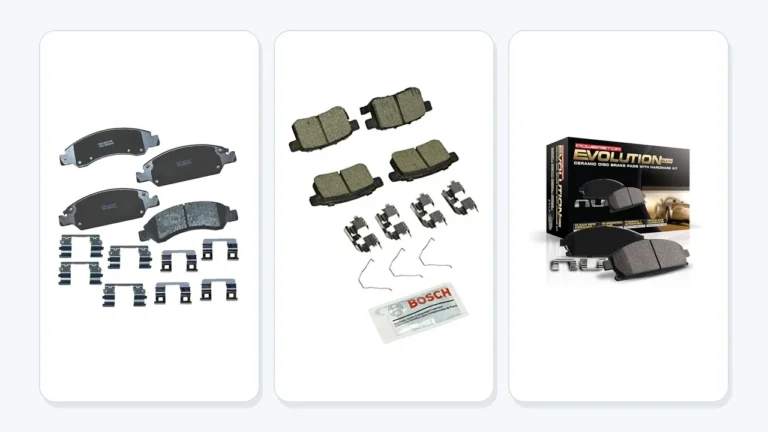
Bendix SBC1363 is the first place to look for many full-size Cadillac, Chevrolet, and GMC applications. Bosch BC1451 is aimed at select Honda and Acura rear brakes, while the remaining sets cover specific Toyota, Lexus, Nissan, Infiniti, Suzuki, and GM fitments. The biggest differences are vehicle coverage, front-versus-rear position, package size, and included hardware.
| Product image | Product name | Check product |
|---|---|---|
| 1 |
Bendix Premium SBC1363 Ceramic Front Brake Pads | Check Price |
| 2 |
BOSCH BC1451 QuietCast Premium Ceramic Disc Brake | Check Price |
3 |
SCITOO Ceramic Front Rear Disc Brake Pad | Check Price |
4 |
Ceramic Front Brake Pads Set Compatible with | Check Price |
5 |
8pc Ceramic Brake Pads Fit for 2007-2014 | Check Price |
5 Best Duralast Brake Pads: Detailed Reviews
When I chose the best duralast brake pads, I paid attention to fitment, axle position, pad material, noise-control parts, and package coverage. Those details help prevent the most common brake-buying mistakes, such as ordering rear pads for the front or assuming every trim uses the same shape.
The group includes ceramic sets for small cars, midsize sedans, SUVs, and full-size trucks. Looking at them side by side makes the choice less mysterious, because the right answer depends more on your vehicle and axle than on a dramatic product claim.
1. Bendix Premium SBC1363 Ceramic Front Brake Pads
Ceramic construction and OE-spec fit help deliver consistent braking for drivers replacing pads on select GM vehicles.
- ColorMetallic
- Size1 Count (Pack of 1)
- Release Date2017-08-07T00:00:01Z
- Number Of Items1
Bendix SBC1363 is a ceramic front brake-pad set for select Cadillac, Chevrolet, and GMC vehicles, including several Escalade, Silverado, Tahoe, Sierra, and Yukon applications.
OE-style fit
OE specifications are the original equipment measurements and design targets used for a vehicle’s factory parts. Bendix says the SBC1363 is designed and engineered to OE specifications for fit, form, and function, which means the pad is intended to match the original braking arrangement rather than require an alteration.
That matters because a pad that does not sit correctly in the caliper bracket can create uneven contact, noise, or installation trouble. The listing also gives OEM equivalent part number 22742382, which gives you another way to cross-check the part before ordering.
Ceramic friction material
Ceramic friction material is a brake-pad compound made to work against the rotor while managing heat and wear. Bendix describes the material as resistant to wear and corrosion and says the design aims to reduce brake fade, the loss of braking response after repeated heat buildup.
For a full-size SUV or pickup, consistent pedal response is more useful than a vague promise of extra stopping power. The application list is broad, though, so confirm the exact year, trim, and axle before placing an order.
The package information lists one count, not a clearly stated four-pad or eight-pad quantity. Check the listing details to confirm whether the package covers the complete front axle before buying.
Pros:
- OE-spec design, supports a factory-style fit.
- Ceramic material, helps manage wear and brake heat.
- OEM equivalent number, gives another fitment cross-check.
- Broad GM application list, helps cover many large vehicles.
- Front-pad designation, clarifies the intended axle position.
Cons:
- Package lists one count, so axle coverage needs confirmation.
- Fitment spans many trims, making exact vehicle checking essential.
- Front application does not replace rear brake pads.
Buy it if: you drive a listed Cadillac, Chevrolet, or GMC and want a front ceramic pad designed around OE specifications.
Skip it if: you need rear pads or a complete front-and-rear kit, because this Bendix front set does not clearly provide that coverage. For another fit, consider Bosch or Scitoo.
I’d pick Bendix SBC1363 when a full-size GM vehicle matches the application list and the buyer wants a straightforward OE-style replacement. The ceramic material and stated fit target make the choice sensible for normal street driving. I would double-check the package quantity and exact trim before ordering.
This Bendix brake-pad set suits a GM owner who is replacing the front axle and has confirmed the part number.
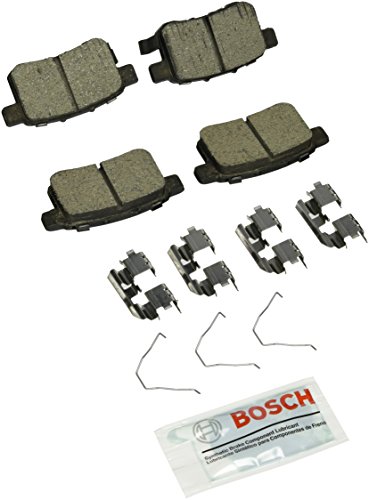
2. BOSCH BC1451 QuietCast Premium Ceramic Disc Brake
Multilayer rubber shims and ceramic friction material help reduce noise and dust for select Honda and Acura owners.
- ColorRear
- SizeBC1451
- Number Of Items1
- Noise[QUIETER STOPS] – The industry’s best pre-attached OE style multilayer rubber core shims ensure the highest qu
Bosch BC1451 is a rear ceramic disc brake-pad set for select Acura TSX and Honda Accord applications, with a focus on quiet operation and a ready-to-install package.
Multilayer rubber shims
A shim is a thin layer attached to the back of a brake pad that helps control vibration between the pad, piston, and caliper. Bosch uses pre-attached OE-style multilayer rubber-core shims, so the noise-control layer is already part of the pad assembly.
In daily driving, the shim can help reduce the small vibrations that become a squeal when the brakes are applied. That does not make noise impossible, since rotor condition, caliper movement, hardware, and bedding all matter, but the design addresses one common source.
Ceramic friction material and hardware
Bosch describes the QuietCast ceramic material as engineered for stopping performance, quiet operation, and low dust. Ceramic pads are often chosen by drivers who want cleaner wheels and less brake squeal during ordinary street use, though dust and noise still depend on the whole brake system.
The set is for one axle, meaning two wheels, and the listing says a hardware kit is included where available along with synthetic lubricant for sliding contact points. That can reduce the need to source small installation parts separately, but verify the contents for your exact package.
Bosch also lists a powder-coated backing plate to help resist rust and corrosion, plus slots and chamfers for fit and noise control. The fit checker matters because the listing warns that trim and engine can affect compatibility.
Pros:
- Rear-axle set, clearly identifies the intended wheel position.
- Rubber-core shims, help limit vibration-related squeal.
- Ceramic material, supports quiet and low-dust street use.
- Hardware and lubricant, may simplify the installation plan.
- Powder-coated backing plate, helps resist rust and corrosion.
Cons:
- Fits select Honda and Acura applications only.
- Trim and engine differences may change compatibility.
- Hardware is stated as included where available.
Buy it if: you have a compatible Honda Accord or Acura TSX and want rear ceramic pads with attached shims and possible hardware support.
Skip it if: your vehicle needs front pads or uses a different rear brake shape, because the Bosch rear set is limited to listed applications. Bendix and Scitoo are worth a closer look instead.
What I like here is the clear focus on rear-axle fit and noise control. Bosch BC1451 earns its rank because the attached shims, ceramic material, and possible hardware reduce several small installation decisions for a beginner. Check the exact year, engine, trim, and package contents before buying.
This Bosch brake-pad set is the practical choice for a matching Honda or Acura rear axle where quiet operation matters.
3. SCITOO Ceramic Front Rear Disc Brake Pad
The catalog lists COMPATIBLE VEHICLES – ATD1222C,D1222-8331 308.12120,EHT1212H,D1212-8332 Ceramic disc brake pad kit for 2013 20. Compare fit and care needs before choosing.
- SizeFront D1222 & Rear D1212
- Number Of Items1
- WeightNot listed; check details
- DimensionsNot listed; check details
SCITOO D1222/D1212 is an eight-piece ceramic front-and-rear brake-pad set for selected Toyota Camry, Toyota Avalon, Lexus ES300h, and Lexus ES350 applications.
Front and rear coverage
The most useful feature here is the stated combination of front D1222 and rear D1212 pads. Front and rear pads have different shapes and jobs, so a kit that names both positions can cover the whole vehicle rather than only one axle.
The eight-piece count matches four wheels when the listed application is correct. That can save a second order, but it also raises the cost of a fitment mistake, so match the vehicle year, model, and part references carefully before opening the package.
Scorch friction process
A scorch process treats the friction surface before installation to help shorten the early break-in period. SCITOO says the process helps lower break-in time and produce a more consistent friction characteristic over the pad’s service life.
For a beginner, that means the new pads may reach their normal feel with less waiting than an untreated surface, though proper bedding still matters. New pads should not be judged by one short stop, and the rotor condition still affects the result.
Gasket buffer
The listing describes a gasket between the caliper piston and pad back plate that helps absorb vibration. This is another small noise-control detail, similar in purpose to a cushion between two hard pieces that might otherwise chatter.
SCITOO also describes the set as a direct factory replacement without modifications and ready to install out of the box. Verify that the vehicle matches before relying on that claim, since direct fit depends on the exact brake configuration.
Pros:
- Eight-piece package, covers front and rear positions.
- D1222 and D1212 references, clarify pad placement.
- Scorch friction process, may shorten early break-in.
- Gasket buffer, helps absorb pad vibration.
- Direct replacement design, avoids planned modifications.
Cons:
- Fits a defined Toyota and Lexus application range.
- A wrong fitment affects both axles in the package.
- Rotor condition and bedding still influence brake feel.
Buy it if: you have a listed Camry, Avalon, or Lexus ES and want one ceramic package for both front and rear axles.
Skip it if: your vehicle uses different pad numbers or you only need one axle, because an eight-piece kit may be more coverage than necessary. If those trade-offs rule it out, Bendix or Bosch may suit you better.
I’d choose SCITOO D1222/D1212 when the vehicle match is exact and the goal is to refresh both axles at once. The front-and-rear labeling is helpful for a buyer who does not want to sort separate sets. I would still verify the D1222 and D1212 references against the vehicle before purchase.
This SCITOO set suits a Toyota or Lexus owner planning a complete pad replacement.
4. Ceramic Front Brake Pads Set Compatible with
The catalog lists – COMPATIBLE WITH NISSAN:Front Brake Pads For Nissan Altima 2013(Coupe Models)/Altima 2007 – 2012/ Altima 2005. Compare fit and care needs before choosing.
- ColorHZ815
- Number Of Items1
- WeightNot listed; check details
- DimensionsNot listed; check details
HZ815 Ceramic Pads are front ceramic brake pads for a wide range of Nissan, Infiniti, and Suzuki applications, with hardware included according to the listing.
Broad vehicle coverage
The application list includes several Nissan Altima, Cube, Juke, Maxima, Sentra, Versa, and 350Z versions, plus select Infiniti and Suzuki SX4 vehicles. A broad list can be useful when your vehicle is common, but it also means small exceptions deserve attention.
The listing calls out exclusions such as Nissan Juke Nismo RS models, 350Z vehicles with Brembo brakes, and certain Altima versions. Those notes are not decoration. A performance brake package can use a different pad shape, so the ordinary application range may not apply.
Ceramic compound and heat handling
The ceramic compound combines ceramic material with bonding agents, resins, and small amounts of copper or other metallic fibers, according to the listing. These ingredients are intended to create friction while helping move heat away from the contact area.
In normal driving, that design can support a smooth pedal feel across a range of temperatures. The claim does not remove the need to inspect the rotor, caliper, and brake fluid, because pads are only one part of the stopping system.
Shims, slots, and chamfers
Chamfers are angled edges on a pad, while slots are grooves cut into the friction surface. Along with shims, these features can help manage vibration, edge contact, and noise during braking.
The listing says the set includes hardware and is designed as an economical replacement. Confirm the hardware contents and the exact front application before beginning the job, especially if the existing clips are rusty or damaged.
Pros:
- Wide Nissan application list, covers many common vehicles.
- Infiniti and Suzuki coverage, helps owners of listed versions.
- Ceramic compound, supports consistent friction across temperatures.
- Shims, slots, and chamfers, address common noise sources.
- Hardware listed as included, may reduce extra parts shopping.
Cons:
- Several trim and brake-package exclusions apply.
- Front-only coverage does not refresh rear brakes.
- Exact application checking is essential across the broad list.
Buy it if: you own a listed Nissan, Infiniti, or Suzuki without an excluded brake package and need front ceramic pads with hardware.
Skip it if: your vehicle has Brembo brakes or an excluded performance trim, because the listed pad shape may not match your caliper.
HZ815 makes sense for a buyer whose vehicle falls cleanly inside the long application list. The useful distinction is not a flashy claim, but the combination of ceramic material, noise-control features, and stated hardware. I would spend extra time checking exclusions because broad compatibility lists can hide important trim differences.
This front pad set is best for a standard Nissan, Infiniti, or Suzuki application that has been confirmed first.
5. 8pc Ceramic Brake Pads Fit for 2007-2014
The catalog lists For 2007-2014 Cadillac Escalade, For 2007-2014 Cadillac Escalade ESV, For 2007-2013 Cadillac Escalade EXT, For. Compare fit and care needs before choosing.
- Number Of Items8
- WeightNot listed; check details
- DimensionsNot listed; check details
- MaterialNot listed; check details
8pc Escalade Pads are a ceramic front-and-rear set for selected Cadillac Escalade, Chevrolet, and GMC full-size vehicles from several 2007 through 2014 applications.
Eight-piece package
An eight-piece brake-pad package normally represents pads for both front wheels and both rear wheels, and this listing specifically says the package includes eight front and rear pads. That is useful when you plan a complete pad refresh instead of a single-axle repair.
The coverage includes many Escalade, Avalanche, Silverado, Suburban, Tahoe, Sierra, Yukon, and Yukon XL versions. The listing also identifies a Tahoe police-package exception, so do not assume a regular Tahoe application fits every fleet or special-service vehicle.
Part-number cross-checking
The set lists D1092 and D1194 along with several related reference numbers. A cross-reference number is a part number used to compare a replacement pad with the shape or application of another cataloged part.
Using those numbers alongside the vehicle details gives you two checks instead of one. The best practice is to match the vehicle, axle, and part reference together, since a vehicle name alone may cover multiple brake systems.
Ceramic compound
The listing describes a low-dust, wear-resistant ceramic compound for the front and rear pads. Low dust can help keep wheels cleaner, while wear resistance is meant to support longer service, though actual life depends on traffic, load, rotors, driving style, and maintenance.
The set is described as a direct replacement kit and includes all eight pads. That is convenient for a full job, but a complete kit is not the right purchase if only one axle needs service or if your vehicle uses a different brake package.
Pros:
- Eight-pad package, covers front and rear axles.
- Broad GM and Cadillac application list.
- D1092 and D1194 references, support fitment checking.
- Ceramic compound, targets lower dust and wear.
- Complete replacement kit, reduces the need for separate sets.
Cons:
- Police-package Tahoe vehicles are excluded.
- Full-vehicle coverage may exceed a one-axle repair.
- Exact images, part numbers, and vehicle fit must match.
Buy it if: you have a listed GM or Cadillac vehicle and want ceramic pads for both axles in one package.
Skip it if: you only need front or rear pads, because an eight-piece set may leave you paying for coverage you do not need.
I’d consider 8pc Escalade Pads for a confirmed full-size GM brake refresh where both axles need new pads. The package size is the main reason for its rank, since it can simplify a complete job. I would carefully check the police-package warning, part numbers, and vehicle year before buying.
This set suits an owner who needs front and rear coverage rather than a single replacement axle.
How to Choose the Best Duralast Brake Pads
The best duralast brake pads for your vehicle are the pads that match the exact year, trim, axle, and brake package. Start with fitment, then choose the coverage and material that match the repair you actually plan to make.
Confirm the vehicle first
Vehicle fit is the first filter because pad shape varies by year, engine, trim, axle, and brake package. Enter the full vehicle details in the fit checker, then read every qualifier note instead of stopping at a green match message.
Keep the year, make, model, engine size, trim, and drive type nearby. A 350Z with Brembo brakes, a Tahoe with a police package, or a Juke Nismo RS may use different hardware from the ordinary version.
Check front versus rear
Front pads and rear pads are not interchangeable. Front brakes usually handle a larger share of the stopping work, while rear brakes use their own pad shape, bracket, and hardware.
Look for words such as front, rear, D1222, D1212, D1092, or D1194. If the listing names one axle only, plan on replacing that axle only unless the package clearly says it includes both.
Decide between one axle and both
A one-axle set usually makes sense when the other axle has plenty of pad thickness and even wear. A front-and-rear kit makes sense when both axles need service at the same time and the package matches both positions.
Do not buy eight pads simply because the price looks attractive. Extra pads can sit unused, and a complete kit still does not solve a fitment mismatch.
Understand ceramic pads
Ceramic pads use a ceramic-based friction compound that works against the rotor. Drivers often choose them for quiet street manners and lower visible dust, but no pad material can overcome a warped rotor, seized caliper, or poor installation.
Ceramic is a sensible starting point for many daily-driven cars and SUVs. For towing, racing, heavy commercial use, or unusual factory brake packages, follow the vehicle maker’s requirements and ask a qualified brake technician before changing materials.
Look at noise-control parts
Shims, slots, and chamfers are small design details that help control vibration and edge contact. A shim cushions the pad backing, a slot gives the friction surface a relief channel, and a chamfer angles the pad edge.
These parts can reduce squeal, but they are not magic. Clean contact points, free-moving slide pins, correct clips, smooth rotors, and proper bedding all affect noise.
Check the package contents
Read the quantity and hardware notes before ordering. A package may contain one listed count, two pads for one axle, four pads for one vehicle position, or eight pads for front and rear coverage.
Also check whether clips, shims, lubricant, and wear sensors are included. Never assume a hardware kit is included just because the words ready to install appear in the title.
Match the pad to your driving
Normal commuting, school runs, and highway driving place different demands on brakes than mountain roads, towing, or repeated heavy loads. Pick a pad that matches the vehicle’s factory setup unless a qualified technician recommends another arrangement.
If the brake pedal feels soft, the vehicle pulls, the steering wheel shakes during braking, or the rotor is deeply scored, changing pads alone may not solve the problem. A brake inspection comes before a shopping decision.
Compare other ceramic brands carefully
Brand names help you narrow the field, but fitment and application still come first. Drivers who are also comparing PowerStop brake pad kits should use the same checks for axle, trim, hardware, and intended driving.
A quiet, low-dust goal may lead another buyer toward Akebono ceramic pads, while a heavy-duty application may call for a different friction formula. Those comparisons are useful only after the exact vehicle configuration is known.
How to Use Brake Pads for the Best Results
New brake pads need a careful installation and break-in period. The basic sequence is inspect, install correctly, bed the pads with controlled stops, and pay attention to changes in pedal feel or noise.
- Confirm the pad shape and axle before removing the old parts. Keep the new pads next to the old pads so a wrong shape is caught early.
- Inspect the rotor for deep grooves, blue heat marks, cracks, or a sharp outer lip. A damaged rotor can shorten pad life and create noise.
- Clean the bracket contact points and confirm the caliper slide pins move freely. Rust or a stuck pin can make one pad wear faster than the other.
- Install clips, shims, and lubricant only where the instructions call for them. Never put grease on the friction surface or rotor.
- Pump the brake pedal slowly before driving until the pedal feels firm. The caliper piston must move back into contact with the new pads.
- Choose a quiet road and make several moderate stops from a safe speed. Leave enough space between stops so the brakes can shed heat.
- Avoid holding the pedal down hard while the brakes are very hot. A long stop can leave uneven material on the rotor.
- Let the brakes cool, then listen and feel for changes during normal driving. A soft pedal, pulling, grinding, or severe vibration calls for immediate inspection.
Bedding instructions differ by pad maker, so follow the directions that come with the set when they are available. Do not treat a few hard stops as a substitute for a controlled break-in routine.
How to Make Your Brake Pads Last Longer
Brake pads last longer when the caliper releases fully, the rotor stays in good condition, and the vehicle is not driven through repeated unnecessary hard stops. Simple inspections catch many problems before they ruin a fresh set.
Keep the wheels and brake area free of thick road grime during routine washing, but do not spray cold water onto very hot brakes. Sudden temperature changes can stress hot components, and water alone cannot replace a proper inspection.
Have the brake system checked when the tires are rotated or serviced. Ask for pad thickness, inner-versus-outer wear, rotor condition, slide-pin movement, and brake-fluid condition rather than looking at only the outside pad.
Replace pads by the axle when the service plan calls for an axle pair. Mixing a new pad on one side with a worn pad on the other can create uneven braking and is not a sensible shortcut.
Avoid resting your foot on the brake pedal during long descents. Use a lower gear where appropriate, leave more following distance, and brake in smooth applications instead of dragging the pedal for miles.
Keep the vehicle within its rated load and towing limits. Extra weight creates more heat, and heat is one of the main reasons brake parts wear faster during repeated stops.
Store unused pads in a clean, dry place. Keep friction surfaces away from oil, grease, coolant, and loose hardware, because contamination can make a pad unsafe to install.
Common Mistakes to Avoid When Buying and Using Brake Pads
Brake-pad mistakes usually come from rushed fitment checks or treating the pad as an isolated part. Each error has a simple prevention step.
- Ordering by vehicle name only: A single model can use several brake packages. Match year, trim, axle, and part number.
- Confusing front and rear pads: The shapes and hardware differ. Read the axle label before adding the set to your cart.
- Assuming ceramic means silent: Noise also depends on rotors, clips, slide pins, and bedding. Inspect the whole brake assembly.
- Ignoring package quantity: One count may not mean a complete vehicle set. Confirm whether the package covers two wheels, one axle, or both axles.
- Skipping the trim exclusions: Performance and police packages can use different brakes. Read exception notes beside the application list.
- Reusing damaged clips: Rusted or weak clips can prevent proper pad movement. Replace them when the brake job calls for new hardware.
- Greasing the friction surface: Lubricant belongs only on specified sliding contact points. Keep grease away from the pad face and rotor.
- Driving hard immediately after installation: Fresh pads need controlled bedding. Use moderate stops and allow cooling between applications.
- Ignoring a soft pedal: A soft pedal can signal air, fluid trouble, or another brake fault. Stop driving normally and have the system inspected.
A useful comparison is the Wagner range, since Wagner brake pad choices also span different vehicle uses and friction designs. The same rule applies: start with the exact application, then weigh noise, dust, hardware, and driving conditions.
How to Set Up Brake Pads
Brake-pad replacement is a safety repair, not a casual accessory installation. If you do not have secure jack stands, the right tools, and a clear service procedure for your vehicle, use a qualified brake technician.
- Park on a level surface and secure the vehicle before lifting it. Never rely on a jack alone while working near a wheel.
- Remove the wheel and photograph the old pad and hardware. The photo helps you remember clip direction and shim placement.
- Compare the new pad with the removed pad. Check shape, wear-indicator position, holes, ears, and axle designation.
- Inspect the rotor and caliper before fitting the new pads. Stop if the rotor is cracked, deeply damaged, or below its service limit.
- Clean the bracket and install new clips if included or required. Rust under a clip can make the pad bind.
- Retract the caliper piston with the correct tool and watch the brake-fluid reservoir. Do not force the piston if the vehicle uses an electronic parking brake system that requires a service mode.
- Apply lubricant only to the listed metal-to-metal contact points. Keep the friction face, rotor, and rubber parts clean.
- Reassemble the caliper and wheel, then tighten fasteners to the vehicle’s stated torque. Do not guess at wheel or caliper fastener torque.
- Pump the pedal until firm before moving the vehicle. A low pedal after installation means the brake system needs attention.
- Perform a controlled bedding drive in a safe area. Stop the job if the vehicle pulls, grinds, shakes severely, or fails to stop normally.
Some vehicles require electronic parking-brake service mode or a scan tool before rear-pad work. Check the vehicle service procedure before pushing a rear piston, because forcing the wrong mechanism can cause damage.
Common Questions About Duralast Brake Pads
Are ceramic brake pads good for daily driving?
Ceramic brake pads are often a good choice for daily driving because they are designed for normal street braking and can produce less visible dust than some other compounds. The right choice still depends on the vehicle’s factory setup, axle, rotor condition, load, and fitment.
How many brake pads come in a set?
A brake-pad set may contain two pads for one wheel position, four pads for one axle, or eight pads for front and rear coverage. Read the quantity and axle wording carefully, because a listed count of one does not always explain the complete physical coverage in plain language.
Do front and rear brake pads use the same shape?
Front and rear brake pads usually use different shapes, hardware, and part numbers. Front brakes often handle more of the stopping force, while rear systems may use smaller pads or a parking-brake mechanism. Always order by axle rather than assuming one set fits all four wheels.
How long do ceramic brake pads last?
Ceramic brake-pad life varies with traffic, vehicle weight, hills, towing, rotor condition, caliper movement, and driving habits. A fixed mileage promise would be misleading. Inspect pad thickness and wear pattern during tire service instead of waiting for squealing or grinding.
Should brake pads include hardware?
Some brake-pad sets include clips, shims, or lubricant, while others provide pads only. Hardware is useful when the original clips are rusty or weak, but the package wording may include exceptions such as where available. Confirm the contents before starting the repair.
Can new brake pads squeak during break-in?
New brake pads can make temporary noise during break-in, but loud or continuing squeal can also point to dirty contact points, damaged hardware, poor bedding, rotor problems, or a fit issue. Grinding, pulling, severe vibration, or a soft pedal should receive prompt inspection rather than more driving.
Make the Fitment Check Before You Buy
The next step is simple: write down your vehicle’s year, make, model, trim, engine, axle, and any special brake package, then match those details to the pad application and quantity. If any detail remains uncertain, pause the order and have the vehicle identification or existing pad number checked before starting the job.