How to Take Parking Brake Off: Hand, Foot, and Electric Types
To take a parking brake off, hold the regular brake pedal firmly and release the parking-brake control fitted to your vehicle. For a handbrake, lift the lever slightly, press its button, and lower it fully. For a foot-operated brake, use the release handle or press the pedal again, depending on the design. For an electric parking brake, switch the vehicle on, hold the brake pedal, and operate its release switch as directed in the owner’s manual.
The important part is keeping the vehicle from rolling while the parking brake releases. This is especially important on a hill, where the car can move as soon as the holding force disappears. The parking-brake warning light should normally go out, but a light alone cannot tell you whether a stuck wheel has actually released.
This guide explains every common release method in detailed steps, how to confirm the brake is off, what automatic release means, and what to do if a lever, pedal, or electronic system refuses to release. It also covers conditions in which driving can damage the brakes.
How to Take Parking Brake Off: Step-by-Step Instructions
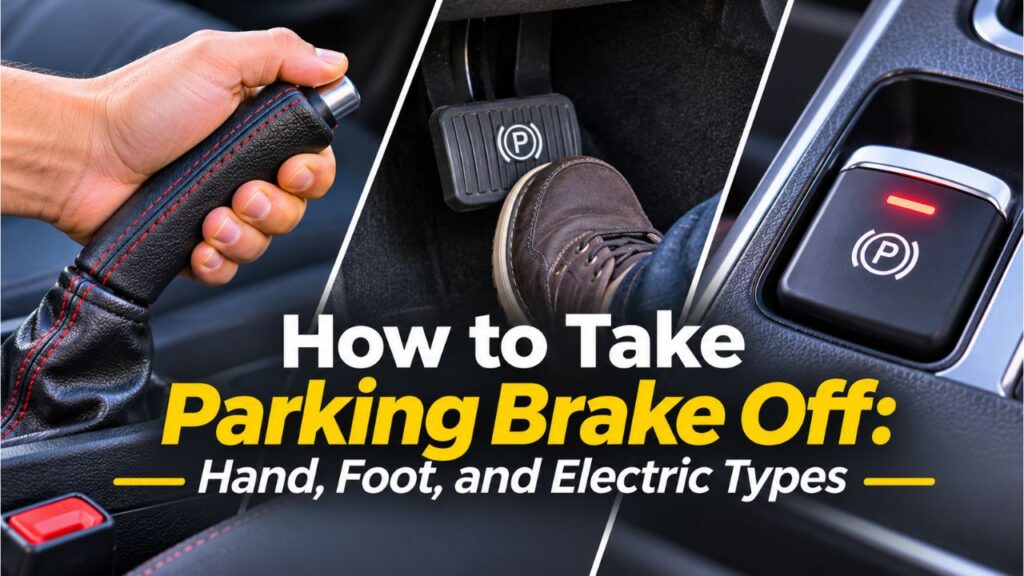
The first three steps apply to every vehicle. Choose only the release method that matches your car in Steps 04–07, then continue with the final checks. Do not operate every control in sequence; a vehicle normally has one parking-brake control type.
Step 01: Keep the Vehicle Stationary Before Touching the Control
Sit in the driver’s seat, close the door, and make sure nobody is standing in the vehicle’s path. If you are parked on a slope, be especially careful: releasing the parking brake removes one of the restraints preventing the car from rolling. Keep the transmission in Park if you have an automatic and are not yet ready to depart.
For a manual-transmission car, do not move the shift lever into neutral and release the parking brake on a hill unless you are controlling the vehicle with the service brake and are prepared to drive. Check your owner’s manual for the correct starting procedure. Never release the brake from outside the vehicle to see whether it rolls.
Step 02: Press and Hold the Regular Brake Pedal
Put your right foot on the main brake pedal and apply firm, steady pressure. The service brakes are what keep the wheels stopped while you take the parking brake off. Do not rely on the transmission alone, particularly on an incline.
Keep pressing the pedal until you have released the parking brake, checked its indicator, and selected the appropriate driving gear. If the regular pedal is unusually soft, sinks toward the floor, or cannot hold the car, stop. A possible hydraulic brake problem must be addressed before trying to drive away.
Step 03: Identify the Parking Brake Control in Your Car
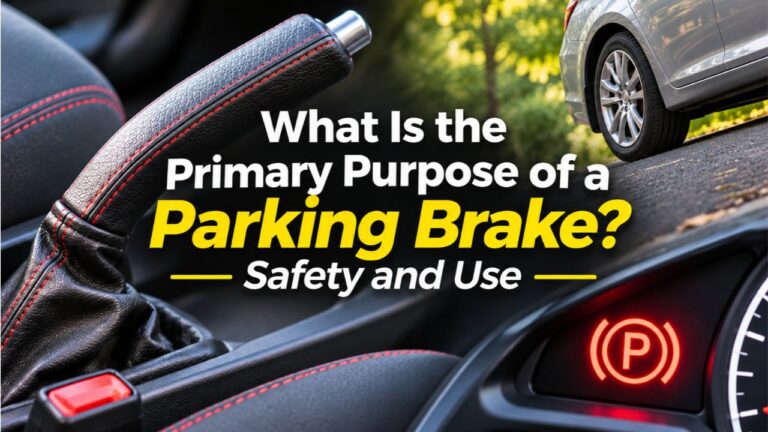
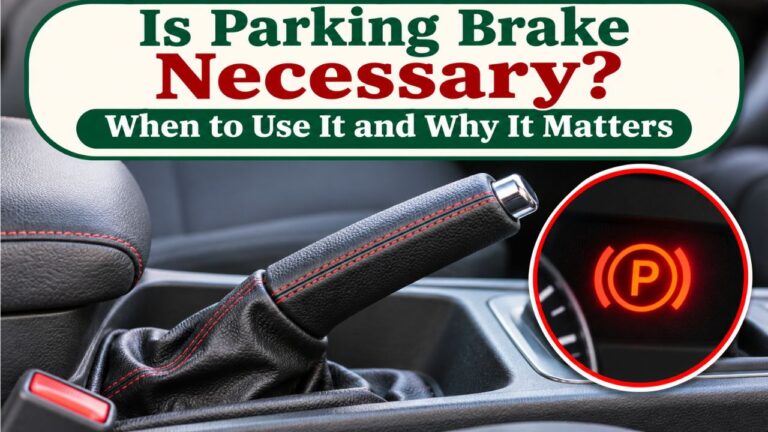
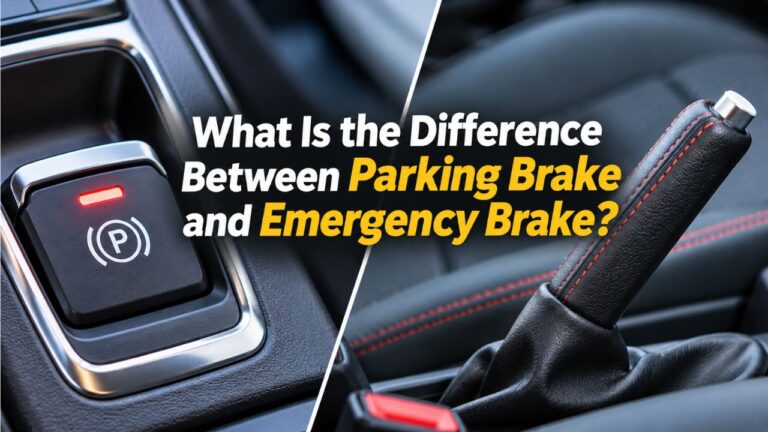
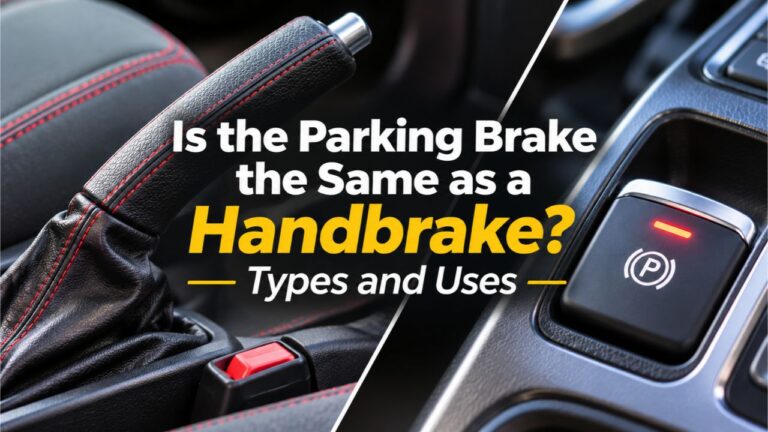
Look for a hand lever between the front seats, a separate pedal near the driver’s left foot, or a small switch marked with a P inside a circle. Some older vehicles have a release handle below the dashboard, while a few parking brakes use a push-on, push-off foot pedal.
Check the owner’s manual if the control is unfamiliar. The brake-hold or Auto Hold button is not automatically the same as the parking-brake switch, and shifting an automatic transmission out of Park does not release every parking brake. Once you identify the type, follow the matching step below.
Step 04: Release a Hand-Operated Parking Brake Lever
Keep your foot on the regular brake. Hold the handbrake lever securely and lift it just a little to take pressure off the locking ratchet. Press and hold the button at the end of the lever, then lower the lever completely to its resting position. Release the button after the lever is down.
Do not push harder on the button while trying to lower a tightly loaded lever; lifting it slightly first usually relieves the ratchet. Toyota’s parking-brake operating guide describes this lift-button-lower sequence for lever-operated systems. If the lever will not move even with the correct technique, do not force it or drive with it partly raised.
Step 05: Release a Push-On, Push-Off Parking Brake Pedal
Some foot-operated parking brakes use the same pedal for application and release. With your right foot holding the main brake, press the smaller parking-brake pedal down firmly with your left foot. The latch should disengage, allowing the pedal to return upward to its normal resting position.
Watch the pedal return instead of assuming the second push worked. If it stays near the floor, the mechanism may still be latched or jammed. Not every foot pedal releases this way; using the wrong method can damage a latch. If your vehicle has a separate release handle, use Step 06 rather than repeatedly stamping on the pedal.
Step 06: Release a Foot Parking Brake With a Separate Handle
In another common design, the small parking-brake pedal stays depressed until you pull a release handle under the dashboard, usually near the driver’s lower left side. With your right foot still holding the regular brake, locate that handle and pull it as instructed. The parking-brake pedal should spring back upward.
Ford’s E-Series owner’s manual parking-brake instructions specify pulling a release lever for its foot-operated configuration. Other models use different controls. If the pedal does not rise, avoid yanking the handle repeatedly; a cable, return spring, or mechanism may be sticking.
Step 07: Release an Electric Parking Brake Using Its Switch
For an electric parking brake (EPB), place the ignition or vehicle power mode in the state required by the manufacturer, usually ON. Keep the regular brake pedal depressed. Find the parking-brake switch and press it in the release direction, commonly downward, until the indicator turns off. Some systems make a brief motor sound near the rear brakes.
Toyota’s electric parking-brake owner instructions specify pressing the switch while holding the brake pedal and checking that the parking-brake indicator goes out. Do not assume pulling the switch releases it; on many vehicles, pulling applies the parking brake. A warning message or flashing indicator calls for model-specific troubleshooting.
Step 08: Understand Automatic Electric Parking Brake Release
Some cars can release the EPB automatically when the driver selects a gear and moves off. Depending on the model, automatic release may require the driver’s door to be closed, the seat belt fastened, the engine or drive system ready, and no detected parking-brake faults. Other vehicles link release to selecting a position other than Park.
Do not press the accelerator hard to overcome an engaged brake. If the system does not release normally, keep your foot on the brake pedal and try the approved manual switch procedure. Automatic release is a convenience feature, not a reason to ignore an illuminated warning light or unexpected resistance.
Step 09: Check the Parking Brake Warning Light
After releasing the control, look at the instrument cluster. A red parking-brake symbol or brake warning indicator should normally go out when the brake is fully released and the vehicle is in the applicable operating mode. Some systems also have an indicator directly on the electric parking-brake switch.
If the light remains illuminated, first confirm that the lever or pedal has fully returned or that the electric switch completed its command. A brake warning light can also indicate low brake fluid or another brake-system fault. Do not assume the sensor is defective just because the parking-brake control looks released.
Step 10: Confirm the Brake Has Actually Released
A lowered hand lever, raised foot pedal, or extinguished switch light is encouraging, but it does not prove the wheel brakes are free. If the vehicle previously had no problem, the controls work normally, and there are no warning messages or signs of dragging, prepare to move away with normal care.
If the car feels held back, will not move normally, or makes an unusual scraping noise, stop immediately. Do not increase engine power to push through resistance. A cable may remain tensioned, parking-brake shoes may be seized, or an electric caliper may not have retracted despite the driver’s command.
Step 11: Release the Service Brake Only When Ready to Move
After confirming that the parking brake has released, select the correct driving gear while continuing to hold the regular brake. On a hill, make sure the path is clear and use the vehicle’s normal hill-start procedure before easing off the service brake. A manual-transmission driver should coordinate clutch and throttle according to the vehicle’s instructions.
Do not release both brakes while still deciding what gear to select. On steep slopes, vehicle movement can begin quickly. If you decide to remain parked, reapply the parking brake and secure the transmission rather than leaving the car supported only by your foot on the brake pedal.
Step 12: Stop if the Parking Brake Is Still Applied
If the lever, pedal, or switch refuses to release, keep the vehicle stationary. Recheck the owner’s manual for the control type and any dashboard messages, but do not force a linkage, disconnect cables, or bypass an electric actuator. A stuck parking brake may need repair at the wheel, not at the driver’s control.
Arrange qualified inspection and an appropriate tow or recovery method if the brake remains engaged. Tell the recovery operator which wheel or axle appears locked, if known, so the vehicle can be moved without dragging restrained wheels along the ground.
How to Tell Whether the Parking Brake Is Off
A successful release should leave the control in its normal disengaged position and, where fitted, turn off the parking-brake indicator. There should be no warning message, grinding, unusual pulling, or strong resistance when the vehicle starts moving normally.
| Parking Brake Type | Normal Release Sign | Reason to Stop |
| Hand lever | Lever rests fully down | Lever remains raised or wheels drag |
| Foot pedal | Pedal returns to released position | Pedal sticks down or release handle jams |
| Electric switch | Indicator goes out after successful command | Flashing light, fault message, or no actuator response |
Do not judge release by a click alone. A mechanical latch can release while a cable remains seized farther down the system. Likewise, an EPB motor sound does not guarantee that both rear calipers have freed correctly.
Why a Parking Brake Will Not Come Off
Rusted or Frozen Parking Brake Cable
Water, road salt, and age can corrode a cable inside its protective sleeve. The driver may release the lever, but the cable can remain tight at the rear brake. Freezing moisture can create a similar problem in winter. Never use an open flame, boiling water, or forceful acceleration to free the brakes. A damaged cable may require replacement.
Stuck Rear Caliper or Parking Brake Shoes
Some cars use a parking-brake mechanism inside a rear disc caliper; others use small shoes inside the rotor hat or a traditional rear drum. Rust, damaged springs, worn hardware, or a seized caliper lever can keep the brake applied after the cabin control returns. These are wheel-end repairs. Do not loosen brake components while the vehicle is resting unsecured on a jack.
Electric Parking Brake Power or Motor Fault
An EPB may fail to release if the 12-volt battery is weak, the actuator is faulty, or the system detects a malfunction. The proper recovery method depends on the model; some vehicles need an approved jump-start or electrical service, and others require a manufacturer-specific release procedure. Do not apply power directly to actuator wiring or try to wind the motor back without the service instructions.
Parking Brake Light Stays On After Release
If the mechanical control has returned but a red brake warning remains on, the issue may be the parking-brake switch, brake fluid level, or another brake fault. A yellow or amber EPB warning may indicate an electronic problem. Read the exact dashboard message and consult the manual. Do not drive until an unexplained brake-system warning is diagnosed.
Mistakes to Avoid When Taking the Parking Brake Off
The most expensive mistakes happen when a driver mistakes a seized brake for a control that needs more force. Avoid these actions:
- Accelerating against an engaged parking brake. This can overheat pads, shoes, rotors, or drums and may damage related parts.
- Forcing a handbrake or release handle. Excess leverage can break the ratchet, cable, or trim without fixing the seized wheel.
- Repeatedly operating a failing EPB switch. Some systems limit operation after repeated attempts to protect the actuator.
- Ignoring a continuing brake warning. It may indicate something more serious than an applied parking brake.
- Releasing the brake on a slope without holding the service brake. The car can roll unexpectedly.
If a hot or burning smell appears after driving, stop safely and have the brakes inspected. Do not touch hot wheel hardware or pour water onto an overheated rotor.
Parking Brake Release, Auto Hold, and Shifting Out of Park
The parking brake, transmission Park position, and Auto Hold are separate functions. Park locks the transmission output on many automatic vehicles; it does not by itself prove that the wheel parking brake is disengaged. Auto Hold may temporarily maintain service-brake pressure after a stop without being the same as the parking brake.
Some cars automatically set their EPB when shifted into Park, then release it when a permitted driving condition is met. Others require the driver to operate the switch. If the car seems unwilling to move after shifting into Drive, check the instrument cluster and the owner’s manual before touching the accelerator again.
FAQs About How to Take Parking Brake Off
How Do You Release a Parking Brake With a Button?
On a hand lever, lift slightly, press the thumb button, and lower the lever. On an electric system, press the brake pedal and operate the parking-brake switch in its specified release direction. The two buttons work differently.
Why Won’t My Parking Brake Release Even Though the Lever Is Down?
A cable, rear caliper, or parking-brake shoe mechanism may be stuck. Do not force the car to move; have the rear brake hardware inspected.
Can You Take the Parking Brake Off With the Engine Off?
Mechanical hand and foot parking brakes usually can be released without starting the engine. An electric parking brake commonly requires the ignition or power mode ON and sufficient battery power; check the manual.
Does Pressing the Brake Pedal Release the Parking Brake?
Usually not by itself. Pressing the service brake holds the car while you operate the parking-brake control. Some electronic systems can release automatically when other specific conditions are met.
Is It Safe to Drive With the Parking Brake Light On?
No, not until you know why the light is on. The parking brake may still be applied, or the vehicle may have a separate brake-system fault.
Make Sure the Parking Brake Is Fully Off Before Driving
Knowing how to take parking brake off starts with identifying the correct control: lower a hand lever while holding its button, use the proper foot-pedal release, or command an electric switch while pressing the main brake pedal. Always hold the vehicle securely during the change, especially on a slope.
Afterward, check that the control has returned and the parking-brake warning is off. If the car still resists movement, has an unexpected brake warning, or shows an electric actuator fault, do not push through the problem. Have the system checked before driving so a simple release issue does not become damaged brakes or a loss of safe control.