How to Fix a Parking Brake That Won’t Release: Causes & Steps
To fix a parking brake that won’t release, first secure the vehicle, use the correct release control, and determine whether the problem is mechanical, frozen, or electronic. A hand lever that will not lower, a brake pedal that will not return, and rear wheels that remain locked after the control releases are different problems. If the brake stays engaged, do not force the vehicle to move.
A stuck parking brake can develop after freezing weather, long storage, cable corrosion, or a failed electric actuator. Sometimes the cause is simpler: an electronic parking brake may require the ignition on and the regular brake pedal pressed before the switch will release it. In other cases, the control appears normal while the brake shoes or caliper remain seized.
This guide covers safe checks for hand-operated, foot-operated, and electronic parking brakes, followed by a clearly explained troubleshooting sequence. It also identifies repairs that need professional equipment and the signs that mean the vehicle should be towed instead of driven.
Why a Parking Brake Won’t Release
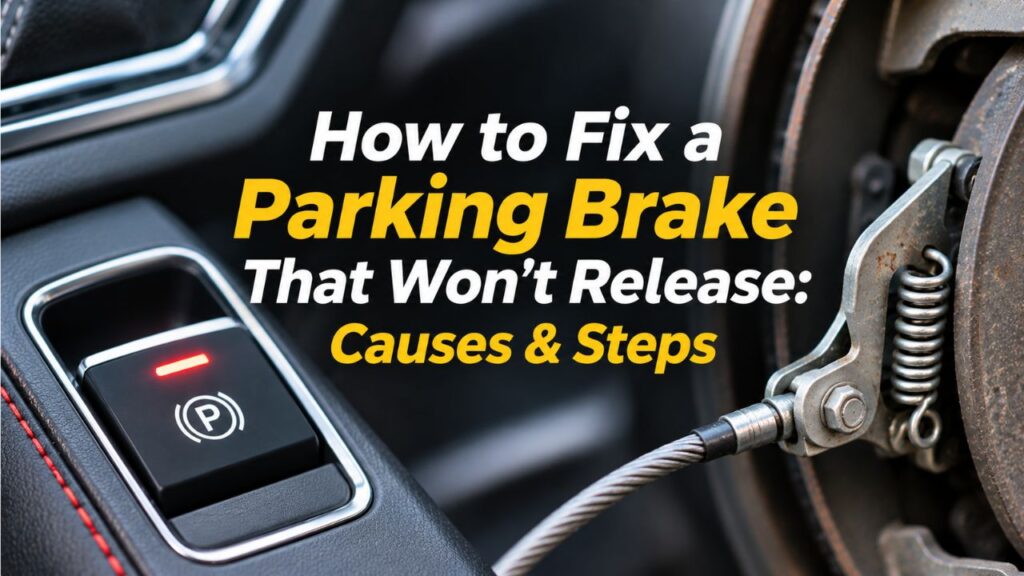
The control and the parts at the wheels are connected, but they can fail independently. Correctly identifying where movement stops helps avoid unnecessary repairs.
Stuck Cable or Return Mechanism
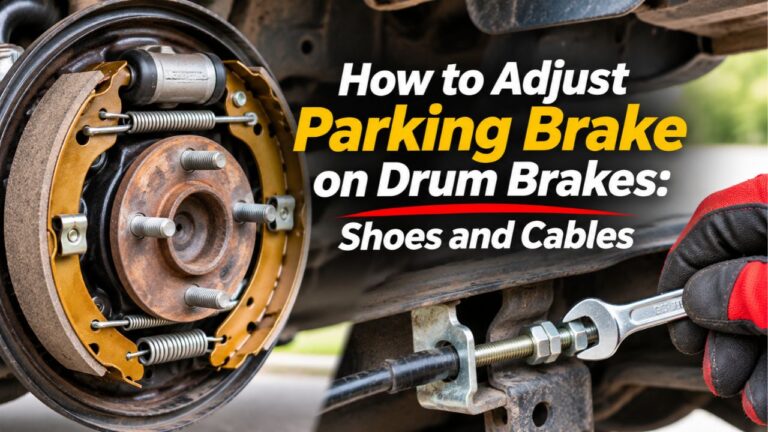
On a mechanical parking brake, a lever or foot pedal pulls steel cables running through protective housings. Rust inside a housing can keep a cable under tension even when the cabin control is released. A damaged return spring, binding equalizer, or seized caliper lever can create a similar effect.
Frozen or Rust-Bonded Brake Components
Water can freeze around brake hardware after driving through snow or washing a car in cold weather. After long storage, moisture can also leave brake shoes or pads lightly bonded to a drum or rotor by corrosion. These situations may look similar to a seized cable but require different inspection and repair.
Electronic Parking Brake Fault
An electronic parking brake (EPB) may not disengage because the specified release conditions are missing, the 12-volt battery is weak, or an actuator, switch, wire, or control unit has a fault. Some systems display a message explaining the condition. Others need diagnostic equipment to identify it.
Safety Checks Before Attempting a Release
Do not accelerate against an engaged parking brake. The vehicle can jump unexpectedly if the brake lets go, while continued dragging can overheat brake components.
Choose level, firm ground if the car is already stationary. Keep the service brake applied, select Park on an automatic or the appropriate gear on a manual, and place suitable wheel chocks before working around the vehicle. If it is on a steep hill, in traffic, or cannot be secured safely, request roadside assistance rather than experimenting with the release.
Stay out from underneath the car. Checking hidden cables or wheel components can require lifting the vehicle, supporting it on rated stands, and following the correct service procedure. A jack alone is never safe support. These instructions begin with owner-level checks; disassembly belongs to a qualified technician unless the person has the equipment and model-specific instructions.
How to Fix a Parking Brake That Won’t Release: Step-by-Step
Step 01: Keep the Vehicle Stationary and Identify the Symptom
Hold the regular brake pedal, secure the transmission, and make sure the car cannot roll if the parking brake suddenly frees. If you are stopped at the roadside, prioritize a safe location and call for assistance when necessary.
Notice what actually seems stuck. Does the hand lever refuse to move downward? Has a separate parking-brake pedal stayed near the floor? Does an electric switch show a fault? Or does the control move normally while the car still resists moving? The last pattern suggests the cable or wheel-end brake may remain engaged even though the control has released.
Avoid using engine power to answer this question. A slight change in vehicle movement is not a reliable diagnosis, and forcing a locked wheel can cause damage.
Step 02: Confirm the Correct Release Method in the Owner’s Manual
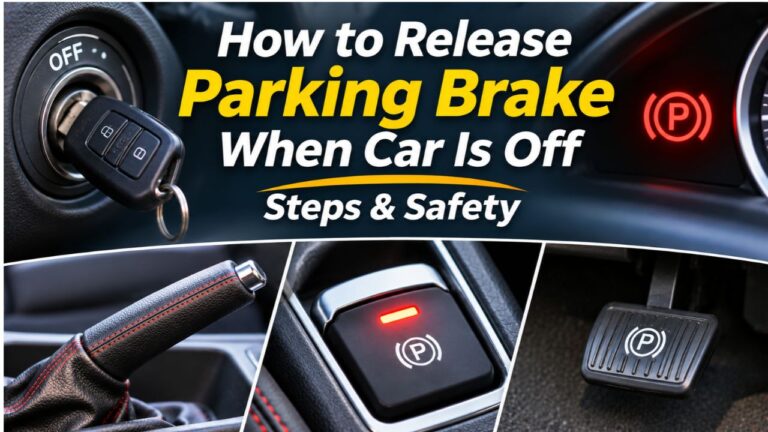
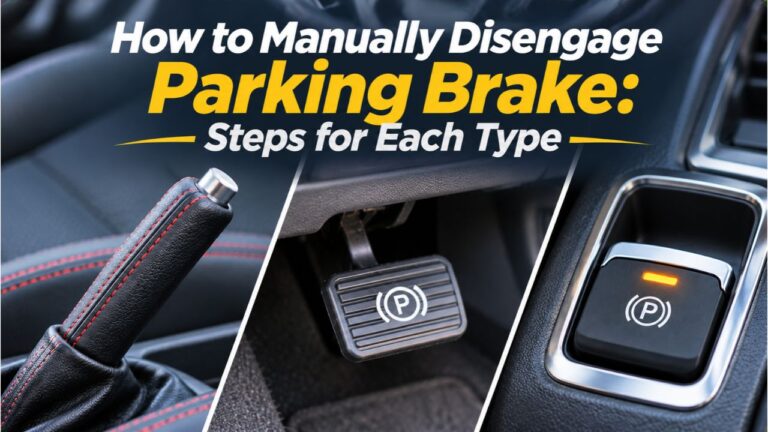
Find the parking-brake instructions for the exact year and model. A conventional hand lever often releases when it is lifted slightly, its button is depressed, and it is lowered fully while the service brake is held. Do not yank it harder if the button or ratchet is jammed.
A foot-operated parking brake may release by pulling a separate handle, pressing the small pedal again, or using another model-specific method. The smaller parking pedal is not the regular brake pedal. Check the dashboard for any message or symbol that explains a failed release.
If the procedure is unclear, identify the control before trying again. Repeatedly pulling, stomping, or prying at the mechanism can break otherwise repairable parts.
Step 03: Try One Controlled Release of a Mechanical Parking Brake
With the car securely chocked and your foot holding the service brake, follow the specified hand-lever or foot-pedal release sequence. Watch whether the control returns to its expected rest position. A lever that will not lower may have a binding release button or locking mechanism. A lever that lowers freely while the brake stays engaged points farther down the linkage.
Listen for an unusual snap or scraping noise and stop if the mechanism resists strongly. Do not disconnect or slacken cables just to make the vehicle move: doing so can leave the parking brake unable to hold the car next time.
If the cabin control releases normally but a wheel remains locked, continue with external observations rather than repeating the lever movement indefinitely.
Step 04: Release an Electronic Parking Brake Using Its Normal Controls
Switch the vehicle to the ignition or Ready state specified by its manual. Hold the service brake firmly, then operate the parking-brake switch in the release direction. On many cars this means pressing the switch down, but the direction and prerequisites are model-dependent.
For example, Ford’s electric parking brake instructions specify switching the ignition on, pressing the brake pedal, and pressing the parking-brake switch for manual release. Ford also notes that its automatic drive-away release has additional conditions. The instructions are an example, not a universal procedure.
If the indicator stays lit, flashes, or displays a malfunction message, do not assume that repeated switch operation will correct the fault. Stop and follow the vehicle’s specific troubleshooting guidance.
Step 05: Check Battery Power and Electronic Release Conditions
A weak 12-volt battery can prevent an EPB actuator from operating even if the parking brake is mechanically sound. Look for other signs of low voltage, such as dim lights, slow startup, or several electrical warnings. Record any parking-brake message before turning the vehicle off again.
If the manual permits jump-starting or providing auxiliary power for EPB release, use its exact procedure or have roadside assistance do it. Different hybrids and electric vehicles have important jump-start and power-isolation restrictions. Do not apply power directly to caliper motors or attempt to bypass the control module.
A blown fuse can be another cause, but a fuse must be identified and tested against the correct wiring diagram. Never fit a larger fuse or keep replacing one that blows repeatedly. An electrical fault needs proper diagnosis.
Step 06: Consider Ice if the Brake Stuck After Freezing Weather
If the vehicle was parked with wet brakes during freezing temperatures, ice may be preventing the cable or rear brakes from moving. Look from outside the vehicle for obvious ice or packed snow around the rear wheels, without reaching into moving parts or crawling underneath.
Kia’s winter-driving guidance warns that wet rear brakes and accumulated snow or ice can leave a parking brake frozen in the engaged position. For prevention, it describes securing specified vehicles with Park and wheel blocks when freezing is a risk; that is not permission to leave an unsecured car without its parking brake.
If practical, arrange for the vehicle to thaw naturally in a sheltered, heated location using an appropriate recovery service. Do not pour boiling water on brake assemblies, use an open flame, or aim intense heat at cables, rubber seals, fuel lines, or brake fluid components. If the brake releases after warming, inspect it before regular driving because trapped moisture or damaged parts may make it stick again.
Step 07: Check for Visible Cable Damage or Corrosion
On a conventional mechanical system, inspect only the cables and linkages that can be seen safely without lifting or entering beneath the vehicle. Look for a torn protective sheath, exposed strands, heavy rust, or a cable that appears disconnected. Do not grab exposed cable strands; they can cut skin.
A cable may be seized inside its housing even when the outer surface looks acceptable. The proper repair for a damaged or internally corroded cable is commonly replacement, not simply spraying the outside with lubricant. Keep oils and penetrating fluids off brake pads, shoes, rotors, and drums.
If cable movement must be evaluated at the rear wheel, leave that work to a technician who can safely support the car and isolate the mechanism.
Step 08: Determine Whether the Rear Brake Hardware Is Still Applied
Sometimes the cable and control release, but a rear caliper lever, drum-brake shoe, return spring, or parking-brake actuator remains stuck. Clues include a control returning normally, one rear wheel that appears locked, or a burning smell from previous attempts to move the car.
Do not reach through wheel openings to pry at the mechanism, hit the brake assembly, or turn an adjustment screw without knowing its purpose. Drum-in-hat parking brakes, integrated rear calipers, and EPB motor assemblies require different procedures. Improper adjustment may reduce holding force or cause continued drag.
A qualified technician can lift the vehicle securely, check each affected wheel, and determine whether the cable, caliper, or separate parking-brake shoes need service.
Step 09: Decide Whether a Mechanical Repair or Diagnostic Scan Is Needed
If simple release checks fail, stop attempting to free the brake by applying throttle or rocking the car. For a mechanical system, a shop may need to remove brake components, replace a seized cable, clean or replace damaged hardware, and set the correct adjustment.
For an electronic system, a technician may read fault codes, inspect battery voltage, wiring, switches, and rear actuators, and use the manufacturer’s service procedures. EPB maintenance mode is not the same as a universal emergency release, and forcing an electric caliper without the correct procedure can damage it.
NAPA’s parking-brake repair guide discusses seized rear brake components, cable adjustment, caliper mechanisms, and EPB fuses as different repair paths. The correct path depends on which part actually failed.
Step 10: Verify the Brake Fully Releases Before Driving
A control returning to its rest position is not enough. Confirm the dashboard indicator behaves normally, there are no persistent fault messages, and the vehicle has no evidence of dragging brakes. A mechanic should check wheel rotation, brake temperature after controlled testing, cable return, and the ability to reapply the parking brake.
If the brake was overheated, seized, or forcibly moved before the repair, pads, shoes, rotors, drums, and calipers may also need inspection. Do not drive if you notice resistance, grinding, smoke, a burning odor, or abnormal service-brake performance.
Once corrected, the parking brake must both release completely and hold the car securely when applied. A brake disabled merely to allow movement is not a completed repair.
Which Parking Brake Repairs Fix the Underlying Problem?
| Confirmed Fault | Typical Repair | Why It Matters |
| Seized or frayed cable | Replace damaged cable; adjust per manual | Prevents repeated sticking or loss of holding force |
| Jammed hand lever or pedal latch | Repair or replace control components | Restores proper application and release |
| Rust-bonded shoes or pads | Inspect, free, and replace damaged friction parts as needed | Avoids dragging and unreliable holding |
| Sticking caliper mechanism | Service or replace affected component | Restores rear brake release |
| Low battery or EPB electrical fault | Restore proper voltage; diagnose wiring, fuse, or actuator | Addresses release failure at its source |
| Incorrect adjustment | Adjust to vehicle-specific specification | Prevents excessive drag or weak holding |
Mechanical and electronic designs have different adjustment procedures. Never use a cable-adjustment method on a caliper-motor EPB unless the manufacturer specifically calls for it.
Can You Drive With a Parking Brake That Won’t Release?
No. Do not drive a vehicle with a parking brake that remains engaged. Even a small amount of brake drag can build heat, wear friction material, damage a rotor or drum, and alter vehicle handling. A locked wheel can also make it difficult to move the car safely.
Do not assume that the brake is free simply because its dashboard light went out. The switch may report release while mechanical parts remain stuck. Conversely, a warning light that stays on can also indicate an electronic or hydraulic problem rather than a physically engaged parking brake.
If the vehicle cannot roll freely after a correct release attempt, explain the problem to roadside assistance. A flatbed or suitable wheel-lift and dollies may be needed to avoid dragging a locked wheel. The towing operator should choose the method based on the drivetrain and owner’s manual.
How to Prevent the Parking Brake From Sticking Again
Use the parking brake regularly under normal conditions so its mechanism does not sit unused for months, and have the cables, seals, and rear brake hardware inspected during scheduled service. Repair torn cable boots and sticking mechanisms early.
In freezing weather, be aware of water from car washes, slush, and wet brakes. Follow the vehicle maker’s cold-weather parking guidance rather than assuming every car should use the same exception. Never leave a car unsecured to avoid a frozen brake.
For EPB-equipped vehicles, maintain the 12-volt battery and have fault messages checked promptly. Brake-pad replacement may require an approved electronic service mode, so follow the repair procedure instead of forcing the actuator backward.
FAQs About How to Fix a Parking Brake That Won’t Release
Can a Parking Brake Release on Its Own After It Gets Stuck?
Sometimes warming a frozen brake or a change in cable tension allows it to release. That does not establish that the underlying problem is fixed. Inspect it for corrosion, moisture damage, or sticking hardware before regular use.
Why Is the Parking Brake Light Still On After I Release It?
The control may not have fully released, or the system may detect an EPB fault. On some vehicles the red BRAKE indicator can also warn about the hydraulic braking system. Follow the owner’s manual and do not ignore the light when braking feels abnormal.
Can a Dead Battery Keep an Electronic Parking Brake Engaged?
Yes. Many electronic systems need sufficient 12-volt power to operate the release actuator. Use the manufacturer’s approved power-restoration procedure; do not try to apply voltage directly to the motor.
Will Lubricating a Stuck Parking Brake Cable Fix It?
Surface lubrication may help some exposed linkage pivots when recommended by the manufacturer, but it will not reliably repair corrosion inside a damaged cable sheath. Replace a seized or frayed cable and keep lubricants away from friction surfaces.
Can I Release a Stuck Parking Brake by Driving Backward?
Do not use engine force to break a stuck brake free. Sudden release can cause unexpected vehicle movement, while dragging can overheat or damage the brakes. A technician can inspect and free the mechanism under controlled conditions.
Does a Stuck Parking Brake Mean the Rear Caliper Is Bad?
Not necessarily. The problem may be the release control, cable, drum-in-hat shoes, ice, or electronic actuator. Diagnosis should identify what remains engaged before any caliper is replaced.
Restoring Safe Parking Brake Operation Before Your Next Drive
Understanding how to fix a parking brake that won’t release starts with distinguishing a control issue from a brake that remains mechanically stuck. Secure the car, confirm the correct release sequence, and check for freezing or electronic power problems without forcing the wheels to move.
If those basic checks do not restore normal release, professional inspection is the right next step. Replacing a seized cable, repairing the wheel-end brake, or correcting an EPB fault must be followed by checks that the system both releases completely and holds the vehicle when parked. Do not return the car to the road until those functions are confirmed.