Is Parking Brake Necessary? When to Use It and Why It Matters
Yes, using the parking brake is an important safety practice whenever you park, even on level ground or in a vehicle with an automatic transmission. It provides a separate means of holding the vehicle stationary and reduces reliance on the transmission’s Park mechanism. On a slope, it is especially important.
Many drivers assume shifting into Park is enough, while manual-transmission owners sometimes depend entirely on leaving the car in gear. Those methods can help prevent movement, but neither makes a working parking brake unnecessary. A parked vehicle may be bumped, loaded, or left on a surface with more slope than it appears to have.
The parking brake is also different from the regular brake pedal and from automatic brake-hold systems. Understanding what each system does prevents mistakes when parking or preparing to drive away.
This article explains why the parking brake matters, whether you need it with automatic or manual transmissions, how to use it on hills and flat roads, and what to do if it will not engage or release.
Is Parking Brake Necessary for Everyday Parking?
Yes, engaging the parking brake should be part of your normal parking routine. A vehicle may stay still without it, but relying on Park alone offers less protection.
A parking brake is designed to hold a stationary vehicle rather than simply help the driver slow down. It applies a mechanical holding force at designated brakes or a driveline mechanism, depending on the design. Many systems work independently of the normal hydraulic brake pedal, although their components may overlap.
Using the parking brake adds another means of preventing an unintended roll. Regular use can also reveal a malfunction before you need to park on a steep driveway. The correct habit is to set it every time you leave the vehicle, subject to specific manufacturer instructions for unusual conditions.
What Does the Parking Brake Actually Do?
The regular service brakes slow or stop a moving vehicle when you press the brake pedal. The parking brake is intended to keep an already stopped vehicle from moving while it is parked.
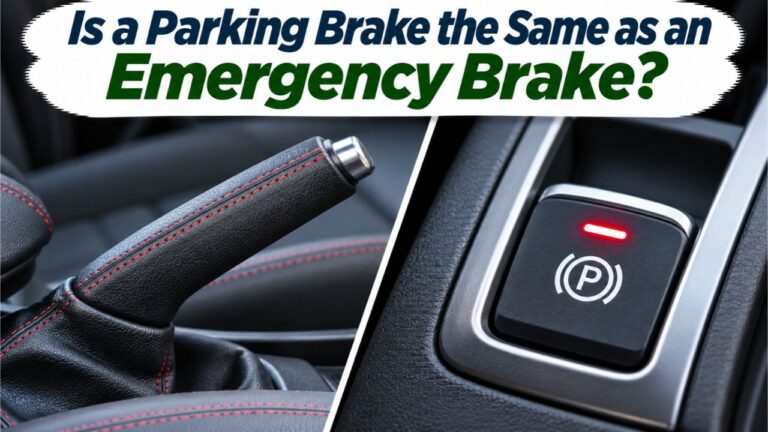
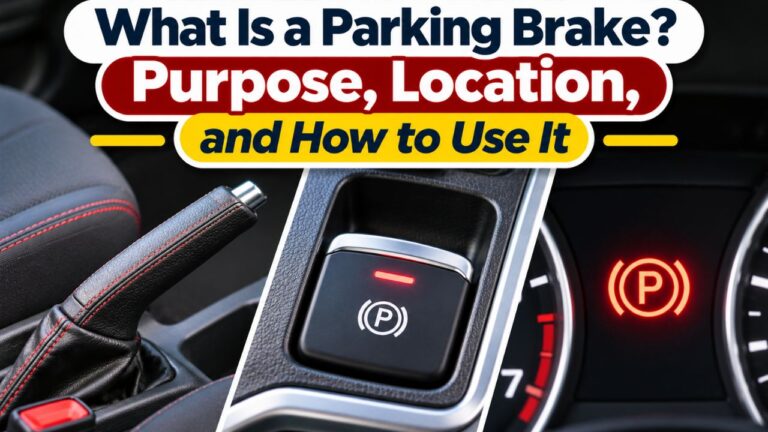
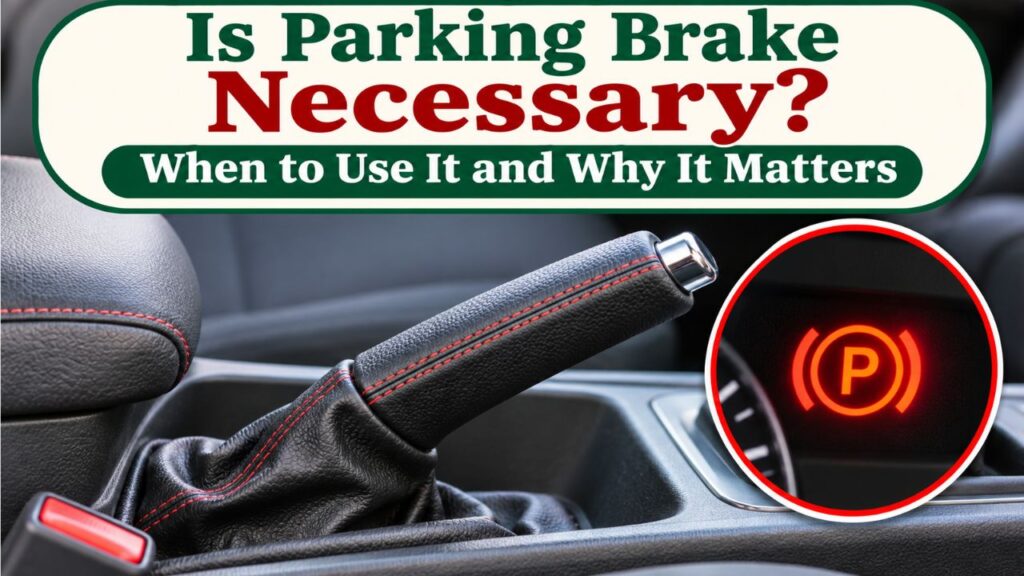
Older vehicles commonly use a hand lever or foot pedal connected to cables. Pulling the lever or pressing the pedal applies the parking brake mechanism, often at the rear wheels. Other designs use electronic switches and electric actuators. Some heavy vehicles have air-operated spring parking brakes.
The parking brake does not necessarily act on all four wheels. Its holding ability depends on the design, condition of its components, available tire traction, and ground slope. It should therefore be used alongside the vehicle’s proper transmission position, not treated as a substitute for it.
Although people sometimes call it the emergency brake, that name does not mean it can safely replace the normal brakes during driving. Emergency operation varies substantially by vehicle, particularly with electronic systems.
Is Parking Brake Necessary in an Automatic Car?
Yes. An automatic transmission’s Park position and parking brake are two different ways of resisting vehicle movement, and using both is the safer routine.
Why Shifting Into Park Is Not the Same as Applying the Parking Brake
On many conventional automatic transmissions, selecting Park engages a small mechanism called a parking pawl. The pawl locks a part of the transmission’s output mechanism to prevent rotation. It is designed to hold the vehicle when properly engaged, but it is not the same as applying the wheel brakes.
When you shift into Park on a slope and release the foot brake without setting the parking brake, the vehicle may roll slightly until the pawl takes the load. That movement can produce a noticeable jolt or make the shifter harder to move out of Park. Using the parking brake reduces the load on the pawl.
In a Toyota owner’s manual’s parking procedure, the driver is instructed to stop with the brake pedal, set the parking brake, select Park, and confirm the indicators. The procedure is model-specific, so follow your own owner’s manual where its sequence differs.
What If the Vehicle Automatically Applies Its Parking Brake?
Some newer vehicles engage an electronic parking brake automatically when Park is selected or the vehicle is switched off. Others require the driver to pull a switch, and certain automatic functions work only under particular conditions.
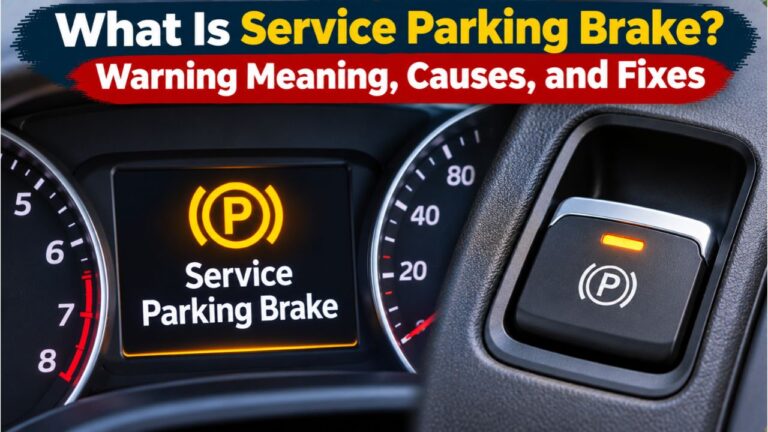
Check the dashboard indicator and the owner’s manual instead of assuming the system engaged. Auto Hold, which keeps the service brakes applied during a traffic stop, is not necessarily the same function as the parking brake and may release or shut off under different conditions.
Do You Need the Parking Brake on Flat Ground?
Yes, it is worth using on flat ground as well as on hills. A level parking space reduces the tendency to roll, but does not eliminate every risk of movement. Even a level-looking driveway may slope slightly, and a parked car can be bumped or loaded.
Using the parking brake also creates a consistent routine. Drivers who set it only when a hill looks steep may forget it when they actually need it.
Do not use excessive lever force or repeatedly cycle an electronic switch. Apply the mechanism according to the owner’s manual and confirm that it has engaged. Have a weak or difficult-to-operate brake inspected.
Why the Parking Brake Is Especially Important on Hills
On an incline, gravity continuously pulls the vehicle downhill. The steeper the slope and the heavier the vehicle, the greater the tendency to move. Using the parking brake reduces reliance on the transmission or engine compression to keep the car stationary.
The California DMV’s hill-parking instructions recommend setting the parking brake and using Park or an appropriate gear. They also describe how turning the front wheels toward or away from a curb can help control where a vehicle moves if its primary holding methods fail.
For downhill parking beside a curb, turn the front wheels toward it. When facing uphill with a curb, turn the wheels away from it. Where there is no curb, follow the applicable driver handbook’s guidance for positioning the wheels away from traffic.
Wheel position is an additional precaution, not a replacement for the parking brake. For steep slopes, trailers, or heavy loads, the manufacturer may also recommend wheel chocks. Never park where the vehicle cannot be secured reliably.
Is the Parking Brake Necessary With a Manual Transmission?
Yes. A manual-transmission vehicle should normally be parked with its parking brake applied and the transmission in an appropriate gear, as specified in its owner’s manual.
Leaving the transmission in gear creates resistance to vehicle movement through the engine and drivetrain. However, a drivetrain may still move under certain loads, and relying on gear engagement alone is less secure than using both methods.
Drivers commonly select first gear or reverse when parking, depending on the vehicle and direction of the slope. Some manufacturers provide specific instructions for this choice. Neutral cannot hold a manual-transmission car through engine resistance.
For vehicles with a clutch pedal, fully engage the parking brake before exiting, confirm the engine is off, and check that the transmission is in the recommended gear. Never leave the car unattended while relying on a foot resting on the service brake.
How to Apply the Parking Brake Properly
A simple sequence makes the parking brake part of normal driving without placing unnecessary load on the transmission. The exact switch, lever, and shift order may vary by model.
- Stop completely and keep the service brake pressed. Bring the vehicle to a full stop before operating the parking mechanism. Keep your foot firmly on the brake so the car cannot roll during the next steps.
- Apply the parking brake. Pull the hand lever, press the designated pedal, or operate the electronic parking brake switch according to the owner’s manual. Look for the parking brake indicator where applicable.
- Select the correct transmission position. For a conventional automatic, shift into Park. With a manual transmission, select the gear specified for the parking situation and switch off the engine. Follow a different sequence if your vehicle’s instructions require it.
- Confirm that the vehicle stays stationary. Release the service brake gradually, with the vehicle secure and your foot ready to reapply it. Do not perform this check where any movement could put people or property at risk.
- Set any additional hill-parking protection. Position the wheels according to local guidance and use wheel chocks if required for the vehicle, load, or slope. Only then exit and secure the vehicle.
Before driving away, press the service brake and release the parking brake according to the manufacturer’s instructions. Confirm the indicator has turned off and the vehicle moves normally. Some electronic systems release automatically, but automatic release should not be assumed on every vehicle.
Mechanical vs. Electronic Parking Brakes: Do Both Matter?
Both perform the same basic parking function, although their controls and operating behavior differ.
| Parking Brake Type | Typical Control | What to Remember |
| Hand-operated mechanical | Lever beside the seat | Pull to the specified holding position; release fully |
| Foot-operated mechanical | Separate parking pedal | Follow the vehicle’s release method before moving |
| Electronic parking brake | Dashboard or console switch | Watch for engagement indicators and system warnings |
| Automatic electronic function | Engages under certain conditions | Confirm the function actually activated |
A cable-operated mechanism may suffer from corrosion, poor adjustment, or sticking linkages. An electronic system may have actuator, wiring, battery-power, or control faults. Neither type should be ignored when warning lights appear or the vehicle will not hold.
Electronic systems may provide an emergency braking function when a switch is held, but the response is controlled by the specific vehicle. Never experiment with it at speed or treat it as a standard replacement for the service brake.
What Happens If You Never Use the Parking Brake?
Skipping it does not automatically cause immediate damage. Many automatic cars will sit in Park without moving, particularly on level ground. The concern is relying on one holding mechanism instead of using the equipment provided for secure parking.
Repeatedly placing the vehicle’s weight against the parking pawl on a slope can make shifting out of Park feel difficult. Leaving the parking brake unused for long periods may also allow some cable-operated mechanisms to become stiff or corroded, although corrosion depends on their condition and exposure.
The bigger concern is an unexpected roll if the selected gear or parking mechanism does not hold as intended. The parking brake offers a separate layer of protection when correctly maintained and used.
A partially engaged parking brake while driving, on the other hand, can overheat components and cause abnormal wear. Always check that it has released before accelerating.
Is a Parking Brake Required by Law in the United States?
For covered vehicles, federal motor vehicle safety standards establish requirements for parking brake equipment and performance. Under Federal Motor Vehicle Safety Standard No. 135, applicable light vehicles must have a parking brake system, with specified holding performance tested on a 20% grade.
A federal equipment requirement is not the same as a rule telling drivers when to engage the brake. Parking laws and vehicle inspection requirements vary by state and situation. Driver handbooks may direct drivers to set the brake when parking, particularly on hills.
Avoid assuming that using Park alone satisfies every local requirement. Check state driving rules and the vehicle’s owner’s manual. Even where no particular flat-ground parking rule applies, routine parking brake use remains a sound safety practice.
What If Your Parking Brake Does Not Work?
If the brake cannot hold the vehicle, engages weakly, refuses to release, or displays a malfunction warning, it needs attention. The fault may involve a stretched or seized cable, worn parking brake friction surfaces, poor adjustment, a failed electronic actuator, or a related control problem.
Do not test a questionable brake by letting the vehicle roll down a hill. Have a qualified technician inspect it using the manufacturer’s procedure, and avoid leaving the car unattended on an incline until it can be secured safely.
If the parking brake is stuck on, do not drive to force it free. Dragging brakes can overheat pads, rotors, and nearby parts. On electronic systems, a low battery or control fault may require a specific service or emergency-release procedure; improvising can damage the mechanism.
For long-term storage, extremely cold weather, or unusual parking conditions, consult the owner’s manual. Some manufacturers provide special advice where moisture could freeze a mechanical parking brake. Approved wheel chocks or another secure parking method may be needed instead of routine application in those circumstances.
FAQs About Is Parking Brake Necessary
Is It Okay to Park an Automatic Car Without the Parking Brake?
The transmission may hold the car in Park, but using the parking brake is safer and reduces reliance on the parking mechanism. Make it part of the normal parking routine, especially on a slope.
Should I Use the Parking Brake Every Time I Park?
Generally, yes. Consistent use helps keep the vehicle secure on both flat ground and hills. Follow any special instructions for your specific vehicle or unusual conditions.
Can the Parking Brake Damage an Automatic Transmission?
Correct parking brake use does not normally damage the transmission. It can reduce the load transferred to the parking pawl when the vehicle is stationary on a slope.
Is an Electronic Parking Brake the Same as Auto Hold?
No. An electronic parking brake is intended to secure a parked vehicle. Auto Hold normally maintains service-brake pressure during a temporary stop and may have different release conditions.
Can I Drive If My Parking Brake Is Broken?
A defective parking brake creates a parking safety risk and may affect legal roadworthiness. Avoid parking on slopes, arrange prompt repair, and do not drive if the brake is stuck applied or another braking fault is present.
Is a Parking Brake Useful in an Emergency?
Some parking brakes can provide limited backup stopping capability, but their emergency behavior varies. Follow the owner’s manual and never assume a manual or electronic parking brake can safely replace the normal brakes at speed.
Make the Parking Brake Part of Every Safe Stop
Is parking brake necessary? For everyday parking, the responsible answer is yes. It helps hold a stationary vehicle, adds protection beyond Park or an engaged gear, and is especially important on hills. It should be used whether the car has a manual lever, separate pedal, or electronic switch.
The best routine is straightforward: stop fully, engage the parking brake according to your owner’s manual, select the correct transmission position, and confirm the vehicle is secure. On slopes, position the wheels correctly and use additional precautions when needed.
If the parking brake cannot hold the vehicle or does not release normally, repair it rather than treating it as optional equipment. A working parking brake is a small part of the parking process with an important safety purpose.