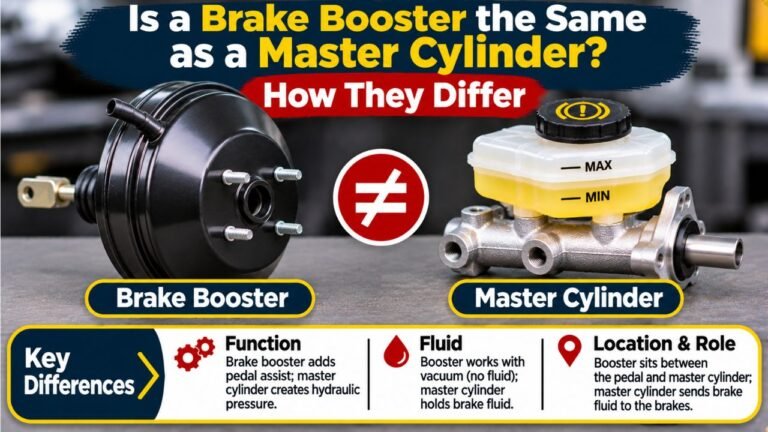
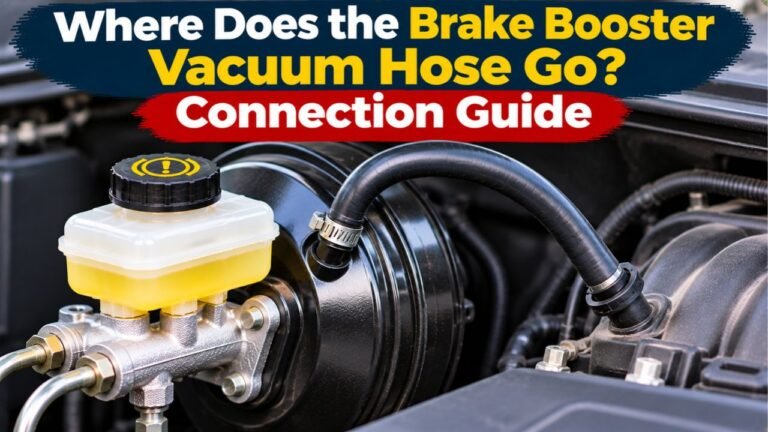
Does a Bad Brake Booster Make Noise? Hissing Sounds and Causes
Yes, a bad brake booster can make noise, most often a hissing or whistling sound when you press or release the brake pedal. The noise usually comes from air passing through a leaking diaphragm, internal valve, or seal. However, a cracked vacuum hose or loose check-valve connection can produce a similar sound even when the booster itself still works.
Not every noise means the booster has failed. A brief, soft rush of air can accompany normal pedal movement in some vacuum-assisted brakes. What deserves more attention is a new, loud, or continuous hiss, particularly when the brake pedal becomes unusually hard or the engine idles roughly as you brake.
Knowing where the sound originates and when it occurs can prevent replacing the wrong part. This guide explains the noises a failing brake booster can make, how to separate harmless airflow from a vacuum leak, what related symptoms reveal, and how to perform basic stationary checks. It also covers noises from hydraulic and electronic brake-assist systems, which do not all behave like conventional vacuum boosters.
Does a Bad Brake Booster Make Noise When You Press the Brakes?
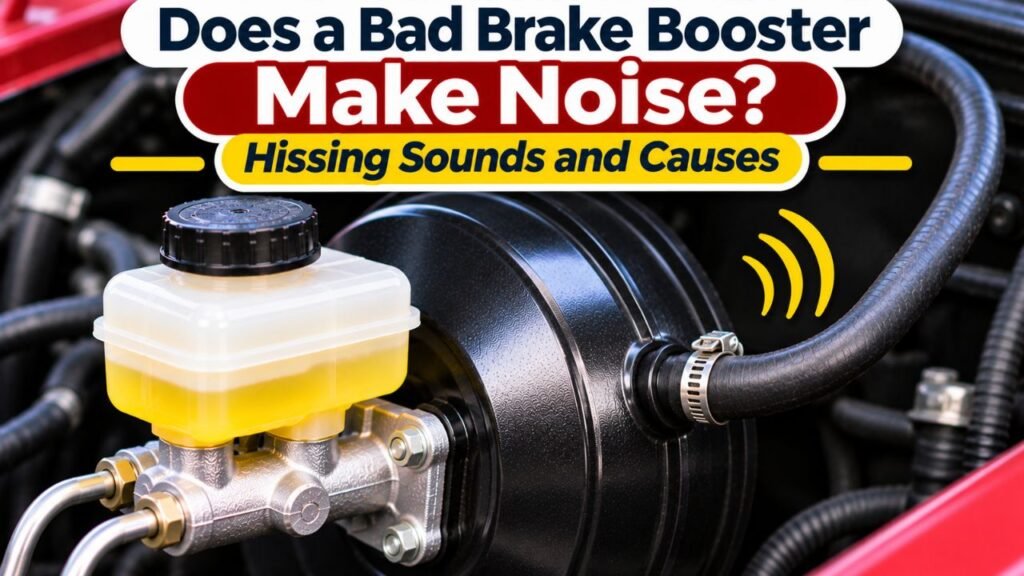
A faulty conventional vacuum booster often hisses near the brake pedal or firewall. The booster uses a pressure difference to assist your foot as it pushes the master cylinder. Its internal valve deliberately admits air during braking; a damaged diaphragm or seal lets air move where it should not.
It may sound louder inside the cabin because the booster mounts to the firewall. Firestone Complete Auto Care’s guide to hissing when braking identifies leaks in the booster diaphragm, vacuum hose, or adjoining seals as possible causes of pedal-related hissing.
Noise alone does not confirm a bad booster. A technician must distinguish internal leakage from a defective hose, check valve, or unrelated engine noise before selecting a replacement.
What Does a Bad Brake Booster Sound Like?
Timing and pedal feel are usually more informative than volume alone.
| Sound | Possible Meaning | What to Notice |
| Sustained hiss | Air leaking through a booster seal or vacuum connection | Continues while the pedal is held |
| High-pitched whistle | Air passing through a small opening in a hose, grommet, or valve | Changes as pedal pressure changes |
| Brief soft whoosh | Normal airflow in some vacuum boosters | Stops quickly; pedal assist remains normal |
| Click or clunk | Pedal linkage, mounting, valve movement, or another component | Occurs on press or release |
| Grinding or squealing at a wheel | Pads, rotors, or other wheel-brake hardware | Usually follows wheel rotation |
Hissing From the Brake Pedal Area
A hiss beneath the dashboard is especially relevant because the booster’s control valve is near the pedal pushrod. Worn seals can make the sound louder inside the cabin.
Whistling Near the Firewall or Vacuum Hose
A whistle can come from a narrow leak at the hose, check valve, or rubber grommet. Changing pitch does not prove the booster housing is damaged.
Clicking, Popping, or Groaning
Pedal pivots, return springs, brackets, and other brake components can click. A click with a hard pedal deserves inspection, but it does not justify booster replacement by itself.
What Causes a Brake Booster to Hiss Continuously?
Torn Diaphragm or Worn Internal Seals
A vacuum booster normally keeps a controlled difference in air pressure across its internal chambers. A split diaphragm or deteriorated seal disrupts that separation. Air rushing through the damaged area can create a steady hiss and reduce brake assistance.
The pedal may feel harder. On manifold-fed systems, a major leak can disturb engine idle. A small leak may be audible before assistance noticeably weakens.
Leaking Air-Control Valve
The internal control valve changes airflow when the driver presses and releases the pedal. If its sealing surfaces wear, airflow may continue after the pedal stops moving. This can explain why some boosters hiss while the driver holds constant pedal pressure.
Diagnosis requires vacuum-supply and retention checks, not attempts to lubricate the valve through the pedal opening.
Cracked Vacuum Hose or Faulty Check-Valve Seal
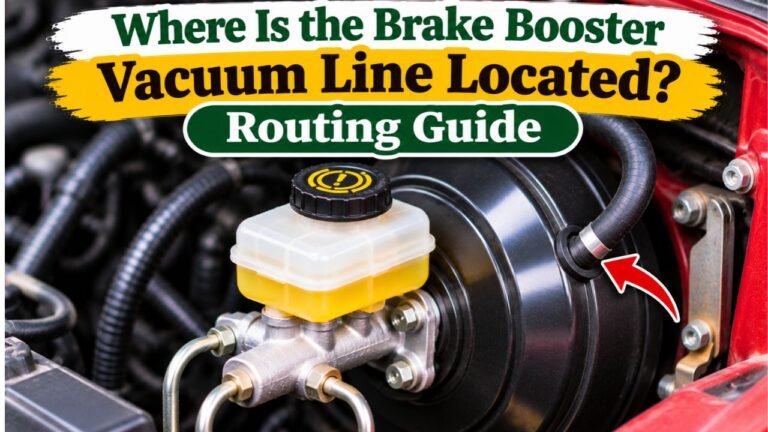
The hose supplies vacuum from the engine or a dedicated pump. Cracks, loose ends, a damaged check-valve grommet, or a restricted hose can interrupt assistance and create noise. A failed one-way valve may also allow stored vacuum to escape after the engine stops.
These are external vacuum-system faults, not necessarily a defective booster. A visibly damaged line should be replaced with the specified power-brake-rated part, while the valve and booster are tested according to the vehicle’s service manual.
Missing or Damaged Air-Intake Silencer
Some boosters have foam or another sound-damping material around their atmospheric intake. If it deteriorates, ordinary air movement can become louder even though the booster is still providing assistance. This is another reason a hiss should be diagnosed, not treated as automatic proof of diaphragm failure.
Is a Hissing Brake Booster Ever Normal?
A short, quiet air sound during pedal movement can be normal on some vacuum-assisted vehicles. The booster controls atmospheric airflow as the pedal moves, so a momentary whoosh is not inherently a leak. The sound should be judged against the vehicle’s normal behavior and service information.
A hiss that continues while you hold steady pressure is more suspicious. A new loud hiss, a noticeably harder pedal, a change in stopping response, or engine stumbling when the brakes are applied also calls for inspection.
Do not assume silence means the booster is healthy, either. A failed check valve or inadequate vacuum source can produce a hard pedal with little audible leakage. Likewise, a noisy pedal mechanism can coexist with a perfectly good booster.
Compare brief versus sustained sound and normal versus changed pedal feel; neither proves a diagnosis.
What the Timing and Location of Brake Booster Noise Reveal
Hissing Only While Pressing the Brake Pedal
A short rush of air can reflect normal valve movement. A repeated loud hiss every time pressure is applied could indicate an internal seal or a vacuum connection leak. Note whether the pedal becomes hard and whether the sound persists after your foot stops moving.
Hissing While Holding the Pedal Down
A continuous hiss under steady pressure deserves particular attention because the pedal and valve are no longer moving through their normal application cycle. Internal leakage is possible, but the vacuum supply connections still need checking.
Hissing on Brake Pedal Release
A brief release sound can be normal. If it is unusually long, loud, or accompanied by a pedal that returns slowly, investigate the booster, pedal linkage, and hydraulic brake release. This does not prove the booster is defective.
Hissing Even When the Brakes Are Not Applied
Noise at idle with no foot on the pedal can point to a hose, grommet, or other engine vacuum leak. Location can be misleading because sounds travel through the firewall. A Chrysler power brake booster technical tip advises checking whether pedal movement actually triggers the noise and describes a purge-solenoid mounting problem that can transmit a similar sound on certain vehicles.
A hiss near the pedal does not always originate in the booster.
How to Check a Suspected Brake Booster Noise Safely
These stationary checks apply to conventional vacuum boosters, not every brake system. They do not replace a vehicle-specific inspection.
Step 01: Park Securely and Note When the Sound Starts
Park securely on level ground and apply the parking brake. Never run the engine in an enclosed garage.
With the engine off, gently apply the pedal. Note whether noise occurs on application, while holding, or at release. Stop if the pedal sinks abnormally.
Step 02: Check Pedal Response During Engine Start
With the engine off, press the pedal several times to use stored vacuum. Hold steady pressure and start the engine.
The pedal should move downward slightly. If it stays hard, the booster or supply may be faulty. A normal drop does not rule out a smaller leak.
Step 03: Listen for a Sustained Hiss Without Driving
With the vehicle secured and engine idling, hold a gentle pedal application briefly. Listen for a sustained hiss or changes in idle. Stop if the pedal feels abnormal.
Avoid repeatedly pumping the pedal or revving the engine to force a symptom. If a hiss is clear and pedal assistance is reduced, professional diagnosis is the next step.
Step 04: Inspect the Visible Vacuum Connections
Turn the engine off and let hot components cool. If accessible, visually inspect the booster vacuum hose, check valve, and grommet for cracks, loose connections, oil damage, or collapse. Do not detach fittings merely to listen more closely.
Keep clear of hot parts and belts. Never open hydraulic brake lines for this check.
Step 05: Have the Vacuum Supply and Booster Tested
A technician can measure available vacuum at the specified point and evaluate check-valve function and booster retention. Low supply points toward the pump, engine, line, or restriction; adequate supply with an internal leak points toward the booster. Test limits and procedures vary by vehicle.
The pedal-drop check alone cannot distinguish a torn diaphragm from a cracked hose.
Other Symptoms That Make Booster Noise More Concerning
A hard brake pedal is the clearest companion symptom of lost vacuum assistance. The brake hydraulics may still operate, but much more driver force can be needed to slow the vehicle. If the pedal changes abruptly or stopping becomes uncertain, do not continue driving.
A leak connected to the engine intake can also cause rough idle, fluctuating RPM, or stalling when you apply the brakes. That combination supports checking the booster vacuum circuit, although intake leaks elsewhere can produce similar symptoms.
A soft, spongy pedal or one that sinks toward the floor points more strongly toward a hydraulic issue, such as air in the brake lines, low fluid, a leak, or a master cylinder fault. Do not assume the booster is responsible merely because a hiss occurs at the same time.
Brake warning lights, leaks, or dragging brakes require prompt attention. Noise alone does not establish braking safety.
Could the Noise Be Coming From the Brake Pads or Another Part?
Brake pads and rotors usually create friction-related noises at the wheels, rather than an airy hiss under the dashboard. Squealing that changes with wheel speed, grinding when stopping, and repetitive scraping are reasons to inspect wheel-brake components.
A clicking pedal can come from a pivot, switch, spring, or bracket. A hissing engine vacuum leak elsewhere can seem to originate behind the steering wheel. The most useful first question is whether the noise follows pedal movement, engine operation, or wheel rotation.
Also inspect the master cylinder for hydraulic leaks, which require correction regardless of vacuum noise.
Do Hydraulic and Electric Brake Boosters Make Different Noises?
Yes. A Hydro-Boost system uses hydraulic pressure, often supplied by a power steering pump, instead of intake manifold vacuum. Some designs make a hiss, clunk, or chatter during unusually heavy pedal applications or rapid release. Noise during ordinary braking, especially with changed steering or brake assistance, requires the applicable hydraulic-system checks.
Electric or electronically controlled brake-assist systems may produce motor whirring or pumping noises that do not sound like a vacuum leak. The Ford F-150 Lightning owner’s manual’s brake FAQs specifically identify certain electric motor sounds during brake-pedal operation as normal for that vehicle’s electronic booster or parking brake.
Do not apply a vacuum-booster pedal test or hose diagnosis to an electric-assist system without checking its service information. A new loud sound, brake warning, or changed pedal response still warrants inspection.
Does a Noisy Brake Booster Need Replacement?
Not always. A damaged external hose, check valve, or grommet can often be replaced without changing a healthy booster. A missing sound-damping component may have a different remedy. Confirmed internal diaphragm or control-valve failure generally means the booster assembly needs replacement or approved professional remanufacturing.
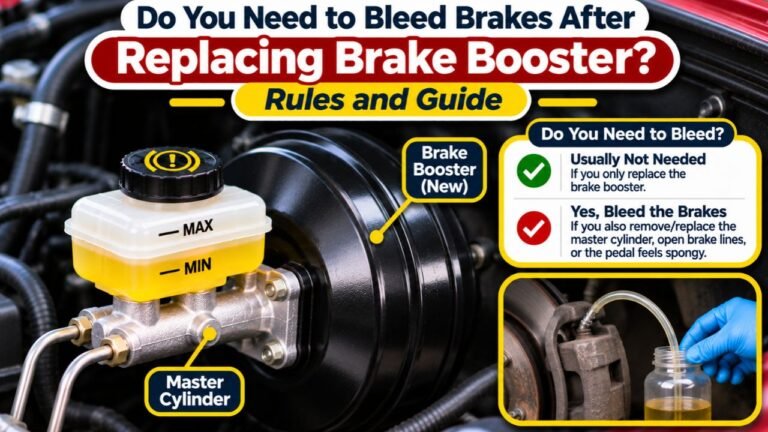
Before installing a replacement, check for brake fluid leaking from the rear of the master cylinder, since contamination can damage the booster. Verify the replacement part, pushrod arrangement, and installation procedures for the exact vehicle. Any hydraulic connections that are opened require the specified bleeding steps.
If a hiss is accompanied by high pedal effort, poor stopping, an engine stall during braking, or abnormal pedal travel, arrange professional inspection or towing rather than driving the vehicle to reproduce the symptom.
FAQs About Does a Bad Brake Booster Make Noise
Can a Bad Brake Booster Hiss With the Engine Off?
Yes. Stored vacuum may escape through a leak after shutdown, although brief air sounds during assisted pedal applications can be normal. Sustained hissing needs inspection.
Why Does My Brake Pedal Hiss but Still Feel Normal?
A small leak or missing silencer may make airflow audible before assistance changes. Brief airflow can be normal, but a new sustained hiss needs inspection.
Can a Bad Brake Booster Make the Engine Stall?
Yes, on vehicles that draw booster vacuum from the intake manifold, a significant leak can disturb the air entering the engine and cause rough idle or stalling. This symptom can also come from other engine problems.
Does a Bad Brake Booster Make a Clicking Noise?
It can be associated with unusual mechanical sounds, but clicking alone is not a reliable booster symptom. Pedal linkage, switches, brackets, and other brake components are common alternatives. Hissing or whistling tied to pedal use is more characteristic of vacuum leakage.
Will Replacing the Vacuum Hose Stop Brake Booster Hissing?
Only if the hose or its connection is actually the leak source. A damaged booster diaphragm or internal valve will continue leaking after the hose is replaced. Test both the supply and booster before purchasing parts.
What Brake Booster Noise Means for Your Next Repair
The answer to does a bad brake booster make noise? is yes: a worn diaphragm, leaking valve, or compromised seal can create a hiss or whistle, especially around brake-pedal operation. But a brief air sound can be normal, and external vacuum faults can mimic a failed booster.
Pay attention to whether the sound continues while the pedal is held, whether assistance feels weaker, and whether engine idle changes. Those observations help direct testing without guessing at the failed component.
If the pedal becomes hard or stopping performance changes, stop driving and arrange a proper brake inspection. Confirm the fault before replacing the booster, and do not return the vehicle to service until its braking operation is verified.