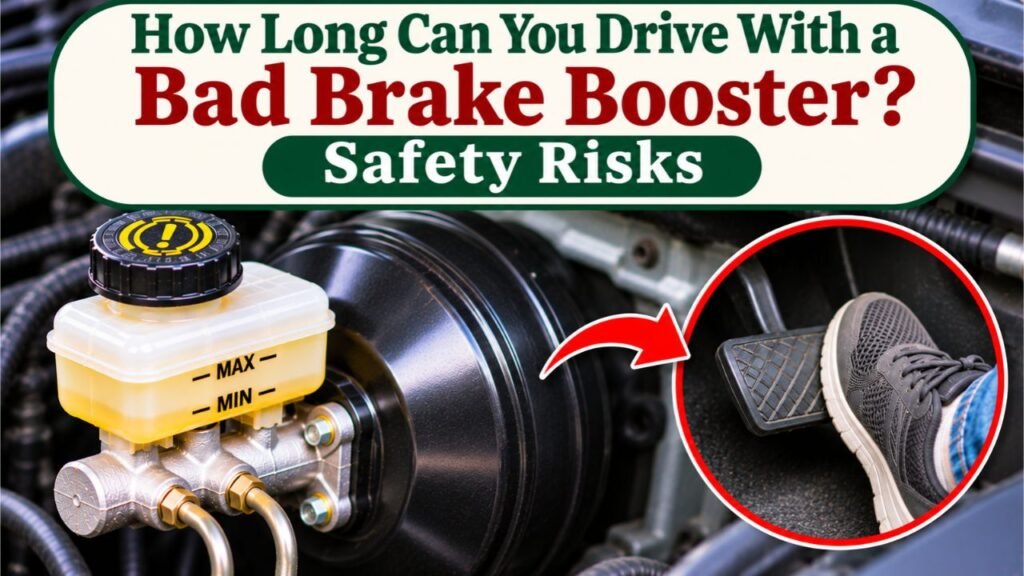
How Long Can You Drive With a Bad Brake Booster? Safety Risks
There is no safe number of miles or minutes to drive with a confirmed bad brake booster. If the booster is no longer providing normal assistance, stop in a safe place and arrange a tow rather than driving to work, home, or a repair shop. The car may still have some braking ability, but stopping can demand far more pedal force than you expect.
A brake booster helps the driver generate braking force without pressing extremely hard on the pedal. When assistance fails, an ordinary stop can suddenly require a much stronger push. This creates a particular danger in traffic, on hills, or whenever another driver brakes unexpectedly.
Not every stiff brake pedal means the booster itself has failed. A cracked vacuum hose, defective check valve, weak vacuum pump, or another braking problem can produce similar symptoms. Knowing the difference prevents unnecessary parts replacement, but it does not make an unexplained braking change safe to ignore.
This guide covers how much driving is too much, what happens when brake assist disappears, the warning signs to watch for, what to do if the problem starts while moving, and how a repair shop identifies the failed part.
How Long Can You Drive With a Bad Brake Booster?
Do not plan to drive any distance with a confirmed loss of brake assistance. There is no dependable allowance of five miles, ten miles, or one more commute. A vehicle might still stop during an easy, low-speed maneuver, then require considerably more effort during a sudden stop.
How much braking remains depends on the vehicle’s system, the failure, road conditions, and how much force the driver can apply. Those variables cannot be converted into a trustworthy mileage limit. The safest plan is to stop driving once the vehicle is secure and have it transported for inspection.
Does a Partially Working Booster Give You More Time?
Not reliably. A leaking vacuum booster may provide some assistance at one moment and less during the next brake application. A faulty check valve may let stored vacuum escape, while a weak supply may struggle during repeated stops.
A vehicle that stops normally on an empty street has not demonstrated that it can stop adequately in an emergency. Partial function is a reason for urgent diagnosis, not permission to postpone repair.
Is Moving the Car a Few Feet Ever Reasonable?
If the failure occurs in a traffic lane or another immediately dangerous location, moving only as far as necessary to reach a safer stopping position may be unavoidable. That is different from choosing to drive several blocks or miles to a shop.
If the car is already safely parked, leave it there. Explain the symptoms to roadside assistance so the towing provider can use a suitable recovery method.
Why a Bad Brake Booster Makes Driving Dangerous
The Brakes May Still Work, but Pedal Effort Increases
A conventional power brake booster adds force between the brake pedal and master cylinder. When that assistance disappears, the driver may still be able to operate the hydraulic brakes through the pedal linkage, but much greater force can be necessary.
The NHTSA explanation of brake power-assist units distinguishes a system that reduces driver effort from one that supplies braking energy itself. That distinction explains why loss of assist does not always mean the wheels have no braking force. It does not mean a vehicle with failed assistance is safe for continued driving, and some newer electronically integrated systems operate differently.
Emergency Stops Become Less Predictable
Drivers develop a feel for how quickly their car slows with ordinary pedal pressure. With little or no boost, that familiar pressure may produce much less deceleration. A sudden stop can therefore require more time, distance, and effort.
Higher speeds, heavy traffic, wet pavement, and downhill roads leave less room for error. Even if the driver can press hard enough to stop under favorable conditions, there is no guarantee of the same result when surprised or fatigued.
Some Failures Can Affect the Engine
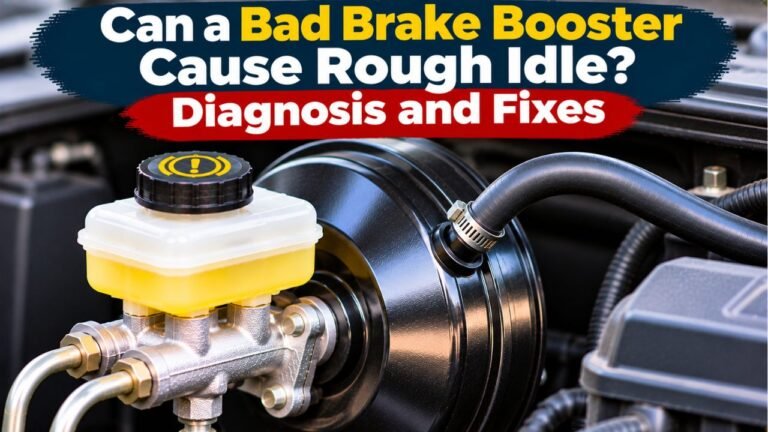
On vehicles using engine vacuum, a torn booster diaphragm or major hose leak can admit unwanted air into the intake system. Depending on engine controls, this may cause rough idle, stumbling, or stalling when the brakes are applied.
An engine stall may also affect other powered systems. This is another reason not to treat an audible leak as a harmless annoyance while continuing routine trips.
Warning Signs That Mean You Should Stop Driving
The most recognizable symptom is a brake pedal that becomes unusually hard to press while the vehicle is running. Other signs can appear together or separately:
- Longer stopping distance: The vehicle slows less than expected for the same pedal pressure.
- Hissing or whistling: Air noise occurs near the firewall or pedal, especially during braking.
- Changing pedal effort: Assistance feels inconsistent between stops.
- Engine idle changes: The engine runs rough or nearly stalls when the pedal is pressed.
- Brake-system warnings: A relevant dashboard message or light appears, particularly on electronically controlled systems.
The AutoZone guide to bad brake booster symptoms identifies hard pedal effort, longer stopping distances, hissing, and possible engine problems as common clues. It also cautions that a bad booster should be addressed promptly rather than driven with indefinitely.
A soft or sinking pedal requires urgent attention too, but it may point toward a hydraulic problem rather than a booster failure. Do not keep driving simply because the symptom does not match the classic hard-pedal description.
What to Do if the Brake Booster Fails While Driving
If the brake pedal suddenly becomes hard or the vehicle does not slow as expected, concentrate on controlling the car and reaching a safe stopping place. These actions are for an unexpected emergency while already moving, not a plan for driving with a known defect.
Step 01: Release the Accelerator and Look for a Safe Stopping Area
Take your foot off the accelerator and maintain smooth steering. Scan ahead for a shoulder, turnout, or another place away from moving traffic. Give yourself as much room as conditions allow and avoid abrupt maneuvers.
Turn on the hazard lights when it is safe to do so. Keep your attention on the road rather than looking down at switches or trying to diagnose the car while moving.
Step 02: Apply Firm, Steady Pressure to the Brake Pedal
If vacuum assist has been lost, the pedal may feel much harder than normal. Apply firm, sustained pressure to the service brake rather than assuming a hard pedal means the brakes cannot function at all.
Do not repeatedly pump the pedal merely to regain boost; on a vacuum-assisted system, pumping can use up any remaining reserve. If braking is ineffective for a different reason, follow the vehicle manufacturer’s emergency stopping instructions instead of assuming a booster problem is the only fault.
Step 03: Reduce Speed Without Making the Vehicle Unstable
Continue steering smoothly toward the safest available stopping area. Downshifting may help slow some vehicles when it can be done safely and according to the owner’s manual, but do not shift an automatic transmission into Park while moving.
Do not shut off the ignition while driving, because steering assistance and other systems may change or become unavailable. A parking brake is not a routine substitute for the service brakes; any emergency use must follow the specific vehicle’s instructions and avoid sudden application that could cause a skid.
Step 04: Secure the Car and Arrange a Tow
After stopping, place the transmission in Park or the appropriate manual gear, apply the parking brake as directed, and shut down the vehicle when safe. If you are on a busy roadway, follow local roadside safety guidance and avoid standing near traffic.
Call roadside assistance or a towing company. Do not restart your trip to test whether the brake pedal has improved, even if the warning disappears or the pedal temporarily feels normal.
Can You Drive to a Mechanic With a Bad Brake Booster?
Towing is the safer choice, even when the shop is nearby. A short route can still include a pedestrian crossing, unexpected traffic, a hill, or an emergency stop. Distance alone does not measure the risk.
A driver may be tempted to travel slowly on side streets or rely on extra following distance. Those precautions cannot restore failed assistance or guarantee enough stopping force. A vehicle with a brake defect should not be tested in normal traffic to find out how serious it is.
If you only hear an unfamiliar hiss but the pedal still feels normal, the booster may not be the cause. Nevertheless, have the concern assessed promptly and avoid unnecessary driving until a brake-related air leak has been ruled out. An appointment for inspection is useful; a tow may still be appropriate based on the symptoms.
What Causes a Brake Booster to Go Bad?
Leaking Booster Diaphragm or Internal Valve
A conventional vacuum booster contains a diaphragm and control valves that help create the pressure difference used for assistance. Wear or internal leakage can reduce the available force and sometimes create noise near the pedal.
A confirmed internal failure usually requires replacement of the booster assembly or a manufacturer-approved repair. Simply adjusting the brake pedal is not a fix for an air leak inside the unit.
Damaged Vacuum Hose or Check Valve
The hose supplying vacuum can crack, loosen, or collapse. A one-way check valve should help the booster retain reserve vacuum when the engine stops or the supply drops. If it leaks, assistance may disappear sooner than expected.
These external parts can mimic a bad booster while costing less to repair. Proper testing matters because replacing a good booster will not fix a restricted hose or faulty check valve.
Weak Vacuum Pump or Other Assist-System Fault
Some engines need an auxiliary vacuum pump, while other vehicles use hydraulic or electric assistance instead. Pump faults, wiring problems, low hydraulic pressure, or control-system errors can create a hard pedal without a failed conventional booster.
Hybrids and electric vehicles may have integrated electronic braking arrangements. Their warning messages and service procedures must be interpreted using the exact model’s documentation.
How a Mechanic Checks Whether the Booster Is Really Bad
A technician first verifies the complaint while the vehicle is safely stationary and checks for hydraulic leaks, warning messages, and obvious hose damage. On a conventional vacuum system, the next checks usually establish whether adequate vacuum reaches the booster and whether the check valve retains it.
The CARDONE technical bulletin on diagnosing a vacuum brake booster describes a stationary engine-off and engine-start pedal test, along with inspection of supply vacuum, hoses, and the one-way valve. A small pedal movement when assistance returns can be a useful clue, but no single test proves that every brake component is sound.
A professional may use a vacuum gauge or other approved tools to compare the system with vehicle-specific specifications. If supply vacuum and external parts are good but assist remains faulty, an internal booster problem becomes more likely.
Do not perform a road test to prove the brakes are weak. Diagnosis should be completed under controlled conditions, followed by the manufacturer’s required checks before the vehicle is returned to service.
Bad Brake Booster or Another Brake Problem?
| Symptom | Possible Problem | Appropriate Next Step |
| Hard pedal while engine runs | Booster or assist supply fault | Stop driving; inspect assist system |
| Soft, spongy pedal | Air or hydraulic fault | Inspect for leaks and proper bleeding |
| Pedal slowly sinks under steady pressure | Possible master-cylinder or other hydraulic leak | Diagnose pressure loss urgently |
| Hiss with changing idle | Vacuum leak near hose or booster | Check vacuum components |
| Brakes drag or wheels heat up | Sticking brake components or hydraulic restriction | Stop; inspect before further use |
The symptoms overlap, so the table cannot identify a failed part by itself. For example, loss of vacuum reserve may cause a firm pedal after the engine is off even though the booster works normally while the engine is running.
A sudden change from the vehicle’s usual braking behavior matters more than whether the pedal feels similar to another car’s. If stopping performance is questionable, treat the situation as unsafe until diagnosed.
Will Driving With a Bad Booster Damage Other Parts?
The immediate danger is reduced control of stopping distance, not a predictable amount of mechanical wear after a particular mileage. A booster that merely stops providing assistance does not automatically destroy the master cylinder, calipers, or brake pads.
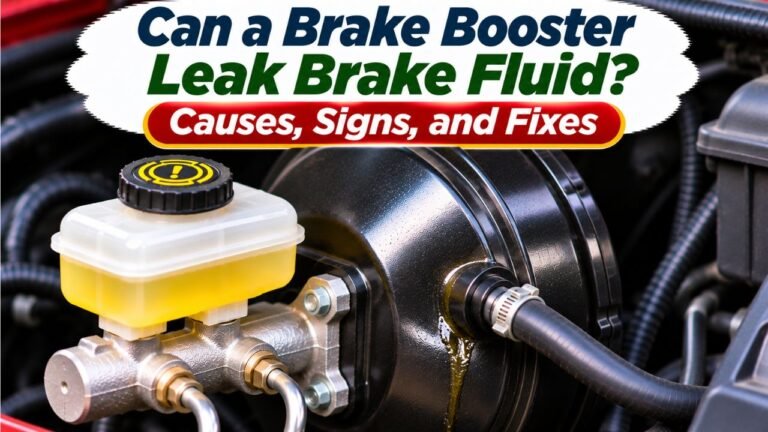
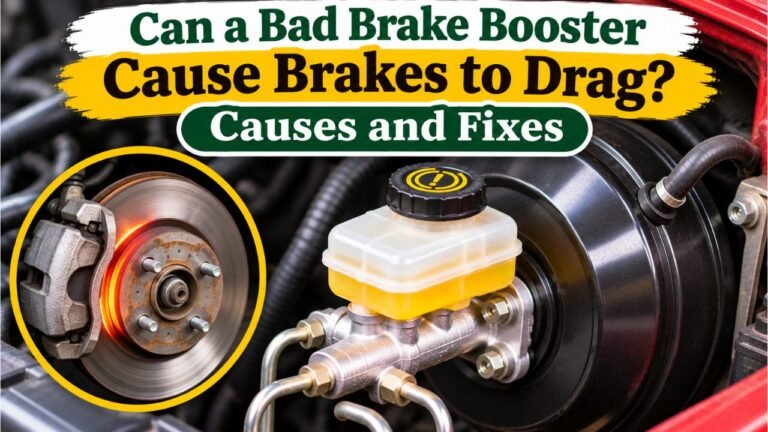
However, related faults can cause additional damage. An improperly adjusted pushrod or sticking hydraulic component may leave brakes dragging, which builds heat and can harm friction parts. A master-cylinder leak into the booster can damage the booster as well.
Driving in spite of a braking fault also increases the chance of a collision. That risk makes a repair delay far more consequential than the price of towing.
Can a Bad Brake Booster Be Repaired Instead of Replaced?
It depends on where the fault is found. A damaged vacuum hose, loose connection, worn grommet, or defective check valve may be replaceable without changing the entire booster. Those repairs still need verification that normal assist has returned.
When the booster diaphragm, housing, or internal control valve fails, replacing the assembly is common for modern passenger vehicles. Some older or specialized units have approved rebuilding options, but the design and parts availability determine whether that is appropriate.
Repair costs depend on the vehicle, the part, and access around the firewall. Ask for a diagnosis that separates the booster itself from its vacuum or electrical supply, and make sure the repair includes a safe functional check. A low estimate is not useful if it leaves the underlying fault unresolved.
How to Avoid Unexpected Brake Booster Problems
A brake booster may fail with little advance warning, but routine service can catch some developing problems. During brake inspections, have cracked vacuum hoses, loose fittings, damaged grommets, and relevant warning codes checked.
Pay attention to a new hiss or a change in pedal effort instead of waiting for stopping distance to become obviously worse. Follow the manufacturer’s brake-system service schedule, and do not postpone inspection because the pedal still seems manageable during light traffic.
Avoid treating booster issues as a scheduled mileage replacement. Most repairs are based on symptoms and verified condition rather than a universal age or odometer limit.
FAQs About How Long Can You Drive With a Bad Brake Booster
Can You Drive 10 Miles With a Bad Brake Booster?
There is no safe guarantee for ten miles or any other distance. Even a short journey may require a sudden stop that demands more pedal force than the driver can provide. Arrange towing instead.
Will the Brakes Completely Stop Working if the Booster Fails?
Not always. Many conventional systems retain a mechanical path to the hydraulic brakes, but stopping may require much greater effort. Other brake faults may be present, and some electronic systems operate differently, so continued driving is unsafe.
Can a Bad Booster Cause the Car to Stall?
Yes, on some engines. A substantial vacuum leak in the booster or its supply can disturb engine operation and cause rough idle or stalling, especially when the brake pedal is pressed. Other engine problems can produce the same symptom.
Will Pumping the Brakes Help if the Booster Stops Working?
Repeated pumping does not repair a booster. In a vacuum-assisted system, it can consume the remaining reserve of assist. If the pedal suddenly becomes hard while driving, maintain firm, steady pressure and work toward a safe stop.
Can a Bad Brake Booster Be Mistaken for a Bad Master Cylinder?
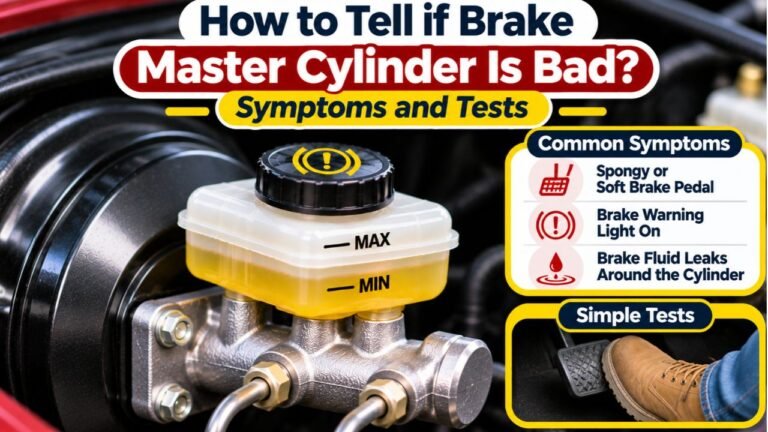
Yes. Both affect braking, but a lost booster commonly produces a hard pedal, while internal master-cylinder leakage may cause a sinking pedal. A technician must inspect the entire brake system to confirm the fault.
Should You Tow a Car if the Brake Pedal Only Feels Hard Sometimes?
Yes, if braking assistance or stopping performance changes unpredictably. Intermittent operation is not proof that the problem is minor. Have the vehicle transported and tested before normal driving resumes.
Why Stopping Now Is Safer Than Driving Another Mile
The question “how long can you drive with a bad brake booster” has no dependable mileage answer. A confirmed loss of power assist can demand far more effort at the pedal and make emergency stopping unpredictable, even when the car still slows during gentle braking.
If the fault appears while moving, use firm, steady braking to reach a safe stopping position. Once secure, do not resume the trip. Have the booster, vacuum supply, check valve, and other braking components inspected so the actual cause is repaired.
A tow is a reasonable tradeoff for avoiding the uncertainty of another stop with reduced brake assistance. Wait until normal brake operation has been verified before putting the vehicle back on the road.