Are Brake Calipers Supposed to Move: Clear Answers and Key Facts
To diagnose what you’re seeing, you must first distinguish between **sliding movement** and **piston movement**. These are entirely different mechanical actions, and confusing them is the most common source of worry for DIY mechanics.
Are brake calipers supposed to move? The short answer is yes, but only in a very specific way: they must slide laterally along their guide pins to press the pads against the rotor, yet they should have no vertical, horizontal, or rotational looseness. This article explains the difference between normal sliding motion and dangerous play, the conditions that cause excessive movement, and how to tell if your calipers need attention.
Imagine pressing the brake pedal and hearing a metallic clunk from the front wheel, or feeling a slight shudder that seems to come from the suspension rather than the rotor. You jack up the car, grab the caliper, and it moves when you push on it. That moment of uncertainty—whether you are looking at a normal floating caliper design or a failing component—is exactly where many DIYers and concerned drivers get stuck. The distinction matters because a caliper that moves too much can cause uneven pad wear, reduced braking power, and even a dangerous wheel vibration under hard stops. What looks like a loose part might actually be the mechanism working as intended, but the line between correct function and failure is narrower than most people realize.
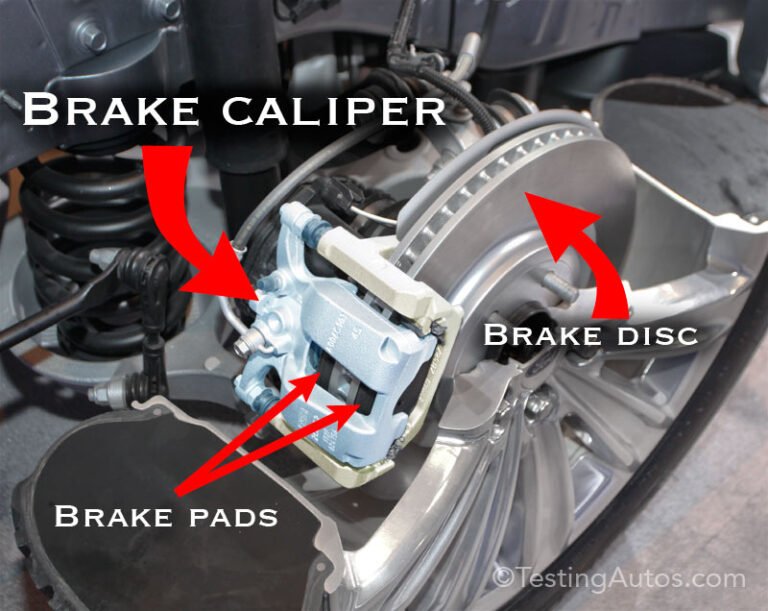
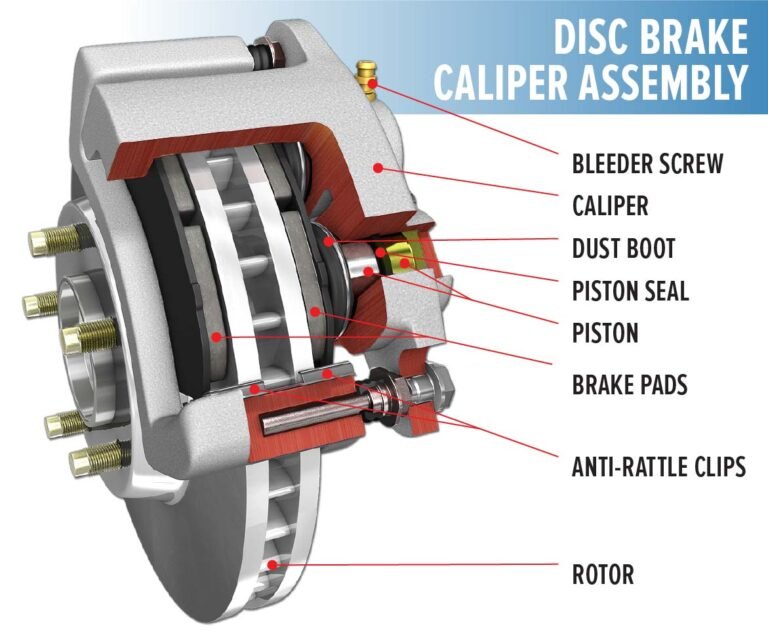
To understand what you are feeling, you need to know how a floating caliper works. Unlike a fixed caliper with pistons on both sides of the rotor, a floating caliper has pistons on only the inboard side. When you press the brake pedal, hydraulic pressure pushes the piston against the inner pad, forcing it into the rotor. The caliper body then slides outward on guide pins, pulling the outer pad into contact with the other side of the rotor. This sliding action is essential; without it, the outer pad would never touch the rotor with enough force. So when you grab a caliper and feel it shift side to side along the axis of the rotor, that is the guide pins doing their job. The real problem is when the movement happens in any other direction.
**Normal sliding motion vs. dangerous play**
The most reliable way to distinguish acceptable caliper movement from a failure is to check the direction of the play. A caliper that slides parallel to the rotor surface, moving in and out along the guide pins, is functioning as designed. You can usually feel this by gripping the caliper body and pushing it toward the engine or toward the outside of the wheel well. A small amount of this axial movement—often a millimeter or two—is normal, especially when the brake pads are not fully seated against the rotor. The caliper should return to its resting position when you let go, and it should move smoothly without binding or sticking.
What is not normal is movement perpendicular to the rotor surface. If you can rock the caliper up and down, twist it, or feel a clunk when you push on the top or bottom edge, you have a problem. This type of play usually comes from worn guide pins, damaged rubber bushings, or corroded mounting brackets. The caliper should feel solid when you try to move it in these directions because the guide pins and bracket are designed to constrain it tightly. Vertical or rotational movement means the caliper is not held securely, which can lead to uneven pad contact and a pulsing brake pedal.
Another way to test the condition is to watch the caliper while someone else presses and releases the brake pedal. With the wheel removed and the engine running, have an assistant apply firm pressure to the pedal. You should see the caliper slide outward slightly as the brakes engage, then return when the pedal is released. If the caliper moves but does not return, or if it shifts sideways rather than straight out, the guide pins are likely sticking or corroded. This test also reveals whether the caliper is moving too far, which can indicate worn bushings or a collapsed piston seal.
**Why calipers develop excessive movement**
The most common cause of abnormal caliper movement is corrosion on the guide pins or inside the rubber boots that protect them. Over time, moisture and road salt can work their way past the boots, causing the pins to rust and the lubricant to wash out. When this happens, the caliper may bind on one pin while sliding freely on the other, creating a twisting motion that feels like play. You might also notice that the brake pads wear unevenly, with one pad significantly thinner than the other. This is a classic sign that the caliper is not sliding evenly across both guide pins.
Worn guide pin bushings are another frequent culprit. Many calipers use rubber or polyurethane bushings inside the mounting bracket to dampen vibration and allow smooth sliding. As these bushings age, they can crack, soften, or lose their shape. A deteriorated bushing allows the caliper to move more than it should, producing a knocking sound over bumps and a vague brake pedal feel. In severe cases, the caliper can rattle constantly, even when the brakes are not applied, because the bushings no longer hold it snugly against the bracket.
A less common but more serious cause is a bent or damaged mounting bracket. If the caliper bracket has been hit by debris, or if the car was involved in a collision, the bracket may no longer hold the guide pins parallel to each other. This misalignment forces the caliper to bind and shift as it slides, creating play that cannot be fixed by lubrication alone. You might also see this after an improper brake job where the bracket bolts were over-torqued or the caliper was pried off with a pry bar, bending the bracket ears.
**The role of the guide pins and boots**
Guide pins are the metal rods that pass through the caliper ears and into the mounting bracket. They are not just simple bolts; they are precision components that allow controlled sliding while keeping the caliper aligned with the rotor. Most guide pins have a rubber boot at one end that keeps dirt and water out of the bore. When this boot tears or pops off, contamination enters the pin bore and accelerates wear. You should inspect these boots whenever you have the wheel off, looking for cracks, tears, or signs that grease has been washed out.
The pins themselves should be clean and lightly coated with high-temperature brake grease. If you find one pin dry and the other covered in old, hardened grease, that imbalance explains why the caliper moves unevenly. Some calipers use a rubber bushing on one pin and a solid pin on the other; this is intentional, as the bushing absorbs vibration while the solid pin provides precise alignment. Do not assume both pins should look identical. If you are unsure, compare the new pins to the old ones before installation.
**How much movement is too much**
There is no universal measurement for acceptable caliper play because it varies by vehicle make and model. However, a good rule of thumb is that any movement you can feel by hand, other than the smooth axial slide, is worth investigating. A properly functioning caliper should feel tight when you try to rock it, even if it slides freely along the pins. If you can hear a clunk when you push on the caliper, or if the movement is accompanied by a metallic rattle while driving over rough roads, the caliper needs attention.
One way to quantify the play is to use a dial indicator, but most DIYers do not have one. A simpler approach is to compare the movement to the other side of the car. If the driver-side caliper feels solid and the passenger-side caliper rocks noticeably, you have found the problem. Brake components wear symmetrically, so a significant difference between left and right sides almost always indicates a fault on the looser side.
**What happens if you ignore excessive caliper movement**
Driving with a loose caliper is not just a noise issue; it affects braking performance and safety. When the caliper moves excessively, the brake pads do not maintain consistent contact with the rotor. This can cause the pads to wear at an angle, reducing the effective friction area and increasing stopping distance. The uneven pressure can also warp the rotor over time, leading to a pulsating brake pedal that is difficult to control in an emergency stop.
Excessive caliper movement also stresses the brake hose. The hose is designed to flex as the caliper slides, but if the caliper is rocking or twisting, the hose can bend beyond its intended range. This can cause the hose to crack or fail internally, restricting brake fluid flow and causing the brakes to drag or stick. A stuck caliper generates enormous heat, which can boil the brake fluid, fade the brakes, and damage the wheel bearing from prolonged high temperatures.
**When to replace versus repair**
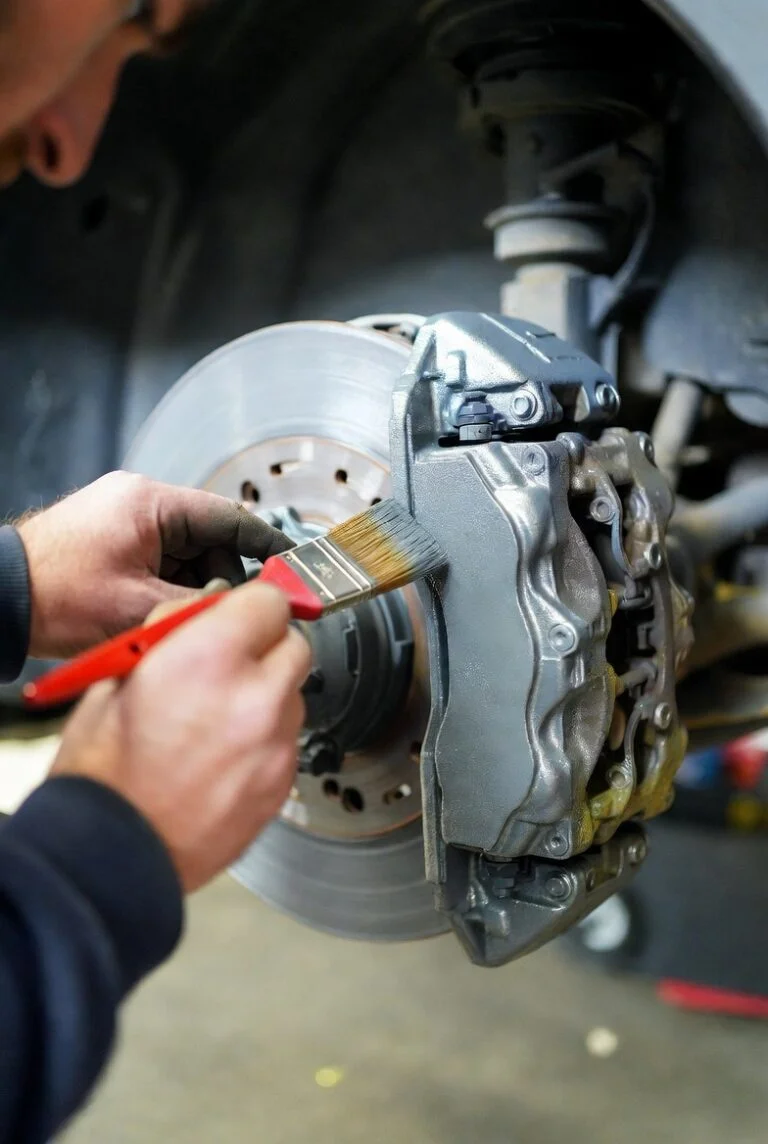
If you find that the caliper movement is caused by dry or corroded guide pins, the fix is often simple. Remove the caliper, clean the pins and bores with brake cleaner, apply fresh high-temperature brake grease, and reinstall. This usually restores smooth sliding and eliminates the play. However, if the pins are pitted, scored, or bent, they must be replaced. Do not try to sand down a corroded pin, as this removes the protective coating and leaves a rough surface that will wear the bore quickly.
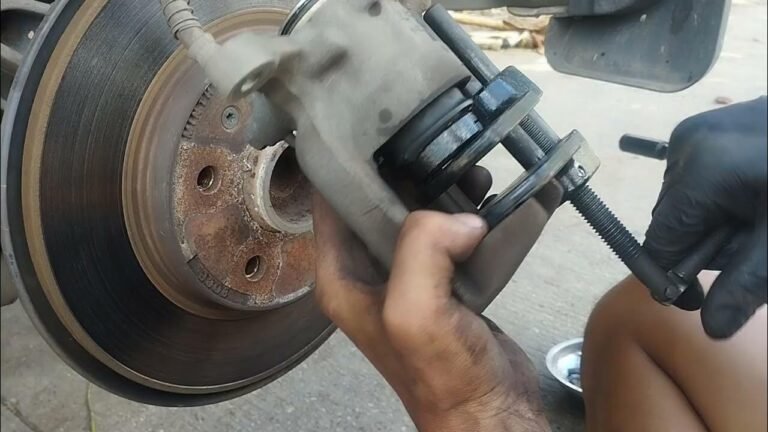
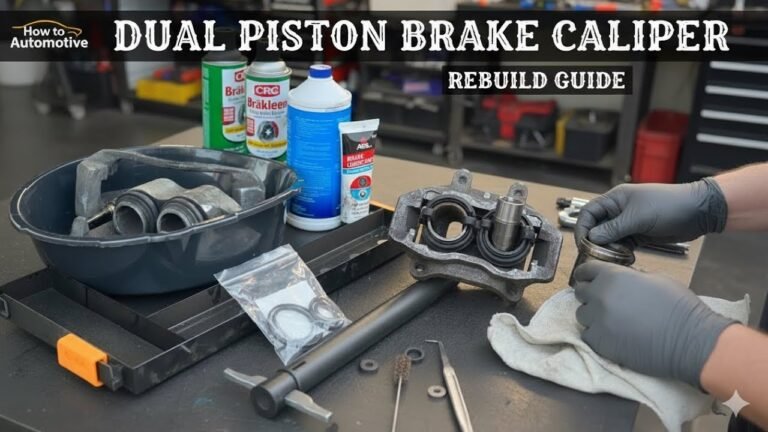
Worn rubber bushings should also be replaced, not just lubricated. Many caliper rebuild kits include new bushings, boots, and pins, and these kits are inexpensive compared to a full caliper replacement. If the caliper piston itself is leaking or sticking, or if the mounting bracket is damaged, replace the entire caliper. A rebuilt or new caliper comes with fresh seals and a clean bore, which is the safest option when internal damage is suspected.
**The importance of proper lubrication and torque**
When you reassemble a caliper, the type of grease you use matters. Ordinary chassis grease or petroleum-based lubricants can swell the rubber boots and bushings, causing them to fail prematurely. Use only a high-temperature brake caliper grease that is compatible with rubber and silicone components. Apply a thin, even coat to the guide pins and the inside of the boots, but do not overpack the bore with grease. Excess grease can create hydraulic pressure inside the boot, pushing the pin out of position and causing the caliper to bind.
Torque specifications are equally important. Guide pin bolts have a specific torque range, usually between 20 and 35 foot-pounds, but you should verify the exact value for your vehicle. Over-tightening the pins can distort the rubber bushings and restrict sliding, while under-tightening allows the pins to back out. Use a torque wrench and follow the manufacturer’s procedure, which often involves tightening the upper and lower pins in a specific order.
**A practical inspection routine**
You do not need to disassemble the brakes to check for abnormal caliper movement. With the car safely supported on jack stands and the wheel removed, grab the caliper with both hands and try to move it in every direction. Push it toward the rotor and away from the rotor to feel the normal slide. Then try to rock it up and down, and twist it around the axis of the guide pins. Any movement other than the slide is a red flag. Also, look at the rubber boots on the guide pins; if they are cracked or missing, plan to replace them soon.
If you notice a caliper that moves excessively, do not drive the car until you have addressed the issue. A loose caliper can cause the brake pads to dislodge or the caliper to contact the wheel, leading to sudden brake failure. Even if the movement seems minor, the condition will worsen as the bushings continue to wear. Addressing it early is far cheaper than replacing a rotor, a caliper, or both.
**Conclusion**
A brake caliper is supposed to move, but only in one direction: sliding along its guide pins to press the pads evenly against the rotor. Any other movement—rocking, twisting, or vertical play—indicates worn guide pins, deteriorated bushings, or a damaged bracket. The key takeaway is to distinguish between the smooth axial slide that is part of normal operation and the loose, clunking play that signals a problem. If you feel abnormal movement, inspect the guide pins and boots first, because lubrication or replacement of these parts often solves the issue. Do not ignore a loose caliper, as it compromises braking performance and can lead to rotor damage or a stuck brake. If you are not comfortable performing the inspection yourself, have a trusted mechanic check the caliper movement during your next brake service. Catching this problem early is a simple way to keep your braking system safe and reliable.
Understanding the Two Types of Caliper Movement
Sliding movement refers to the entire caliper body shifting laterally on its mounting pins. This is a normal, required function on floating calipers, allowing the inner pad to press against the rotor first, then pulling the outer pad into contact via the caliper’s slide action. Without this side-to-side play, the outer pad would wear rapidly and braking force would be severely reduced.
Piston movement, by contrast, is the hydraulic extension of the piston out of the caliper bore. This happens when you press the brake pedal, and the piston should retract slightly when you release it. If the piston itself is moving excessively or pushing the pad against the rotor while you’re driving straight, that is a hydraulic problem, not a mechanical slide issue.
How Much Play Is Considered Normal?
There is no universal millimeter specification because designs vary by manufacturer, but a good rule of thumb is that a caliper should move **no more than 1–2 millimeters** when you pry on it with a large screwdriver. This movement should feel like a firm, controlled slide, not a loose rattle.
If you grab the caliper with your hand and feel a distinct clunk or hear a metallic knock, that indicates excessive wear in the slide pins or their rubber bushings. On the other hand, a caliper that feels completely frozen—with zero lateral movement—will cause uneven pad wear, pulling to one side during braking, and often a burning smell from the dragging pad.
To test properly, always do this with the wheel removed and the brake pads installed. Push the caliper inward toward the rotor, then release. It should spring back slightly due to the square-cut piston seal, but the main slide movement should be smooth and free of binding.
Why the Caliper Must Move: The Floating Design
Most modern vehicles use a **floating or sliding caliper design** for cost and weight savings. This design uses a single piston on the inboard side. When you brake, hydraulic pressure pushes the piston against the inner pad, forcing it onto the rotor.
Simultaneously, the caliper body slides outward on its pins, pulling the outer pad into contact with the rotor’s outer face. This self-energizing action is what creates even clamping force from both sides using just one piston. If the caliper cannot slide, only the inner pad makes full contact, leading to a dangerous braking imbalance and rapid pad destruction.
Fixed calipers, found on performance vehicles, do not slide at all. They have pistons on both sides of the rotor, and the caliper body is bolted rigidly to the steering knuckle. If you own a fixed-caliper car, any visible movement of the caliper body is a serious red flag indicating loose mounting bolts or a cracked bracket.
Common Causes of Abnormal Caliper Movement
When movement becomes excessive or sloppy, the usual culprits are worn slide pins, deteriorated rubber boots, or corroded mounting brackets. The slide pins are precision-ground steel shafts that fit inside rubber bushings; over time, moisture and road salt can cause pitting and rust, creating a rough surface that binds or wobbles.
Another frequent issue is **missing or damaged anti-rattle clips**. These spring steel clips hold the pads tightly against the caliper and bracket, preventing vibration. If a clip breaks, the caliper may shift forward and backward under braking, producing a clicking noise every time you stop.
Finally, check the caliper mounting bolts themselves. These bolts are typically torqued to 80–120 ft-lbs and should never loosen. If you find a loose bolt, do not simply retighten it—inspect the threads and the bracket for damage, as a loose caliper can shear the bolt and cause a catastrophic wheel lockup.
Diagnostic Steps: What to Look For and Feel
Start by lifting the vehicle and securing it on jack stands. Remove the wheel and visually inspect the rubber dust boots on the slide pins. A torn or cracked boot allows water and grit into the pin bore, accelerating wear and causing uneven movement.
Next, use a pry bar to gently push the caliper inward and outward. Listen for grinding or squeaking, which indicates dry pins. If the movement feels gritty, remove the slide pins, clean them with brake cleaner, and apply a thin coat of high-temperature silicone brake grease.
Never use petroleum-based grease, as it will swell the rubber boots.
Also examine the brake pads for a **tapered wear pattern**. If the inner pad is significantly thinner than the outer pad, the caliper is not sliding properly. Conversely, if the outer pad is thinner, the caliper may be sticking in the outward position, which keeps the outer pad pressed against the rotor even when you release the brake.
Safety Implications and When to Act
A caliper that moves excessively is not just a nuisance—it is a direct safety hazard. Excessive play can cause the caliper to contact the wheel rim or suspension components, leading to a sudden loss of braking force. It also increases brake fluid temperature, which can cause brake fade on long descents.
If you notice any of the following symptoms, address them immediately: a low-pitched clunk when driving over bumps, a pedal that feels spongy despite proper bleeding, or a vehicle that pulls to one side during hard braking. These are signs that the caliper is moving in ways it should not.
In most cases, the fix is straightforward: replace the slide pin kit, which costs $20–$40, or replace the caliper bracket if it is severely corroded. However, if the caliper piston itself is loose or leaking fluid, you must replace the entire caliper unit. Do not attempt to repair a leaking piston seal, as internal damage is often invisible and can lead to sudden brake failure.
Conclusion: Normal Slide, Never Sloppy Play
The short answer is yes, brake calipers are supposed to move—but only in a controlled, lateral sliding motion on their pins. This movement is essential for the floating caliper design to function correctly, ensuring even pad wear and balanced braking force.
What is not normal is excessive rattling, clunking, or visible wobble of the caliper body. If you feel more than a couple of millimeters of play, or if the movement is accompanied by noise or pulling, inspect the slide pins, boots, and mounting hardware immediately. When in doubt, replace the inexpensive slide pin kit before considering a full caliper replacement.
A properly sliding caliper should move smoothly, quietly, and predictably—anything else is a warning that your braking system needs attention.