How Often Do You Need a Brake Fluid Flush? Intervals and Tips
Most cars need a brake fluid flush approximately every 2–3 years, although the correct interval depends on the vehicle manufacturer’s maintenance schedule. Some manufacturers recommend replacing brake fluid every two years regardless of mileage, while others specify three years or a different schedule. You may need service sooner if the fluid is contaminated, the braking system has been opened, or testing shows that its performance is below the required standard.
Brake fluid transfers hydraulic pressure from the brake pedal to the components that slow or stop your vehicle. Over time, conventional brake fluid absorbs moisture, which can reduce its boiling point and contribute to corrosion. These changes can occur even when you rarely drive, so mileage alone is not a reliable way to determine when a flush is due.
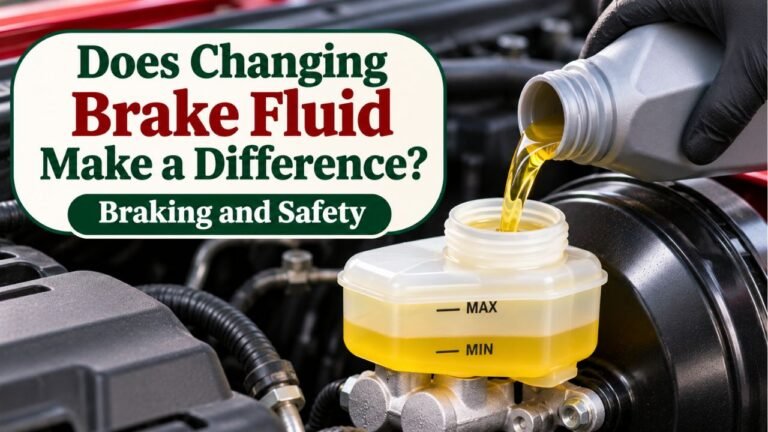
Unlike adding fluid to the reservoir, a proper brake fluid flush or replacement service removes old fluid from the hydraulic system and replaces it with fresh, manufacturer-approved fluid.
In this article, I explain how often you need a brake fluid flush, compare manufacturer service intervals, and cover the symptoms of deteriorating fluid. I also explain moisture testing, DOT fluid differences, ABS considerations, service costs, and what happens when brake fluid replacement is delayed.
How Often Do You Need a Brake Fluid Flush?

For many passenger vehicles, a brake fluid flush is recommended every 24–36 months, even when the vehicle has accumulated relatively few miles.
However, this is a general planning range rather than a universal maintenance requirement.
The vehicle’s owner’s manual and official maintenance schedule should always take priority.
Brake Fluid Flush Interval Chart
| Vehicle or Driving Situation | Typical Maintenance Approach |
| Vehicle specifying a 2-year interval | Replace every 24 months |
| Vehicle specifying a 3-year interval | Replace every 36 months |
| Vehicle with an initial 3-year interval and subsequent 2-year intervals | Follow that sequence |
| Low-mileage vehicle | Follow the time-based schedule |
| High-mileage daily driver | Follow the manufacturer; inspect sooner when appropriate |
| Vehicle used for towing or mountain driving | Follow scheduled replacement; consider more frequent condition checks |
| Track or performance vehicle | Follow the applicable high-performance service schedule |
| Vehicle with contaminated brake fluid | Replace and investigate the contamination |
| Vehicle with hydraulic components recently repaired | Follow the required replacement or bleeding procedure |
| Used vehicle with unknown service history | Arrange inspection and determine whether replacement is overdue |
The Bosch Car Service guide to brake fluid changes explains that many manufacturers recommend replacement approximately every two years. It also emphasizes that fluid condition and the vehicle’s service requirements matter.
Is Every Two Years the Best Rule?
A two-year interval is a practical maintenance guideline for many vehicles.
However, it would be incorrect to say that every car must receive a brake fluid flush exactly every two years.
For example, some Honda maintenance schedules specify three years, while certain Volkswagen schedules specify three years for the first replacement and two years for subsequent replacements.
Does Mileage Matter?
Mileage can affect overall brake-system wear and operating conditions, but brake fluid also deteriorates over time.
A vehicle that travels 5,000 miles annually may still need fluid replacement after two or three years.
Likewise, a vehicle that travels 25,000 miles annually should follow its manufacturer-specific requirements rather than relying on a general mileage estimate.
Key Takeaway: Check the official service schedule first. If you’re unsure, a 2–3-year interval is a useful general reference, but it does not replace vehicle-specific maintenance instructions.
Brake Fluid Flush Intervals by Car Manufacturer
Different manufacturers use different maintenance schedules.
The following examples illustrate why brake fluid replacement should not follow one universal rule.
Honda Brake Fluid Flush Interval
Many Honda vehicles require brake fluid replacement every three years.
For vehicles equipped with Maintenance Minder, brake fluid replacement may appear as service item 7.
According to American Honda’s official Maintenance Minder explanation, if the brake fluid reminder does not appear within 36 months after the item 7 service is reset—or the vehicle does not have that item—the fluid should be changed every three years.
The exact procedure and required fluid depend on the Honda model and year.
Volkswagen Brake Fluid Flush Interval
Volkswagen uses different first-service and subsequent-service intervals for some vehicles and markets.
For example, the Volkswagen 2023 U.S. service maintenance schedule, updated December 2025, specifies:
- First brake fluid replacement: Three years after registration for U.S. vehicles.
- Subsequent replacements: Every two years.
- The interval applies regardless of mileage.
That document also specifies a different initial interval for Canadian vehicles.
These requirements should not automatically be applied to every Volkswagen model year.
Other Vehicle Manufacturers
Many European vehicle maintenance programs specify approximately two-year replacement intervals.
However, schedules differ across brands, model years, and markets.
Some manufacturers also include inspections or condition-based recommendations.
Rather than assuming a particular interval for Toyota, Ford, Chevrolet, BMW, Mercedes-Benz, Subaru, or another brand, check the exact vehicle’s maintenance documentation.
Manufacturer Interval Comparison
| Manufacturer Example | Documented Interval | Important Qualification |
| Honda | Every 3 years | Follow Maintenance Minder and the applicable manual |
| Volkswagen, certain U.S. 2023 models | First at 3 years, then every 2 years | Based on the cited U.S. service schedule |
| Many vehicles covered by general Bosch service guidance | Approximately every 2 years | General recommendation; confirm vehicle-specific requirements |
| Other makes and model years | Varies | Consult the official maintenance schedule |
The correct interval can differ even between vehicles manufactured by the same company.
Important: Don’t assume that your previous car’s brake fluid schedule applies to your current vehicle.
Why Does Brake Fluid Need to Be Flushed?
Brake fluid gradually changes as it ages.
The most important concern for conventional automotive brake fluid is moisture absorption.
Brake Fluid Absorbs Moisture
DOT 3, DOT 4, and DOT 5.1 are generally glycol-based fluids.
These fluids are hygroscopic, meaning they absorb moisture from the surrounding environment.
Although the brake system is designed to remain sealed during operation, moisture can gradually enter through certain components and materials.
Over time, this can affect the fluid’s performance.
Moisture Lowers the Boiling Point
Braking generates heat.
During repeated or heavy braking, some heat reaches the hydraulic components.
Fresh brake fluid is formulated to resist boiling at elevated temperatures.
When moisture accumulates, the boiling point can decrease.
Under sufficiently demanding conditions, the fluid may begin to boil.
Why Boiling Is Dangerous
Liquid brake fluid transfers hydraulic pressure effectively because it is only slightly compressible.
Vapor behaves differently.
When vapor forms inside the braking system, some pedal movement may compress that vapor instead of transmitting pressure to the brakes.
This can create a soft pedal or reduced braking effectiveness.
The problem may become particularly noticeable during prolonged downhill driving or repeated hard braking.
Moisture Can Contribute to Corrosion
Water contamination can also contribute to corrosion inside certain components.
Potentially affected parts include:
- Brake lines.
- Brake calipers.
- Wheel cylinders.
- Master cylinders.
- ABS hydraulic units.
- Hydraulic fittings.
Corrosion and contamination can contribute to expensive repairs.
Brake Fluid Additives Also Matter
Brake fluid contains additives designed to support characteristics such as corrosion protection and component compatibility.
Proper maintenance helps ensure that the fluid continues to meet the requirements of the braking system.
Key Takeaway: Brake fluid replacement is preventive maintenance. The objective is to maintain suitable boiling-point performance and protect hydraulic components before noticeable braking problems occur.
Do You Need a Brake Fluid Flush Every 30,000 Miles?
Not necessarily.
Some repair shops use general mileage recommendations, such as 20,000–30,000 miles, when discussing brake fluid service.
However, that doesn’t mean every vehicle requires a flush at 30,000 miles.
Why Time Is Often More Important
Moisture absorption occurs over time, including when the vehicle is parked.
Consider two vehicles:
Vehicle A
- Driven 5,000 miles annually.
- Brake fluid last replaced three years ago.
- Total distance since replacement: 15,000 miles.
Vehicle B
- Driven 20,000 miles annually.
- Brake fluid replaced one year ago.
- Total distance since replacement: 20,000 miles.
For a car with a three-year replacement schedule, Vehicle A may be due for service despite having traveled fewer miles.
Vehicle B may not yet be due based on time, although its manufacturer and operating conditions still matter.
What if the Manual Specifies Mileage and Time?
Follow the manufacturer’s exact instruction.
If the schedule says a certain mileage or a certain number of years, whichever comes first, use the earlier limit.
Don’t replace that requirement with a generic mileage rule.
Signs You May Need a Brake Fluid Flush Sooner
Brake fluid can deteriorate without causing obvious symptoms.
Therefore, waiting for a problem is not a good substitute for scheduled maintenance.
However, certain observations call for immediate inspection.
1. Spongy Brake Pedal
A soft or spongy pedal can indicate air or vapor in the hydraulic system.
It may also result from a leak or another mechanical fault.
Do not assume that old brake fluid is the only possible cause.
If the pedal feels abnormally soft or sinks toward the floor, do not drive until the system is evaluated.
2. Braking Performance Changes When Hot
If braking performance deteriorates after repeated hard stops or a long downhill drive, overheating may be involved.
Brake fluid with a reduced boiling point is one possible contributor.
Other brake problems can create similar symptoms.
A professional inspection is necessary.
3. Unusual Brake Fluid Appearance
Brake fluid may darken or become cloudy with age and contamination.
However, color is not a reliable measurement of moisture content.
Clear-looking fluid can still have reduced boiling-point performance.
Visible particles, unusual cloudiness, or foreign material warrant inspection.
4. Unknown Brake Fluid Service History
If you recently purchased a used vehicle and cannot determine when the fluid was last replaced, arrange an inspection.
The technician can review the maintenance schedule and evaluate the fluid’s condition.
5. Contaminated Hydraulic System
Brake fluid should be replaced when contamination is confirmed and the required repair procedure calls for replacement.
Contamination from engine oil, power steering fluid, or other incompatible liquids may require more extensive service than an ordinary flush.
6. Hydraulic Repairs
Replacing a brake hose, caliper, master cylinder, or another hydraulic component can require bleeding or fluid renewal.
The procedure depends on which parts were serviced and whether air entered the system.
Warning Signs and Next Steps
| Symptom | Possible Cause | Recommended Action |
| Spongy pedal | Air, vapor, leak, or hydraulic fault | Do not drive; have brakes inspected |
| Pedal sinks | Serious hydraulic issue | Do not drive |
| Braking weakens during heavy use | Heat-related fade or other brake fault | Stop safely and arrange inspection |
| Brake fluid visibly contaminated | Fluid deterioration or foreign material | Have system evaluated |
| Reservoir level keeps dropping | Hydraulic leak or brake wear | Inspect promptly |
| Brake warning light remains on | Brake-system fault | Diagnose before driving |
| No fluid service record | Unknown maintenance condition | Check schedule and arrange inspection |
A flush is not a universal cure for these symptoms. Any mechanical or hydraulic fault must be identified and repaired.
How Do You Know if Brake Fluid Is Still Good?
Professional testing can help assess brake fluid condition.
However, different tests measure different properties.
Brake Fluid Moisture Testing
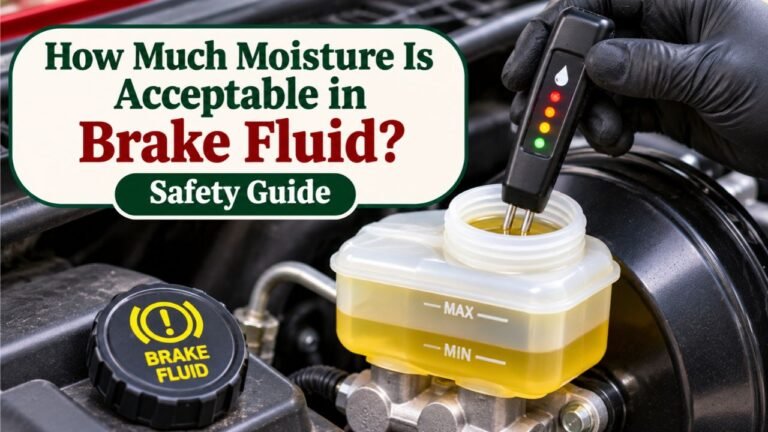
Some electronic testers estimate water content using electrical conductivity.
These devices may display values such as 1%, 2%, 3%, or 4%.
However, conductivity varies with brake fluid formulation and additives.
An inexpensive tester may not provide an accurate measurement for every fluid type.
Is 3% Moisture Too Much?
A moisture reading around 3% is commonly treated as a reason for concern in general automotive maintenance.
However, 3% is not a universal replacement threshold that applies equally to every brake fluid and vehicle.
Different products have different wet boiling-point performance.
The vehicle manufacturer’s service requirements and appropriate fluid testing should determine whether replacement is necessary.
Boiling Point Testing
A professional boiling-point tester evaluates how the fluid performs when heated.
This can provide useful information about its resistance to boiling.
However, boiling-point testing does not establish every possible aspect of the fluid’s condition.
A fluid may have other contamination or compatibility issues that require attention.
Can You Check Brake Fluid by Color?
You can inspect its appearance, but you cannot reliably determine its boiling point or moisture content by color alone.
Should Testing Replace the Maintenance Schedule?
Generally, no.
If the manufacturer requires replacement every two or three years, a visually clean fluid or an inexpensive test-pen reading should not automatically override that schedule.
Testing is especially useful when condition is uncertain or a problem is suspected.
What Happens During a Brake Fluid Flush?
A brake fluid flush, often called a brake fluid replacement or exchange, removes old hydraulic fluid and replaces it with fresh fluid.
The exact procedure varies depending on the vehicle’s braking system.
Step 1: Identify the Correct Brake Fluid
The technician checks the manufacturer’s required specification.
The system may require DOT 3, DOT 4, a particular low-viscosity formulation, DOT 5.1, or another approved fluid.
The correct product is essential for compatibility.
Step 2: Inspect the Brake System
Before replacing the fluid, the technician checks the braking system for obvious problems.
These may include:
- Fluid leaks.
- Damaged lines or hoses.
- Worn brake components.
- Reservoir or cap problems.
- Hydraulic-system faults.
A fluid flush does not repair these problems.
Step 3: Prepare the Equipment
Depending on the vehicle and service method, the technician may use:
- A pressure bleeding system.
- A manufacturer-approved manual bleeding procedure.
- A suitable vacuum bleeding system.
- Specialized ABS diagnostic equipment.
Not all methods are appropriate for every vehicle.
Step 4: Remove Old Fluid
The technician follows the manufacturer-approved procedure to exchange the fluid through the required hydraulic circuits.
The goal is to replace the old fluid without allowing air to enter the system.
Step 5: Introduce Fresh Fluid
Fresh brake fluid is added using clean, compatible equipment.
The hydraulic system must remain free of contamination.
Used fluid must never be returned to the fresh-fluid container.
Step 6: Bleed the System Correctly
The required bleeding sequence and equipment depend on the brake system.
Some vehicles require special procedures involving ABS valves or electronic brake-control components.
Step 7: Check Fluid Level and Pedal Operation
After servicing, the technician verifies the reservoir level, pedal behavior, and relevant braking-system conditions.
Step 8: Perform Final Safety Checks
The braking system must be confirmed to operate correctly before the vehicle is returned to service.
This may include checking for leaks, confirming that warning indicators are resolved, and completing the manufacturer’s post-service tests.
Important: Brake fluid service is safety-critical. If you lack the correct equipment or vehicle-specific procedure, professional service is preferable to experimenting with the hydraulic system.
Brake Fluid Flush vs. Brake Bleeding: What’s the Difference?
The terms are sometimes used interchangeably, but they describe different service objectives.
Brake Fluid Flush
The primary goal is to replace old or contaminated brake fluid with fresh fluid.
It is usually performed as preventive maintenance or as part of a required repair.
Brake Bleeding
The primary goal is to remove trapped air from the hydraulic system.
Bleeding may be necessary after certain brake repairs, component replacements, or accidental loss of fluid.
Comparison Table
| Feature | Brake Fluid Flush | Brake Bleeding |
| Main purpose | Replace old fluid | Remove trapped air |
| Typical reason | Scheduled maintenance | Hydraulic repair or air in the system |
| Fresh fluid used | Yes | Usually |
| All circuits serviced | According to the replacement procedure | According to the bleeding procedure |
| Requires correct sequence | Yes | Yes |
| Can involve ABS procedures | Yes, depending on vehicle | Yes, depending on vehicle |
| Fixes leaks | No | No |
A proper fluid replacement commonly involves bleeding fluid through the system.
However, not every brake bleeding operation amounts to a complete fluid exchange.
Is Topping Off the Reservoir the Same as a Flush?
No.
Adding a small amount of fresh fluid to the reservoir leaves most of the old fluid inside the brake lines, calipers, and other components.
It does not reset the manufacturer’s replacement interval.
Does Brake Fluid Type Affect the Flush Interval?
Brake fluid type can affect performance and maintenance requirements.
However, the DOT classification alone does not establish a universal replacement schedule.
DOT 3 Brake Fluid
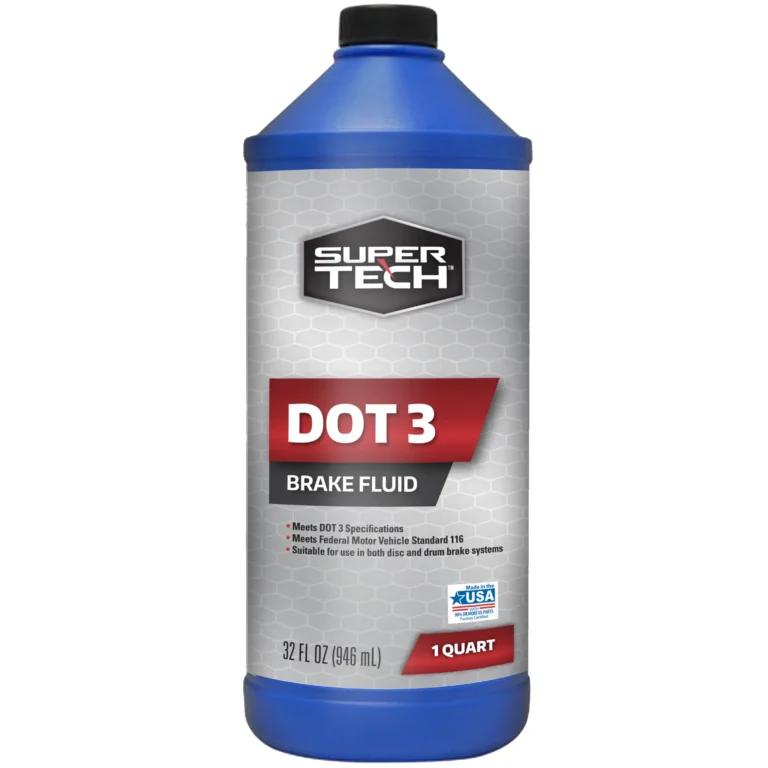
DOT 3 is a common glycol-based brake fluid.
It absorbs moisture over time and requires replacement according to the vehicle manufacturer’s instructions.
DOT 4 Brake Fluid
DOT 4 is also generally glycol-based.
It has higher minimum dry and wet boiling-point requirements than DOT 3.
However, that does not mean DOT 4 can always remain in the braking system longer.
DOT 4 LV Brake Fluid
Low-viscosity DOT 4 formulations are designed for certain braking systems that require specific fluid-flow properties.
Use only the specification approved by the manufacturer.
A generic DOT 4 product may not provide the required low-temperature viscosity.
DOT 5 Brake Fluid
Conventional DOT 5 is silicone-based.
It does not absorb moisture in the same way as glycol-based fluids.
However, water contamination and other maintenance concerns remain possible.
Silicone DOT 5 should not be mixed with conventional glycol-based DOT fluids.
DOT 5.1 Brake Fluid
DOT 5.1 is glycol-based despite its similar name to DOT 5.
It is hygroscopic and needs appropriate maintenance.
Brake Fluid Comparison
| Fluid Type | Base Chemistry | Moisture Behavior | Replacement Schedule |
| DOT 3 | Glycol-based | Hygroscopic | Vehicle-specific |
| DOT 4 | Glycol-based | Hygroscopic | Vehicle-specific |
| DOT 4 LV | Glycol-based | Hygroscopic | Vehicle-specific |
| DOT 5 | Silicone-based | Different moisture behavior | Vehicle-specific |
| DOT 5.1 | Glycol-based | Hygroscopic | Vehicle-specific |
Key Takeaway: Don’t extend a brake fluid flush interval simply because the vehicle uses DOT 4 or DOT 5.1. Follow the official maintenance schedule.
Do Cars With ABS Need Brake Fluid Flushes?
Yes.
Vehicles with anti-lock braking systems still require brake fluid maintenance.
ABS hydraulic units contain valves and passages that operate as part of the vehicle’s braking system.
Why Fluid Condition Matters for ABS
Contaminated fluid can affect hydraulic components and contribute to corrosion.
Maintaining the correct fluid specification helps protect the entire braking system.
Does ABS Change the Service Interval?
Not necessarily.
The interval is determined by the manufacturer.
However, ABS may change the procedure required to replace or bleed the fluid.
Does an ABS Brake Fluid Flush Require a Scan Tool?
Some vehicles require special diagnostic procedures to operate ABS components during certain bleeding operations.
Others can undergo routine fluid replacement using conventional manufacturer-approved equipment.
The answer depends on the specific brake system and service procedure.
Can You Use a Universal Bleeding Sequence?
Not safely as a blanket rule.
Different vehicles may specify different bleeding sequences or equipment.
Follow the applicable service manual.
Do Electric and Hybrid Cars Need Brake Fluid Flushes?
Yes, when their braking systems use serviceable hydraulic brake fluid.
Regenerative braking does not eliminate hydraulic brake fluid maintenance.
How Regenerative Braking Works
Many electric and hybrid vehicles use their electric motors to recover energy during deceleration.
This can reduce the use of conventional friction brakes during certain driving conditions.
However, hydraulic brakes remain essential for stopping, emergency braking, and other operating situations.
Does Regenerative Braking Make Brake Fluid Last Longer?
It may reduce some friction-brake wear, but it doesn’t eliminate moisture-related fluid aging.
A vehicle driven mainly with regenerative braking can still reach its brake fluid replacement interval based on time.
Do EVs Have Special Brake Service Procedures?
Some do.
Electrically assisted or integrated braking systems may require specialized tools and service procedures.
Always follow the manufacturer’s maintenance instructions.
Should an EV Owner Follow the Same Two-Year Rule?
Not automatically.
Check the EV manufacturer’s specific brake fluid service schedule.
The vehicle may have a two-year, three-year, condition-based, or other recommended interval.
How Often Should You Flush Brake Fluid in Severe Driving Conditions?
Demanding driving conditions can place greater heat and operating demands on the braking system.
However, this does not mean every severe-use vehicle automatically requires annual fluid replacement.
Mountain Driving
Long downhill roads can require sustained braking.
Repeated heating increases the importance of maintaining suitable brake-fluid boiling performance.
Consider a brake-system inspection if braking performance changes after heavy use.
Towing
A heavily loaded vehicle or trailer can increase braking demands.
Follow the vehicle manufacturer’s towing and severe-service maintenance instructions.
Frequent Stop-and-Go Traffic
Urban driving can involve repeated braking.
However, brake fluid age and moisture accumulation still depend on time and system condition.
A higher braking frequency alone does not establish a particular flush interval.
Hot or Humid Climates
High humidity may affect moisture exposure and fluid condition over time.
Continue following the manufacturer’s prescribed maintenance schedule, with additional inspection if recommended.
Track Driving
Track use can expose brake fluid to substantially higher temperatures.
Performance-driving organizations and manufacturers may recommend more frequent replacement or testing.
Do not rely on an ordinary street-vehicle service interval for a car regularly used under competitive track conditions.
Severe-Use Guidance
| Driving Condition | Maintenance Consideration |
| Daily commuting | Follow normal manufacturer schedule |
| Low annual mileage | Follow time-based requirements |
| Mountain roads | Check fluid and braking performance as needed |
| Frequent towing | Follow vehicle-specific severe-duty guidance |
| Hot and humid environment | Follow schedule; consider condition inspection |
| Track use | Follow specialized high-performance recommendations |
| Long-term storage | Check age and service history before returning to use |
What Happens if You Never Flush Brake Fluid?
Brake fluid can gradually absorb moisture and lose some of its original performance characteristics.
The rate varies, so problems do not appear at exactly the same time in every vehicle.
Reduced Boiling-Point Margin
As moisture accumulates, the fluid may become more susceptible to boiling during demanding braking.
This can increase the risk of vapor-related brake fade.
Internal Corrosion
Moisture may contribute to corrosion inside certain hydraulic components.
Repairs can become expensive if internal parts are damaged.
ABS Hydraulic Component Problems
Some ABS components contain small hydraulic passages and valves.
Corrosion or contamination can interfere with reliable operation.
More Difficult Future Maintenance
Aging components, contaminated fluid, and corrosion can complicate brake repairs.
However, brake fluid replacement alone cannot reverse existing physical damage.
Can the Brakes Suddenly Fail?
An aging brake fluid condition doesn’t mean the system will fail immediately on a particular date.
However, degraded fluid can reduce safety margins, especially under high temperatures.
A leak or trapped air can create a more immediate hydraulic failure risk.
Scheduled fluid replacement is intended to reduce avoidable problems before they become dangerous.
Can You Wait Five Years for a Brake Fluid Flush?
That depends on the manufacturer and verified fluid condition.
However, five years would exceed the routine service interval of many vehicles.
For a car specifying a two-year replacement interval, waiting five years would mean missing more than one scheduled service.
For a car specifying three years, five years would also exceed the stated interval.
What if the Brakes Feel Normal?
Brake fluid may deteriorate without producing noticeable pedal symptoms.
Normal braking during a short drive does not guarantee the fluid retains its original boiling-point performance.
What if the Car Has Only 10,000 Miles?
Low mileage doesn’t cancel a time-based replacement requirement.
If the manufacturer specifies three years regardless of mileage, the service is due based on time.
What if the Fluid Looks Clear?
Appearance alone isn’t a reliable condition test.
Use the maintenance schedule and appropriate professional assessment.
Should You Flush Fluid That Is Overdue?
If the service interval has been exceeded, arrange the required replacement.
Have the braking system inspected at the same time.
If the car has abnormal brake behavior, don’t continue driving while waiting for a routine appointment.
How Much Does a Brake Fluid Flush Cost?
The cost depends on the vehicle, labor rates, brake system, and required fluid.
A simple conventional hydraulic system may cost less to service than a vehicle requiring specialized bleeding equipment.
What Affects the Price?
Common factors include:
- Vehicle make and model.
- Required DOT fluid specification.
- Total fluid quantity.
- Local labor rates.
- Number and accessibility of hydraulic circuits.
- ABS or electronic brake-system procedures.
- Corroded or damaged bleeder fittings.
- Additional leaks or mechanical repairs.
Is a Brake Fluid Flush Expensive?
For many cars, brake fluid replacement is a relatively modest scheduled maintenance expense compared with major brake-system repairs.
However, there is no reliable universal price.
Request a quote for your exact vehicle and ask what the service includes.
What Should Be Included?
A proper quote should identify whether the service includes:
- Manufacturer-approved brake fluid.
- Hydraulic fluid exchange.
- Required bleeding procedures.
- Reservoir level verification.
- Leak inspection.
- Brake pedal function checks.
- Applicable diagnostic procedures.
Why Are Some Brake Fluid Flush Quotes Higher?
A workshop may need specialized equipment or additional labor for certain braking systems.
It may also identify damaged components requiring separate repairs.
Ask for an itemized explanation rather than comparing only the advertised price.
How Long Does a Brake Fluid Flush Take?
Many routine professional brake fluid services can be completed within approximately 30–90 minutes.
However, the required time depends on the vehicle and procedure.
Why Some Services Take Longer
Additional time may be required when:
- Bleeder screws are difficult to access.
- A component is damaged.
- An ABS procedure requires diagnostic equipment.
- Air is trapped in the system.
- The hydraulic system has a leak.
- The vehicle requires additional testing.
A brake fluid flush should not be rushed at the expense of proper bleeding and final safety checks.
Can You Flush Brake Fluid Yourself?
It is mechanically possible on some vehicles, but it is a safety-critical procedure.
Incorrect bleeding can leave air trapped in the system and reduce braking effectiveness.
What Makes DIY Brake Fluid Service Difficult?
The procedure requires:
- The correct brake fluid specification.
- Vehicle-specific service instructions.
- Suitable equipment.
- Proper access to the braking components.
- A correct bleeding sequence.
- Protection against introducing air.
- Proper handling of used brake fluid.
- Post-service safety checks.
Some vehicles require specialized diagnostic tools.
Is a Brake Fluid Flush the Same as Changing Engine Oil?
No.
Brake fluid is part of a hydraulic safety system.
If the reservoir runs dry or air enters the system during service, proper bleeding may become necessary.
A mistake can directly affect the vehicle’s ability to stop.
When Is Professional Service Better?
Professional service is strongly recommended if:
- You are unfamiliar with hydraulic brake procedures.
- The vehicle has an electronic or integrated braking system.
- The manual specifies specialized bleeding equipment.
- The braking system has a leak.
- The pedal feels abnormal.
- The reservoir has run dry.
- A previous repair left air in the lines.
Never drive a vehicle with an unresolved braking-system problem simply to test a DIY flush.
How to Find Out When Your Last Brake Fluid Flush Was Done
Knowing the previous service date helps you determine whether the next replacement is due.
Check Maintenance Records
Look for receipts or service records showing:
- Brake fluid replacement.
- Brake hydraulic fluid exchange.
- Brake fluid flush.
- Brake fluid service.
The wording may differ, but the record should identify a completed fluid replacement.
Check Dealer Service History
A dealership may have records of maintenance performed within its service network.
Ask for the exact date and service description.
Check the Vehicle’s Maintenance Reminder
Some vehicles use maintenance displays that include brake fluid replacement.
However, a reminder can be reset without the work being completed.
Service records remain important.
What if There Is No Record?
If you bought the car used and the replacement history is unknown, arrange an inspection.
The mechanic can determine whether the fluid should be replaced based on the vehicle’s maintenance schedule and condition.
Record the Next Due Date
After a proper flush, record:
- Date of service.
- Vehicle mileage.
- Brake fluid specification.
- Workshop or technician.
- Next scheduled interval.
This makes future maintenance easier.
Common Brake Fluid Flush Mistakes
Assuming Brake Fluid Lasts Forever
Conventional glycol-based fluids absorb moisture over time.
Follow the vehicle’s maintenance schedule.
Using Mileage Instead of the Required Time Interval
Low mileage does not eliminate time-based maintenance requirements.
Waiting for a Soft Brake Pedal
Brake fluid may become unsuitable before obvious symptoms appear.
Don’t wait for braking performance to deteriorate.
Believing Topping Off Is a Flush
Adding fresh fluid to the reservoir does not replace old fluid throughout the system.
Choosing Brake Fluid Based Only on DOT Number
Some vehicles require specific viscosity or manufacturer approvals.
Use the precise fluid specification.
Mixing Silicone DOT 5 With Glycol-Based Fluid
Conventional DOT 5 is not interchangeable with DOT 3, DOT 4, or DOT 5.1.
Trusting Color Alone
Clear fluid is not necessarily moisture-free.
Using Old Fluid From an Opened Bottle
Brake fluid stored in an opened container may have absorbed moisture.
Use fresh, properly stored fluid.
Ignoring ABS Service Requirements
Some vehicles require special bleeding procedures or diagnostic equipment.
Allowing the Reservoir to Run Dry
This can introduce air into the hydraulic system and complicate service.
Ignoring Brake Fluid Leaks
A flush does not repair a leak.
Any hydraulic fault must be corrected.
Driving With an Abnormal Pedal
A soft, sinking, or unusually low brake pedal may indicate a serious problem.
Do not drive until the cause has been identified and repaired.
Is a Brake Fluid Flush Really Necessary?
Yes, when required by the manufacturer’s maintenance schedule or the condition of the hydraulic system.
Brake fluid is not a permanent service fluid in most conventional automotive braking systems.
Benefits of Scheduled Brake Fluid Replacement
Proper replacement helps:
- Maintain suitable boiling-point performance.
- Remove aged and moisture-contaminated fluid.
- Reduce the risk of corrosion associated with fluid deterioration.
- Support reliable operation of hydraulic components.
- Keep the vehicle aligned with manufacturer maintenance requirements.
What a Brake Fluid Flush Won’t Fix
A flush cannot repair:
- Worn brake pads.
- Damaged rotors.
- Leaking brake lines.
- Defective calipers.
- A failing master cylinder.
- Damaged ABS components.
- Other mechanical brake-system faults.
If braking performance is abnormal, diagnosis is necessary before deciding which repairs are required.
Should You Approve a Flush Every Time You Change Brake Pads?
Not automatically.
Brake pads and brake fluid have different service intervals.
If the fluid is due for replacement, combining the services may be convenient.
However, a brake pad replacement alone does not necessarily require a complete fluid flush.
Follow the vehicle’s maintenance schedule and the actual hydraulic work performed.
Conclusion
How often do you need a brake fluid flush? For many cars, approximately every two to three years is a practical guideline. However, the correct interval is the one specified by your vehicle manufacturer.
Some Honda vehicles require replacement every three years, while certain Volkswagen models specify an initial three-year interval followed by two-year replacements. Other manufacturers use different schedules or maintenance reminders.
Brake fluid replacement is important because glycol-based fluids absorb moisture over time. This can lower their boiling point and contribute to corrosion inside hydraulic components.
I recommend checking the owner’s manual, reviewing your service history, and arranging a professional inspection if the brake fluid condition is uncertain.
If the pedal feels soft, the reservoir is losing fluid, or braking performance changes, treat the situation as a potential brake-system fault rather than waiting for the next scheduled flush.
The best approach is to replace brake fluid on time, use the exact manufacturer-approved specification, and have the entire braking system checked whenever warning signs appear.
FAQs About How Often Do You Need a Brake Fluid Flush
How Often Should Brake Fluid Be Flushed?
Many vehicles require brake fluid replacement approximately every two or three years.
The exact interval depends on the manufacturer, model, and maintenance schedule.
Follow your owner’s manual rather than a universal rule.
Do You Really Need a Brake Fluid Flush Every Two Years?
Some manufacturers specify two-year replacement intervals, while others require three years or a different schedule.
If your vehicle specifies two years, follow that requirement even when the brakes feel normal.
Can Brake Fluid Last Five Years?
Brake fluid may remain functional for years, but five years exceeds the scheduled replacement interval of many vehicles.
Moisture and contamination can affect its performance without producing obvious symptoms.
Follow the manufacturer’s service requirements.
How Often Should You Flush Brake Fluid on a Honda?
Many Honda vehicles require brake fluid replacement every three years.
Some models use Maintenance Minder item 7.
Check the owner’s manual for your Honda’s exact requirements.
How Often Does Volkswagen Recommend Changing Brake Fluid?
Certain Volkswagen U.S. maintenance schedules specify the first replacement three years after registration and subsequent replacements every two years.
However, the schedule can vary by model year and market.
Check the maintenance booklet for your vehicle.
Does Brake Fluid Need to Be Flushed Every 30,000 Miles?
Not universally.
Many brake fluid replacement schedules are based primarily on time.
A general 30,000-mile recommendation should not override a vehicle-specific two-year or three-year interval.
What Happens if You Don’t Flush Brake Fluid?
Moisture can accumulate and reduce the fluid’s boiling-point performance.
Contamination can also contribute to corrosion.
In severe conditions, degraded fluid can increase the risk of reduced braking effectiveness.
How Do You Know When Brake Fluid Needs Changing?
Check the service schedule and previous replacement date.
Professional fluid testing may also provide useful information.
Do not rely only on fluid color or pedal feel.
Is Dark Brake Fluid a Sign That It Needs Flushing?
Dark or cloudy fluid can indicate aging or contamination, but color alone does not establish moisture content or boiling point.
Have the fluid assessed according to the manufacturer’s requirements.
Should I Flush Brake Fluid if It Looks Clean?
Yes, if the manufacturer’s replacement interval has been reached.
Clear-looking fluid may still contain moisture.
Appearance does not reliably indicate whether the fluid meets its specified performance.
Do ABS Brakes Need Brake Fluid Flushes?
Yes.
ABS-equipped vehicles still require brake fluid maintenance.
Some models need specialized bleeding procedures or diagnostic equipment.
Follow the manufacturer’s instructions.
Do Electric Cars Need Brake Fluid Flushes?
Yes, when their braking systems use hydraulic fluid requiring periodic service.
Regenerative braking reduces some friction-brake use, but it does not eliminate moisture-related fluid aging.
Is a Brake Fluid Flush the Same as Bleeding Brakes?
No.
A flush primarily replaces old fluid.
Bleeding primarily removes air from the hydraulic system.
The procedures may overlap, but they have different purposes.
Can You Just Add New Brake Fluid Instead of Flushing?
No.
Topping off the reservoir does not remove old fluid from the brake lines, calipers, and other hydraulic components.
It is not a substitute for scheduled replacement.
Is Brake Fluid Flushing Necessary After Changing Brake Pads?
Not automatically.
Brake pad replacement and brake fluid replacement follow different maintenance requirements.
A fluid flush may be appropriate if it is due or required by the repair procedure.
How Long Does a Brake Fluid Flush Take?
Many routine professional services take approximately 30–90 minutes.
More complex braking systems, leaks, or difficult bleeding procedures can require additional time.
How Much Does a Brake Fluid Flush Cost?
The cost varies by vehicle, location, labor rates, required fluid, and service procedure.
A workshop can provide an accurate quote after confirming the vehicle model and brake-system requirements.
Can I Do a Brake Fluid Flush Myself?
It is possible on some vehicles with the correct equipment and manufacturer-approved procedure.
However, mistakes can introduce air and reduce braking performance.
Professional service is recommended when the process or system requirements are uncertain.
Can Old Brake Fluid Cause a Spongy Pedal?
Moisture-contaminated fluid may contribute to vapor formation during high-temperature braking, which can produce a soft pedal.
However, air in the system, leaks, and other hydraulic faults can cause similar symptoms.
Do not drive with an abnormally soft pedal.
Should You Flush Brake Fluid Before a Road Trip?
If the service interval is due or the fluid condition is questionable, have the vehicle inspected and serviced before traveling.
However, a flush isn’t automatically required before every trip.
How Often Should You Flush Brake Fluid in a Car You Rarely Drive?
Follow the manufacturer’s time-based interval.
Brake fluid can absorb moisture even when the vehicle is rarely driven.
Low mileage does not necessarily extend the recommended replacement period.
Can a Brake Fluid Flush Fix a Brake Warning Light?
Only if the warning is caused by a condition addressed by proper fluid service.
A warning can also indicate low fluid, a hydraulic leak, an electronic fault, or another braking-system problem.
Diagnose the cause rather than treating a flush as a universal solution.