Does Changing Brake Fluid Make a Difference? Braking and Safety
Yes, changing brake fluid makes a difference by restoring resistance to boiling and reducing moisture-related corrosion inside the hydraulic braking system. The benefit matters most during repeated hard braking, long downhill drives, and other high-heat conditions. If the old fluid was still healthy, however, you may not notice a change in pedal feel during ordinary driving.
Most cars use glycol-based DOT 3, DOT 4, or DOT 5.1 fluid. These fluids absorb moisture over time, even in a normally closed system. As moisture increases, the boiling point falls. Under severe heat, vapor bubbles can form, making the pedal feel soft and reducing braking effectiveness.
A fluid change is preventive maintenance, not a cure for every brake problem. It won’t repair worn pads, damaged rotors, leaks, or a failing master cylinder. An unusually soft or sinking pedal requires immediate inspection rather than an assumed fluid fix.
In this article, I explain what changes after brake fluid replacement, when it improves braking, how often to schedule it, and whether a flush is worth the cost. You’ll also learn about fluid types, warning signs, and problems that need separate repairs.
Does Changing Brake Fluid Make a Difference to Braking Performance?
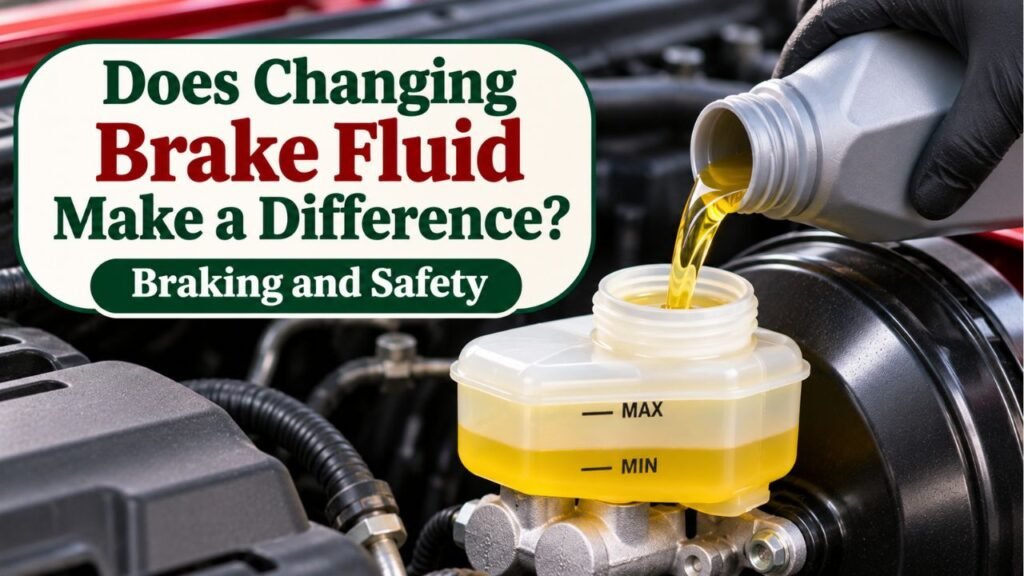
Changing brake fluid helps maintain reliable hydraulic pressure, especially when the brakes become hot. However, the noticeable improvement depends on the condition of the old fluid and the braking system.
Fresh brake fluid doesn’t automatically make the brake pads grip harder or increase the friction between the tires and road.
Instead, it restores important properties of the hydraulic fluid that transmits braking force.
Old Brake Fluid vs. New Brake Fluid
| Feature | Old or Contaminated Brake Fluid | Fresh Brake Fluid |
| Moisture content | May contain absorbed water | Low when properly stored and newly installed |
| Boiling resistance | May be significantly reduced | Meets the specified fluid’s performance requirements |
| High-temperature reliability | Greater risk of vapor formation | Better resistance to vapor formation |
| Corrosion protection | May be reduced by deterioration and contamination | Restored fluid additives and protection |
| Pedal feel | May become inconsistent under certain conditions | Can be more consistent if fluid condition was the problem |
| ABS hydraulic operation | Contamination may affect components over time | Appropriate fluid supports normal hydraulic operation |
| Stopping distance | May increase if vapor forms or braking performance deteriorates | Helps maintain designed braking performance |
| Routine driving feel | May feel completely normal | May feel unchanged |
| Long-term component protection | Increased risk from moisture and corrosion | Helps reduce moisture-related deterioration |
What Difference Will You Actually Notice?
There are three common situations.
Situation 1: The old fluid was still in good condition.
You may feel little or no difference after replacement.
The main benefit is preserving the braking system’s safety margin.
Situation 2: The old fluid had absorbed substantial moisture.
Fresh fluid can improve resistance to brake fade during demanding driving.
This is especially relevant during long descents, repeated hard stops, and heavy vehicle loads.
Situation 3: Air was trapped in the hydraulic system.
A properly performed bleeding procedure may restore a firmer pedal.
However, if air entered because of a leak, the leak must also be repaired.
According to Brembo’s brake fluid guidance, brake fluid absorbs moisture over time, reducing its boiling point and increasing the risk of vapor lock. Replacing deteriorated fluid restores heat resistance and supports reliable hydraulic braking.
Key Takeaway: A brake fluid change may not feel dramatic during everyday driving, but it can make an important difference when braking temperatures rise.
What Happens When You Change Brake Fluid?
A proper brake fluid replacement removes aging hydraulic fluid and introduces fresh fluid meeting the vehicle manufacturer’s specification.
The objective is to restore the fluid’s operating properties throughout the braking system.
1. Moisture-Contaminated Fluid Is Removed
Most modern passenger vehicles use glycol-based brake fluid.
These fluids are hygroscopic, meaning they absorb moisture.
Water can gradually enter the system through hoses, seals, and other components.
Replacing old fluid removes accumulated moisture from the portions of the hydraulic system properly serviced.
2. The Fluid’s Boiling Resistance Is Restored
Brake fluid must withstand substantial heat.
During braking, friction between the pads and rotors generates heat.
Some of that heat transfers to the calipers and fluid.
Fresh brake fluid has a higher boiling resistance than the same fluid after substantial moisture contamination.
3. Corrosion Protection Is Renewed
Brake fluid contains additives intended to protect hydraulic components.
Over time, contamination and moisture can contribute to internal corrosion.
Replacing the fluid helps reduce that risk.
However, fresh fluid cannot reverse corrosion damage that has already occurred.
4. Trapped Air May Be Removed
A complete fluid replacement includes appropriate bleeding procedures.
If air is present and correctly removed, the brake pedal may become firmer.
However, a fluid exchange is not a substitute for diagnosing the cause of air entering the system.
5. The Braking System Is Inspected
A professional brake fluid service may also reveal:
- Fluid leaks
- Damaged brake hoses
- Corroded fittings
- Worn hydraulic components
- Contaminated fluid
- Problems with bleeder screws
Identifying these issues can be another benefit of the service.
Does Changing Brake Fluid Improve Brake Pedal Feel?
Sometimes.
A brake fluid replacement can improve pedal feel when deteriorated fluid, vapor formation, or trapped air is contributing to an inconsistent pedal.
However, fresh fluid doesn’t automatically make a healthy brake pedal noticeably firmer.
Why a Brake Pedal Becomes Spongy
A hydraulic braking system relies on transmitting force through brake fluid.
Under normal operating conditions, liquid brake fluid is relatively incompressible.
Air and vapor bubbles are much more compressible.
When these bubbles are present, part of your pedal movement compresses the gas rather than producing hydraulic pressure at the brakes.
This can create:
- A soft pedal
- Excessive pedal travel
- Inconsistent braking response
- Reduced braking effectiveness
Can Old Brake Fluid Cause a Soft Pedal?
Yes, particularly if moisture-contaminated fluid becomes hot enough to form vapor.
However, old fluid doesn’t always cause a soft pedal at normal temperatures.
A soft pedal may also indicate trapped air, hydraulic leaks, component failure, or a bleeding problem.
Will a Brake Fluid Flush Fix a Spongy Pedal?
It may if the problem is contaminated fluid or air that is successfully removed during the service.
However, it will not repair:
- A leaking brake hose
- A failing master cylinder
- A leaking wheel cylinder
- A damaged brake caliper
- A hydraulic fault in the ABS system
These problems require diagnosis and appropriate repair.
What if the Pedal Is Still Soft After a Fluid Change?
Don’t assume the problem is normal.
Possible explanations include:
- Air remains in the system.
- The bleeding procedure was incomplete.
- The ABS hydraulic unit requires a specific procedure.
- A hydraulic leak is present.
- Another braking component has failed.
If the pedal feels unusually soft, sinks toward the floor, or braking effectiveness is reduced, do not continue driving until the system has been professionally inspected.
Does Changing Brake Fluid Improve Stopping Distance?
Not necessarily during normal braking with an otherwise healthy system.
Stopping distance depends on several factors, including:
- Tire grip
- Road conditions
- Vehicle speed
- Brake pad and rotor condition
- Vehicle weight
- ABS operation
- Brake hydraulic performance
Brake fluid replacement primarily maintains the hydraulic system’s ability to transmit pressure consistently.
When Fresh Fluid Can Make a Difference
During repeated heavy braking, the brakes can become extremely hot.
If moisture-contaminated fluid boils, vapor bubbles may form.
This can reduce hydraulic pressure and braking effectiveness.
In that situation, the vehicle may require more pedal travel or take longer to slow down.
Replacing degraded fluid can reduce the risk of this type of performance loss.
When Fresh Fluid Won’t Shorten Stopping Distance
Suppose a car has:
- Properly functioning brakes
- Healthy brake fluid
- Good tires
- No hydraulic problems
Replacing the fluid isn’t likely to create a noticeable reduction in ordinary stopping distance.
The vehicle was already operating as designed.
What Actually Determines Maximum Braking Performance?
In many emergency braking situations, the available grip between the tires and the road is a major limiting factor.
Fresh brake fluid doesn’t increase tire traction.
It helps ensure the hydraulic braking system remains capable of performing its intended function.
Key Takeaway: Brake fluid replacement protects against heat-related braking deterioration. It isn’t a substitute for good tires, healthy brake pads, and properly functioning brake components.
Why Does Brake Fluid Go Bad?
Brake fluid deteriorates primarily because of moisture absorption, contamination, and aging.
The process can occur even if the vehicle isn’t driven frequently.
Moisture Absorption
DOT 3, DOT 4, and DOT 5.1 are glycol-based fluids.
These fluids absorb moisture from their surroundings.
Although automotive brake systems are designed to contain the fluid, they are not perfectly isolated from moisture over long periods.
Heat Exposure
Braking generates heat.
High-temperature operation places demands on the fluid and its additives.
Repeated severe braking makes the fluid’s heat resistance especially important.
Contamination
Brake fluid can become contaminated by:
- Moisture
- Deteriorating internal components
- Corrosion products
- Dirt entering during improper servicing
- Incorrect fluid or other substances
Contamination may affect the hydraulic system.
Aging Additives
Brake fluid formulations contain additives designed to provide corrosion protection, lubrication, and other performance characteristics.
These properties can deteriorate over time.
Does Brake Fluid Go Bad if the Car Is Rarely Driven?
Yes.
Moisture absorption and aging can occur even when the vehicle sits in a garage.
A car driven only a few thousand miles per year may still require fluid replacement according to the manufacturer’s time-based schedule.
How Moisture Changes Brake Fluid Boiling Point
One of the most important reasons to replace old brake fluid is its decreasing boiling point.
The higher the fluid’s moisture content, the lower its resistance to boiling may become.
Dry vs. Wet Boiling Point
Dry boiling point describes the boiling temperature of fresh fluid tested under specified conditions.
Wet boiling point describes performance after the fluid has absorbed a standardized amount of water.
Wet boiling point is not the temperature at which the fluid is necessarily replaced.
It is a laboratory performance specification.
DOT Brake Fluid Minimum Boiling Points
| Brake Fluid Type | Minimum Dry Boiling Point | Minimum Wet Boiling Point |
| DOT 3 | 401°F (205°C) | 284°F (140°C) |
| DOT 4 | 446°F (230°C) | 311°F (155°C) |
| DOT 5.1 | 500°F (260°C) | 356°F (180°C) |
These are minimum standard values for the listed classifications.
Individual products may exceed them.
The HELLA technical guide to changing brake fluid explains the boiling-point requirements, the effects of absorbed moisture, and the importance of using the correct fluid specification.
Example: DOT 4 Brake Fluid
DOT 4 has a minimum dry boiling point of 446°F.
Its standardized minimum wet boiling point is 311°F.
The difference illustrates why moisture resistance matters.
However, the actual boiling point of a particular used fluid must be measured or assessed appropriately.
What Happens if Brake Fluid Boils?
When brake fluid becomes hot enough to vaporize, gas bubbles may form.
Because gas is compressible, those bubbles interfere with efficient hydraulic pressure transmission.
The result may be:
- Increased pedal travel
- A spongy pedal
- Reduced braking response
- Brake fade
- Potentially dangerous loss of braking effectiveness
When Is Brake Fluid Most Likely to Overheat?
Demanding conditions include:
- Long downhill driving
- Mountain roads
- Repeated hard braking
- Towing heavy trailers
- Carrying heavy loads
- Performance driving
- Brake components operating abnormally hot
For example, a driver descending a mountain while repeatedly applying the brakes may place more thermal stress on the system than a commuter driving gently on level roads.
Does Changing Brake Fluid Help Prevent Brake System Damage?
Yes.
Regular replacement can help reduce deterioration associated with moisture and contamination.
However, it isn’t a guarantee against mechanical failure.
Master Cylinder Protection
The master cylinder converts pedal force into hydraulic pressure.
Its internal components must operate reliably.
Contaminated fluid can contribute to wear and corrosion over time.
Brake Caliper Protection
Brake calipers contain pistons and seals.
Moisture and corrosion can contribute to problems within the hydraulic system.
Replacing aging fluid can help protect these components.
ABS Hydraulic Unit Protection
An anti-lock braking system uses hydraulic valves and other components to regulate brake pressure.
Suitable, clean brake fluid helps preserve normal hydraulic operation.
However, changing fluid does not repair faulty ABS sensors, damaged wiring, or failed electronic components.
Brake Lines and Hoses
The condition of brake lines and hoses matters regardless of fluid age.
Replacing fluid helps reduce internal moisture-related corrosion risks, but it doesn’t repair rusted steel lines or damaged flexible hoses.
Can a Brake Fluid Flush Remove Existing Rust?
It may remove some suspended contamination, but it cannot reverse corrosion damage.
Severely corroded or damaged components must be inspected and replaced as necessary.
Key Takeaway: Fresh brake fluid is preventive maintenance. It helps reduce future moisture-related problems but won’t restore parts already damaged by corrosion or wear.
How Often Should You Change Brake Fluid?
Many manufacturers and brake-system specialists recommend replacement approximately every two to three years.
However, the correct interval depends on the vehicle manufacturer’s maintenance schedule.
Typical Replacement Guidance
| Situation | General Recommendation |
| Normal passenger-car use | Follow manufacturer schedule; commonly every 2–3 years |
| Honda vehicles | Many models specify every 3 years |
| Performance or track use | May require more frequent inspection and replacement |
| Frequent mountain driving or towing | Follow manufacturer guidance; consider more frequent condition checks |
| Vehicle with unknown service history | Have the fluid inspected and consider replacement |
| Vehicle driven infrequently | Follow the time-based schedule |
| Fluid contaminated with the wrong substance | Immediate professional assessment |
| Brake hydraulic system opened for repairs | Appropriate bleeding and fluid service according to repair instructions |
These are general guidelines, not universal service requirements.
Does Mileage Matter?
Mileage alone isn’t a reliable indicator of brake fluid condition.
A vehicle driven 5,000 miles over three years may still accumulate moisture in its brake fluid.
A vehicle driven 30,000 miles in one year may have relatively fresh fluid, although demanding use could justify inspection.
Follow the manufacturer’s time and mileage requirements.
Should You Change Brake Fluid Every Year?
Not necessarily.
For many ordinary passenger vehicles, annual replacement is more frequent than the normal manufacturer schedule.
However, certain performance applications or severe operating conditions may justify more frequent servicing.
What if the Owner’s Manual Doesn’t Specify an Interval?
Ask a qualified technician to review the manufacturer’s service information and assess the fluid condition.
Don’t use an arbitrary interval as a substitute for model-specific guidance.
Do Electric and Hybrid Cars Need Brake Fluid Changes?
Yes, if they use a hydraulic friction braking system requiring serviceable brake fluid.
Regenerative braking can reduce how often friction brakes are used, but it doesn’t eliminate fluid aging.
Follow the vehicle manufacturer’s schedule.
What Are the Signs That Brake Fluid Needs Changing?
Old brake fluid doesn’t always produce obvious symptoms.
That’s why scheduled replacement is important.
However, several warning signs deserve attention.
1. Dark or Cloudy Fluid
Brake fluid may become darker with age.
Cloudiness or visible particles can indicate contamination.
However, color alone doesn’t prove the fluid’s moisture content or boiling point.
Some new brake fluids are naturally different shades.
2. Spongy Brake Pedal
A spongy pedal may be associated with air, vapor, or hydraulic problems.
It requires inspection.
Don’t assume old fluid is the only cause.
3. Brake Pedal Travels Too Far
Excessive pedal travel can indicate a serious braking-system problem.
Possible causes include air in the system, leaks, or component failure.
4. Reduced Braking Performance
If the vehicle requires noticeably more effort or distance to stop, arrange an inspection immediately.
Other causes include worn friction components, damaged tires, and hydraulic faults.
5. Brake Warning Light
A brake system warning light may indicate low fluid, parking brake engagement, or another braking problem.
Check the vehicle’s manual.
If the warning is accompanied by poor braking performance, stop driving and obtain professional assistance.
6. Low Brake Fluid Level
A falling reservoir level can result from brake pad wear or a hydraulic leak.
Don’t automatically top it off without investigating the cause.
A significant drop or evidence of leakage requires prompt inspection.
7. Long Service History
If the fluid hasn’t been changed for several years, the vehicle may be overdue.
Check the maintenance records.
8. Moisture or Boiling-Point Test Results
A technician can assess the fluid using appropriate testing equipment.
However, no single inexpensive tester should be treated as a perfect measurement in every vehicle.
Symptoms and Their Possible Causes
| Symptom | Possible Explanation | Recommended Action |
| Fluid is dark | Aging or contamination | Inspect fluid condition |
| Pedal feels spongy | Air, vapor, or hydraulic fault | Professional brake inspection |
| Pedal sinks toward floor | Possible serious hydraulic failure | Stop driving and arrange recovery |
| Fluid level drops | Pad wear or leak | Inspect brake system |
| Brakes fade when hot | Overheated friction components or fluid vapor | Stop safely and investigate |
| ABS warning light | Electronic or hydraulic issue | Diagnose ABS system |
| No symptoms, but service overdue | Aging fluid may still be present | Schedule recommended replacement |
Important: If the brake pedal sinks, braking power is reduced, or a leak is suspected, do not continue normal driving. Have the vehicle inspected or towed.
How Can You Tell if Brake Fluid Is Still Good?
Brake fluid condition is best assessed using service records and appropriate professional testing.
A visual inspection alone is insufficient.
Check the Last Replacement Date
Look at your maintenance records.
If the fluid is overdue according to the manufacturer’s schedule, replacement may be appropriate even if the brakes feel normal.
Inspect the Reservoir Level
On level ground, check the fluid level against the reservoir’s markings, following the owner’s manual.
The level should be within the specified range.
Avoid opening the reservoir unnecessarily.
Check for Visible Contamination
Cloudy fluid or suspended particles may indicate a problem.
However, clear fluid isn’t automatically moisture-free.
Use a Brake Fluid Boiling-Point Tester
Professional equipment can help measure boiling-point performance.
This is useful because heat resistance is one of brake fluid’s most important properties.
What About Brake Fluid Moisture Test Pens?
Some inexpensive testers estimate moisture content indirectly through electrical conductivity.
However, fluid chemistry and tester calibration can affect the result.
A moisture pen should not be the sole basis for declaring every brake fluid safe or unsafe.
What Moisture Percentage Is Too High?
Some service guidance uses approximately 3% water content as a replacement indicator.
However, this isn’t a universal threshold for every product or vehicle.
The actual boiling point, fluid specification, and manufacturer’s requirements matter.
A qualified technician can interpret test results in context.
Brake Fluid Change vs. Brake Fluid Flush vs. Brake Bleeding
These terms are often used interchangeably, but they aren’t exactly the same.
Brake Fluid Change
A brake fluid change generally means replacing old brake fluid with fresh fluid.
A proper service should address the hydraulic circuits required by the vehicle manufacturer.
Brake Fluid Flush
A brake fluid flush typically describes exchanging the old fluid throughout the braking system.
The goal is to remove aging fluid and introduce fresh fluid.
The exact method varies by vehicle.
Brake Bleeding
Brake bleeding primarily removes trapped air or gas from the hydraulic system.
It may be necessary after:
- Replacing a brake hose
- Replacing a caliper
- Repairing hydraulic components
- Opening a brake line
- Performing a fluid exchange
A fluid flush commonly includes appropriate bleeding procedures.
Brake Fluid Top-Up
A top-up means adding fluid to the reservoir.
It doesn’t replace the fluid already inside the lines and calipers.
Service Comparison
| Service | Main Purpose | Replaces Old Fluid Throughout System? |
| Fluid top-up | Restores appropriate reservoir level after diagnosis | No |
| Brake bleeding | Removes trapped air | Not necessarily |
| Brake fluid change | Renews old fluid | Normally yes, as specified |
| Brake fluid flush | Exchanges aging or contaminated fluid | Yes, to the extent required by procedure |
Is Topping Up Brake Fluid Enough?
No, not when the fluid is due for replacement.
Adding fresh fluid to the reservoir doesn’t remove moisture from the old fluid circulating elsewhere in the hydraulic system.
Also, a low fluid level may indicate pad wear or leakage.
The cause should be determined before adding fluid.
What Brake Fluid Should You Use?
Use only the brake fluid type and specification approved by the vehicle manufacturer.
The common classifications include DOT 3, DOT 4, DOT 5, and DOT 5.1.
Despite similar names, they aren’t all interchangeable.
DOT 3 Brake Fluid
DOT 3 is a glycol-based hydraulic brake fluid.
It is used in many passenger vehicles.
Its minimum boiling-point specifications are lower than those of DOT 4 and DOT 5.1.
DOT 4 Brake Fluid
DOT 4 is also glycol-based.
It has higher minimum dry and wet boiling-point requirements than DOT 3.
Special formulations include low-viscosity fluids for certain electronic braking systems.
DOT 5 Brake Fluid
DOT 5 is a silicone-based brake fluid.
It is chemically different from conventional glycol-based DOT 3, DOT 4, and DOT 5.1.
It must not be substituted into a system designed for glycol-based fluid unless the manufacturer explicitly approves it.
DOT 5.1 Brake Fluid
DOT 5.1 is glycol-based despite its similar name to DOT 5.
It has higher minimum boiling-point requirements than DOT 3 and DOT 4.
However, it isn’t automatically appropriate for every vehicle.
Is DOT 4 Better Than DOT 3?
DOT 4 has higher minimum boiling-point requirements.
However, that doesn’t mean every car calling for DOT 3 should automatically be filled with DOT 4.
Follow the manufacturer’s instructions and approved specifications.
Can You Mix DOT 3 and DOT 4?
Some glycol-based fluids are chemically compatible, but this doesn’t establish that mixing them is approved for every vehicle.
The resulting mixture may not retain the higher fluid’s original performance characteristics.
Follow the factory specification rather than mixing fluids unnecessarily.
Can You Mix DOT 5 and DOT 5.1?
No.
DOT 5 is silicone-based, while DOT 5.1 is glycol-based.
They should not be mixed.
Key Takeaway: A fresh, manufacturer-approved brake fluid is more appropriate than an expensive performance fluid that doesn’t meet your vehicle’s requirements.
How Is Brake Fluid Professionally Changed?
A proper brake fluid service follows the vehicle manufacturer’s hydraulic-system procedures.
The exact method varies by model.
Step 1: Confirm the Correct Fluid
The technician identifies the approved brake fluid specification.
They also review any special service requirements.
Step 2: Inspect the System
The braking system is checked for visible leaks, damaged components, and other problems.
Fluid replacement alone isn’t enough when a hydraulic fault is present.
Step 3: Prepare the Equipment
The reservoir area and service equipment must remain clean.
Dirt, moisture, and incompatible fluids must not enter the hydraulic system.
Step 4: Exchange the Old Fluid
A suitable bleeding or flushing method is used to replace aging fluid in the required hydraulic circuits.
Step 5: Remove Trapped Air
The technician follows the correct bleeding sequence.
Some ABS or electronically controlled braking systems require special tools or diagnostic procedures.
Step 6: Check the Fluid Level
The reservoir is filled to the manufacturer’s specified level.
Overfilling is avoided.
Step 7: Inspect Pedal Response and Leaks
The technician checks for hydraulic integrity and proper pedal feel.
The service should be completed according to manufacturer instructions before the vehicle returns to road use.
Can You Change Brake Fluid Yourself?
Brake fluid replacement is possible for a person with the correct equipment, service information, and experience.
However, it is a safety-critical procedure.
Incorrect bleeding can introduce air into the hydraulic system and compromise braking.
Some modern vehicles require specialized diagnostic equipment.
If you’re unfamiliar with the process, professional servicing is the safer option.
Important Safety Precautions
Brake fluid can damage painted surfaces and may irritate skin or eyes.
Use appropriate protective equipment.
Never reuse drained brake fluid or allow dirt and water to enter the system.
Dispose of used fluid through an appropriate collection or hazardous-waste program.
Does Changing Brake Fluid Make a Difference if You Have ABS?
Yes.
Vehicles with anti-lock braking systems still rely on hydraulic fluid.
The ABS hydraulic unit regulates pressure to help prevent wheel lock during braking.
Suitable brake fluid supports proper hydraulic operation.
Why Does ABS Fluid Condition Matter?
Moisture and contamination can affect internal hydraulic components over time.
ABS units may contain valves and narrow passages that require suitable fluid properties.
Can Changing Fluid Fix an ABS Warning Light?
Usually not by itself.
An ABS warning light may be caused by:
- Faulty wheel-speed sensors
- Damaged wiring
- Electronic faults
- Hydraulic unit problems
- Other system defects
The correct cause must be diagnosed.
Does ABS Require a Special Brake Fluid Flush?
Some vehicles require a particular bleeding procedure.
In certain situations, diagnostic equipment may be needed to operate hydraulic valves.
Follow the vehicle-specific service information.
What About Electronic Stability Control?
Electronic stability control often shares hydraulic components with ABS.
Correct fluid specification and service procedures remain important.
Does Brake Fluid Replacement Matter After Changing Brake Pads?
Not always.
Replacing brake pads doesn’t automatically require a complete brake fluid flush.
The answer depends on the vehicle’s service schedule and whether the hydraulic system was opened.
Brake Pads Replaced Without Opening Hydraulic Lines
A routine pad replacement may not require bleeding if the hydraulic system remains sealed and no other issue is present.
However, scheduled brake fluid replacement may still be due.
Brake Caliper or Hose Replaced
If a hydraulic connection was opened, appropriate bleeding is generally necessary.
Additional fluid replacement may be required depending on the repair.
Should You Flush Fluid Whenever You Replace Rotors?
Not automatically.
Rotor replacement doesn’t itself mean the brake fluid must be changed.
Check the fluid’s service interval and condition.
Can New Pads Make the Pedal Feel Different?
Yes.
New pads and rotors may require a bedding-in process according to the component manufacturer’s instructions.
Changes in pedal response after brake work should be evaluated carefully.
Don’t automatically attribute every difference to brake fluid.
How Much Does Changing Brake Fluid Cost?
For many U.S. passenger vehicles, a professional brake fluid flush costs roughly 100–250, depending on the vehicle, shop, and location.
A current estimate published by Kelley Blue Book’s brake fluid flush cost guide lists an average of approximately 173–205.
This is a general estimate, not a guaranteed price for your vehicle.
What Affects the Cost?
Important factors include:
- Vehicle make and model
- Required brake fluid type
- Fluid quantity
- Local labor rate
- Dealer versus independent shop
- Bleeding procedure
- ABS-related service requirements
- Condition of the hydraulic components
Is Brake Fluid Expensive?
The fluid itself is generally less expensive than the labor involved in a professional change.
However, premium or specialized fluids may cost more.
How Long Does a Brake Fluid Change Take?
A straightforward professional service may take approximately 30–90 minutes.
Some vehicles require additional time because of access, special procedures, or repairs.
Ask the shop for a vehicle-specific estimate.
Is a Brake Fluid Flush Worth the Money?
Usually, yes, when the fluid is due for replacement.
The service helps maintain heat resistance and reduce moisture-related deterioration.
However, an unnecessary early flush is not automatically beneficial.
Follow the manufacturer’s schedule and appropriate condition assessments.
Should You Choose the Cheapest Service?
Price matters, but proper work is more important.
Confirm that the service includes an appropriate fluid exchange and bleeding procedure.
A low-cost reservoir-only fluid exchange should not be mistaken for a complete brake system service.
What Happens if You Never Change Brake Fluid?
Brake fluid can continue absorbing moisture and accumulating contamination as it ages.
The exact rate of deterioration depends on the system and operating conditions.
Reduced Boiling Resistance
Increasing water content can lower the boiling point.
Under severe heat, this may increase the risk of vapor formation.
Internal Corrosion
Moisture can contribute to corrosion in hydraulic components.
More Expensive Repairs
Corroded or damaged components may require replacement.
These repairs can cost substantially more than routine fluid maintenance.
Unpredictable Pedal Feel
If vapor forms or air enters the system, pedal response may become inconsistent.
However, not every vehicle with overdue fluid immediately develops symptoms.
Reduced Safety Margin
The most important concern is maintaining reliable braking under demanding conditions.
A car that appears to brake normally during gentle use may have reduced hydraulic-fluid heat resistance.
Can Brake Fluid Last Five or Ten Years?
Some vehicles may operate for that long without obvious brake symptoms.
However, continued operation doesn’t prove the fluid remains within specification.
If the service interval has been exceeded, arrange inspection and replacement according to manufacturer guidance.
When Should You Change Brake Fluid Immediately?
Certain conditions require more urgent attention than ordinary scheduled maintenance.
Contaminated With the Wrong Fluid
If petroleum oil, power-steering fluid, or another incompatible substance enters the brake system, stop using the vehicle.
Some contaminants can damage seals and other components.
A simple flush may not be sufficient.
Professional diagnosis and repair are required.
Brake Fluid Has Boiled
If the fluid has overheated enough to produce a soft pedal or loss of braking performance, the system needs inspection.
The cause of overheating should also be investigated.
Hydraulic System Has a Leak
A leaking braking system requires repair.
Adding or changing fluid without repairing the leak will not make the system safe.
Brake Pedal Sinks Toward the Floor
This can indicate serious hydraulic failure.
Do not continue driving.
Fluid Is Severely Contaminated
Cloudy fluid containing visible debris or unusual contamination requires professional assessment.
After Certain Hydraulic Repairs
When a brake line, hose, caliper, or other hydraulic component has been disconnected, bleeding is generally necessary.
Follow the manufacturer’s repair procedure.
Important: A brake fluid change is not a substitute for emergency brake repair. If braking is compromised, stop in a safe location and arrange professional assistance.
How to Know if a Brake Fluid Change Was Successful
A properly completed service should leave the braking system functioning according to the vehicle’s specifications.
The Pedal Should Feel Normal
The pedal should not unexpectedly sink or feel abnormally soft.
However, there may be no noticeable difference from before the service if the original fluid was still performing normally.
There Should Be No Hydraulic Leaks
The technician should confirm that the serviced system is leak-free.
The Correct Fluid Should Be Used
The invoice should identify the correct brake fluid specification.
The Reservoir Level Should Be Correct
The level should meet the manufacturer’s requirements.
Avoid assuming that filling to the maximum mark is necessary in every situation.
The System Should Be Properly Bled
There should be no air-related pedal problem.
If the vehicle requires a special ABS bleeding procedure, the technician should follow the applicable instructions.
The Service Should Be Documented
Keep the invoice showing:
- Service date
- Vehicle mileage
- Fluid specification
- Work performed
This makes future maintenance planning easier.
What if the Brakes Feel Worse After the Change?
Do not ignore it.
A soft pedal, unusual travel, warning light, or reduced braking performance requires immediate assessment.
Do not assume the problem will resolve after a few days of driving.
Common Mistakes When Replacing Brake Fluid
Several mistakes can make brake fluid maintenance ineffective or unsafe.
Waiting Until the Pedal Feels Bad
Fluid may deteriorate without an obvious symptom.
Follow the maintenance schedule rather than waiting for brake fade.
Assuming Dark Fluid Always Means Excessive Moisture
Color alone isn’t a reliable moisture measurement.
Use service records and appropriate testing.
Replacing Only the Fluid in the Reservoir
This doesn’t remove aging fluid throughout the hydraulic system.
Using the Wrong DOT Fluid
Different fluid classifications have different chemical and performance properties.
Use the manufacturer’s approved specification.
Allowing the Reservoir to Run Dry
During bleeding, allowing air into the hydraulic system can create additional problems.
Using Brake Fluid From an Improperly Stored Container
Glycol-based fluid can absorb moisture after exposure to air.
Use clean, appropriately stored fluid.
Ignoring ABS Service Requirements
Some vehicles need model-specific procedures or equipment.
An incorrect bleeding method can leave air trapped in the system.
Assuming a Flush Fixes Every Brake Problem
A fluid exchange won’t repair worn pads, damaged rotors, leaking hoses, or a defective master cylinder.
Overfilling the Reservoir
Fluid level can change as brake pads wear.
The appropriate fill level depends on the vehicle and component condition.
Ignoring a Soft Pedal After Service
Any abnormal pedal response should be investigated before driving.
Is Changing Brake Fluid Really Necessary?
Yes, when required by the vehicle manufacturer’s maintenance schedule or supported by a professional condition assessment.
Brake fluid performs a safety-critical function.
Even when the car appears to stop normally, aging fluid may have reduced heat resistance.
For many drivers, brake fluid replacement is mainly preventive maintenance rather than a noticeable performance upgrade.
When the Difference Is Mostly Preventive
If your fluid is relatively new, clean, and within specification, replacing it early may provide little practical benefit.
When the Difference Can Be Significant
If the fluid has excessive moisture or has experienced severe overheating, replacing it can restore an important margin of braking reliability.
When a Fluid Change Is Not Enough
If braking symptoms are caused by mechanical or hydraulic failure, the underlying fault must be repaired.
The correct approach is diagnosis first, followed by the required service.
Conclusion
Changing brake fluid does make a difference, primarily by maintaining braking reliability, heat resistance, and protection against moisture-related corrosion.
Fresh fluid helps preserve the hydraulic system’s ability to transmit braking pressure when temperatures rise.
This is especially important during repeated hard braking, downhill driving, and heavy vehicle loads.
However, a routine brake fluid change doesn’t automatically increase braking power or shorten stopping distance.
If the previous fluid was still in good condition, the brake pedal may feel exactly the same afterward.
A firmer pedal may result when trapped air or vapor-related problems are correctly addressed, but hydraulic leaks and mechanical faults require separate repairs.
Most vehicles should follow their manufacturer-specific replacement schedule, commonly around every two to three years.
The service is generally worthwhile when due because it helps reduce the risk of brake fade and long-term hydraulic deterioration.
For the safest result, use the correct fluid, follow the proper bleeding procedure, and never treat fresh brake fluid as a substitute for repairing a faulty braking system.
FAQs About Does Changing Brake Fluid Make a Difference
Does Changing Brake Fluid Really Improve Braking?
Yes, particularly when the previous fluid has absorbed moisture or lost heat resistance.
Fresh fluid helps maintain reliable hydraulic pressure during demanding braking.
However, you may notice little difference during normal driving if the old fluid was still in good condition.
Will Changing Brake Fluid Make the Brake Pedal Firmer?
Sometimes.
If trapped air or vapor-related problems are correctly addressed during servicing, the pedal may become firmer.
However, a fluid change will not automatically fix a soft pedal caused by a leak or failing component.
Does New Brake Fluid Make Brakes More Responsive?
It can help maintain consistent hydraulic response, particularly under high-temperature conditions.
However, fresh fluid doesn’t automatically increase brake pad friction or tire grip.
Can Changing Brake Fluid Reduce Stopping Distance?
It may prevent increased stopping distances caused by heat-related hydraulic problems.
However, it won’t necessarily shorten ordinary stopping distances when the braking system was already functioning correctly.
How Soon Will I Notice a Difference After Changing Brake Fluid?
If the previous fluid was contributing to poor pedal feel, an improvement may be noticeable immediately after proper servicing.
If the change was routine preventive maintenance, there may be no noticeable difference.
Is It Worth Changing Brake Fluid Every Two Years?
It can be if the manufacturer’s schedule calls for it or the fluid condition justifies replacement.
Some vehicles specify three years or another interval.
Follow the vehicle’s maintenance instructions.
What Happens if Brake Fluid Is Never Changed?
Over time, moisture and contamination can reduce heat resistance and contribute to internal corrosion.
This may increase the risk of brake fade and hydraulic-component damage.
Can Old Brake Fluid Cause Brake Failure?
Yes, under severe conditions.
Moisture-contaminated brake fluid may boil when heated, forming compressible vapor that reduces hydraulic braking effectiveness.
Other hydraulic faults can also cause brake failure.
Will a Brake Fluid Flush Fix a Spongy Pedal?
It may if trapped air or deteriorated fluid is the cause and the system is correctly serviced.
However, leaks, master cylinder problems, and ABS hydraulic faults require separate diagnosis.
Does Brake Fluid Affect ABS?
Yes.
ABS uses hydraulic brake fluid to regulate pressure.
Correct fluid condition and specification support the hydraulic system, but replacing fluid doesn’t repair faulty electronic components.
Can I Just Add Brake Fluid Instead of Changing It?
No.
Topping off the reservoir doesn’t replace old fluid in the rest of the hydraulic system.
Also, a low fluid level may indicate worn pads or a leak that needs inspection.
Is Dark Brake Fluid Always Bad?
No.
Dark color can be a warning sign, but it doesn’t reliably measure moisture content or boiling resistance.
Professional testing and service history are more useful.
Does Brake Fluid Need Changing if I Don’t Drive Much?
Yes, according to the vehicle’s time-based service schedule.
Glycol-based fluid can absorb moisture over time even when the car is rarely driven.
Is DOT 4 Better Than DOT 3?
DOT 4 has higher minimum boiling-point requirements.
However, the correct fluid is the one approved for your vehicle.
Don’t change fluid types solely because one has a higher DOT number.
Can I Mix DOT 5 and DOT 5.1 Brake Fluid?
No.
DOT 5 is silicone-based, while DOT 5.1 is glycol-based.
They are chemically different and should not be mixed.
Does Changing Brake Pads Require Changing Brake Fluid?
Not automatically.
If the hydraulic system remains closed, pad replacement may not require a full fluid flush.
However, brake fluid maintenance may still be due independently.
How Much Does a Brake Fluid Change Cost?
A professional service often costs approximately 100–250 in the United States.
Kelley Blue Book lists an average around 173–205.
Prices vary by vehicle, fluid type, labor rate, and required procedures.
How Long Does a Brake Fluid Flush Take?
A typical service may take approximately 30–90 minutes.
Complex hydraulic systems, special bleeding procedures, or additional repairs may require more time.
Can I Drive With Old Brake Fluid?
If the fluid is merely overdue but braking remains normal, arrange the recommended service promptly.
If the pedal is soft, sinks toward the floor, braking is reduced, or a leak is suspected, do not continue driving.
Does Brake Fluid Last Longer in a Sealed System?
A properly functioning hydraulic system limits contamination, but it doesn’t completely prevent moisture absorption over time.
Follow the manufacturer-recommended replacement interval.
Is Brake Fluid Replacement Necessary on Hybrid and Electric Cars?
Yes, when specified by the manufacturer.
Hybrid and electric vehicles often use regenerative braking, but their hydraulic friction brakes still require appropriate fluid maintenance.
What Is the Biggest Benefit of Changing Brake Fluid?
The most important benefit is restoring the fluid’s resistance to boiling and reducing moisture-related deterioration.
This helps maintain dependable braking when the system experiences demanding operating conditions.