How to Clean Brake Fluid Off of Concrete: Safe Removal Guide
Fresh brake fluid on concrete should be absorbed before it spreads, then the remaining residue can be scrubbed with warm water and a grease-cutting detergent. Older stains usually need repeated detergent treatment or an absorbent poultice because concrete is porous and can hold fluid below the surface.
Brake fluid can leave a dark or damp-looking patch on a garage floor, driveway, or workshop slab. Cleaning it quickly gives you the best chance of preventing the liquid from soaking deeply into the concrete pores.
Most DOT 3, DOT 4, and DOT 5.1 brake fluids use glycol-ether-based chemistry. DOT 5 is different because it is silicone-based. Valvoline identifies DOT 3, DOT 4, and DOT 5.1 as glycol-based and DOT 5 as silicone-based, so stubborn spills may respond differently depending on the fluid involved.
For how to clean brake fluid off of concrete, the safest first move is containment rather than immediately washing the area. Current Castrol brake-fluid safety data tells users to absorb small spills with an inert material and keep spilled product and runoff away from drains, sewers, soil, and waterways.
Cat litter, oil absorbent, sand, or another inert absorbent can pull much of a fresh spill from the surface. Once that liquid has been collected, detergent and mechanical scrubbing can attack the thin residue left in the pores.
Do not reach first for aggressive solvents, gasoline, acid, or random chemical mixtures. They can create new hazards, discolor concrete, damage coatings, or move the contamination deeper instead of removing it.
The process below covers fresh spills, old stains, coated concrete, DOT 5 fluid, pressure washing, disposal, and cases where a commercial concrete cleaner makes sense.
How to Clean Fresh Brake Fluid Off Concrete
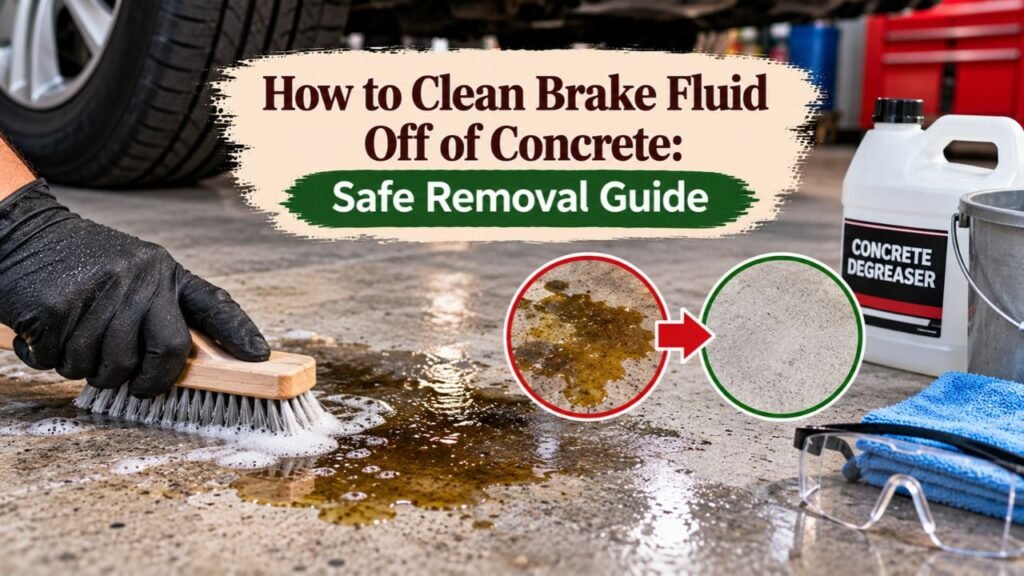
A fresh spill is much easier to remove than a stain that has been sitting for several days.
The goal is to remove as much liquid as possible before adding water.
Step 1: Stop the Source of the Leak
If the fluid came from a vehicle, do not focus only on the floor.
Check for an active leak around the master cylinder, reservoir, brake hoses, calipers, wheel cylinders, or any recently serviced connection.
Brake fluid loss can signal a brake-system fault. A vehicle with a suspected hydraulic leak should not be driven until the cause is identified and repaired.
Place a drain pan or absorbent mat beneath the leaking area while you clean the concrete.
Step 2: Keep the Spill From Spreading
Create a border around the spill with dry absorbent.
Suitable materials include cat litter, commercial oil absorbent, sand, vermiculite, or another inert spill product.
Castrol’s current brake-fluid safety information recommends absorbing small spills with inert material and collecting the waste in an appropriate container.
Do not immediately spray the floor with a garden hose. That spreads a concentrated spot over a much larger area and may send brake fluid toward a storm drain.
Step 3: Cover the Brake Fluid With Absorbent
Spread a generous layer over the entire wet area.
Allow it to sit long enough to take up the liquid.
For a small fresh spill, you may see the absorbent darken quickly. If the top layer becomes saturated, add more dry material.
Pressing or gently working the absorbent across the concrete with a stiff broom can expose more material to the fluid.
Avoid grinding the material aggressively into polished or coated concrete.
Step 4: Collect the Contaminated Absorbent
Sweep the saturated material into a suitable container or heavy-duty bag.
Do not scatter it into the yard.
Brake-fluid safety data warns against allowing spilled material to reach soil, waterways, drains, or sewers.
Disposal rules can vary by area and by the amount spilled. For a larger spill, contact your local household hazardous-waste or waste-management service for instructions.
Step 5: Apply a Grease-Cutting Detergent
Once the free liquid is gone, apply a small amount of grease-cutting dish detergent or a concrete-safe degreasing detergent to the remaining stain.
Add enough warm water to make a concentrated cleaning solution.
You want the cleaner working on the stained concrete rather than immediately running across the driveway.
Step 6: Scrub With a Stiff Nylon Brush
Work the detergent into the concrete pores.
A stiff nylon deck brush is a good choice for most unfinished concrete.
Scrub from the outside of the stain toward the center so you do not enlarge the affected area.
Give extra attention to textured concrete, where fluid can collect in small pits.
Step 7: Blot or Extract the Dirty Liquid
Instead of pushing dirty wash water toward a drain, absorb it.
Use:
- Dry absorbent
- Disposable shop towels
- A wet vacuum rated for the liquid being collected
Place the collected residue in a suitable container for disposal.
Do not use an ordinary household vacuum on liquids.
Step 8: Repeat if a Dark Spot Remains
Concrete is porous.
One wash may clean the surface while a small amount of fluid remains below it.
Apply detergent again, scrub, and absorb the dirty liquid.
Let the slab dry fully before judging the result. Wet concrete naturally appears darker and can make a clean area look stained.
Key Takeaway: For a fresh spill, absorb the liquid first, collect the contaminated material, then scrub the remaining film with detergent and capture the wash residue rather than flushing it toward a drain.
How to Remove an Old Brake Fluid Stain From Concrete
An older stain requires a different approach because the liquid has had time to move below the surface.
Repeated short cleaning sessions work better than flooding the slab.
Start With a Concentrated Detergent Treatment
Apply a concrete-safe degreaser or grease-cutting detergent directly over the dry stain.
Allow it to remain on the surface for the contact time given on the cleaner label.
Keep it from drying prematurely if the product directions require a wet dwell period.
Scrub thoroughly with a nylon brush.
Then absorb the dirty solution.
Use an Absorbent Poultice for Deep Staining
A poultice can draw contamination from porous material as it dries.
Mix an absorbent material with a small amount of concrete-safe cleaner until it forms a thick paste.
Suitable absorbent bases can include clay-based oil absorbent or a commercial concrete-stain poultice.
Spread the mixture over the stain and slightly beyond its edges.
Allow it to dry according to the product directions, then scrape or sweep it up.
Repeat if the stain becomes lighter but remains visible.
Give the Concrete Time to Dry
Do not judge an old stain immediately after washing.
Water darkens concrete.
Allow the slab to dry thoroughly. Depending on temperature, airflow, humidity, and slab thickness, the appearance can continue changing after the surface feels dry.
If the dark patch disappears as the slab dries, the remaining discoloration may have been moisture rather than brake fluid.
Key Takeaway: Old brake-fluid stains often need repeated detergent cleaning or an absorbent poultice because the contamination may sit below the visible concrete surface.
Best Cleaners for Brake Fluid on Concrete
Several cleaner types can work, but stronger is not always better.
Dish Detergent
A concentrated grease-cutting dish detergent is a sensible first treatment for a small household spill.
It is easy to control, works well with scrubbing, and avoids introducing a more aggressive solvent.
Use it after most of the free fluid has been absorbed.
Concrete Degreaser
A concrete-safe degreaser is a better choice for an older or larger stain.
Read the label to confirm compatibility with:
- Bare concrete
- Sealed concrete
- Epoxy coatings
- Painted floors
A product safe on unfinished concrete may dull or soften some coatings.
Commercial Spill Cleaner
Commercial surface cleaners are also available for automotive-fluid spills.
The U.S. EPA lists Fireman’s Brand Spillclean as a surface-washing agent intended for hard-surface contamination that includes brake fluid. Its published procedure involves applying cleaner, brushing it into the material, and treating fluid that has entered surface pores.
For a driveway or garage, do not interpret a product’s rinse instruction as permission to send contaminated runoff into a storm drain. Capture or manage wastewater according to the product label and local requirements.
Absorbent Granules
Absorbent is not really a cleaner, but it is one of the most useful materials in the process.
Removing liquid before washing keeps the stain smaller and reduces contaminated wastewater.
Key Takeaway: Begin with absorbent and detergent; move to a concrete degreaser or purpose-made spill cleaner only when the stain needs more treatment.
Does Brake Fluid Permanently Stain Concrete?
Not always.
Fresh brake fluid can often be removed with little or no visible trace if it is absorbed quickly.
Older contamination may leave a shadow.
Concrete Is Porous
Unsealed concrete contains pores that absorb liquids.
A spill can migrate below the top surface before you see much change from above.
That is why repeated cleaning can continue pulling contamination out after the first wash.
Sealed Concrete Behaves Differently
A good sealer can slow penetration.
The fluid may remain mostly on top, making cleanup easier.
The risk is that certain cleaners used afterward may harm the sealer.
Test any stronger cleaner in an inconspicuous spot.
Some Color Difference May Remain
A very old spill can leave a faint patch even after most of the brake fluid has been removed.
This does not always mean large amounts of liquid remain in the slab.
Repeated aggressive grinding or strong chemical treatment can make the repair look worse than the original stain.
Cleaning DOT 3, DOT 4, DOT 5.1, and DOT 5 Brake Fluid
Knowing the fluid type can explain why one spill cleans differently from another.
DOT 3, DOT 4, and DOT 5.1
These common types are glycol based.
Valvoline describes DOT 3, DOT 4, and DOT 5.1 as glycol-ether-based fluids and notes that they absorb moisture.
For a concrete spill, absorption followed by detergent cleaning is a practical starting method.
Current Castrol DOT 3 and DOT 4 safety data also directs users to absorb small spills with inert material and dispose of collected waste properly.
DOT 5 Silicone Brake Fluid
DOT 5 is silicone based rather than glycol based.
It repels water instead of absorbing it in the same manner as DOT 3, DOT 4, and DOT 5.1.
Do not expect plain water to carry it away.
Start with dry absorbent and follow with a detergent or cleaner suitable for oily residues.
The same environmental rule applies: collect the spill rather than washing it into soil or drainage.
Key Takeaway: Glycol-based and silicone-based brake fluids have different chemistry, but both should be contained, absorbed, cleaned from the surface, and kept out of drains.
Can You Pressure Wash Brake Fluid Off Concrete?
Pressure washing can be useful near the end of the cleaning process, but it should not be your first step on a fresh spill.
A strong water stream can spread contamination over a larger area.
Absorb Before Pressure Washing
Remove free brake fluid first.
Then use detergent and scrubbing to break down the remaining residue.
If pressure washing is still needed, manage the runoff so contaminated water does not reach a storm drain or neighboring soil.
Castrol’s spill instructions specifically call for preventing brake fluid from reaching drains, sewers, waterways, and soil.
Use Moderate Pressure on Older Concrete
Extremely high pressure can etch weak concrete and create visible lines.
Keep the nozzle moving and use a surface-cleaner attachment if suitable.
Test a small area before treating the entire slab.
Should You Use Brake Cleaner on the Concrete?
Usually, there is no need.
Automotive brake cleaner is made for brake components, not as the first choice for garage-floor stain removal.
CRC advises using brake cleaner in a well-ventilated area, wearing gloves and eye protection, avoiding ignition sources where applicable, and collecting runoff or residue during brake-part cleaning.
Using a solvent-based aerosol on a large concrete stain can create vapors, spread dissolved contamination, and add disposal concerns.
Start with absorbent and detergent or a cleaner intended for concrete.
Should You Use Bleach, Gasoline, or Acid?
No.
Gasoline is a poor cleaning choice because it is flammable and creates another hazardous spill.
Strong acids can etch concrete, exposing fresh aggregate and permanently changing surface texture.
Bleach is not a general degreaser for brake fluid, and mixing bleach with unrelated cleaners can create dangerous chemical reactions.
Never mix cleaning products unless their manufacturer explicitly states that the combination is safe.
A stain that survives detergent and a concrete degreaser is better treated with a purpose-made poultice than a random mixture of strong chemicals.
What if Brake Fluid Spilled on an Epoxy Garage Floor?
Treat coated concrete more gently.
The fluid itself may sit on the coating rather than immediately entering the slab, which is good news if the spill is fresh.
Blot or absorb it promptly.
Then clean with mild detergent and water.
Avoid scrubbing with an abrasive wire brush.
Before using a stronger degreaser, check that it is approved for the specific epoxy, polyaspartic, paint, or sealer on the floor.
If the coating becomes soft, tacky, cloudy, or discolored, stop using the cleaner and check the floor-coating manufacturer’s care instructions.
How to Dispose of Brake Fluid Cleanup Waste
Cleanup is not complete when the stain disappears.
The absorbent, towels, and dirty liquid still contain brake fluid.
Current Castrol safety information instructs users to place absorbed brake fluid in an appropriate waste container and dispose of it through an approved route. It also warns against releasing the product to drains or the environment.
Prestone’s DOT 5.1 safety data likewise instructs users to collect spills with absorbent material and place the waste in an appropriate labeled container.
For a household quantity, local hazardous-waste programs can tell you how brake-fluid-contaminated absorbent should be handled.
Do not pour unused brake fluid, contaminated wash water, or liquid collected from the floor into a storm drain.
Brake Fluid Cleanup Safety
Wear chemical-resistant gloves and eye protection while working with the spill.
Prestone’s DOT 5.1 safety data calls for protective gloves and eye protection, while Castrol’s DOT 3 and DOT 4 documents advise appropriate personal protective equipment and avoiding skin and eye contact.
Work with ventilation if cleaning inside a garage.
Keep children and pets away from the area until the spill and cleaning materials have been removed.
Brake fluid also makes floors slippery. Castrol’s safety documentation specifically warns that contaminated floors can create a slipping hazard.
Wash your hands after cleanup, even if gloves were worn.
Conclusion
For how to clean brake fluid off of concrete, remove as much free liquid as possible with dry absorbent before adding water. Sweep up the contaminated material, then treat the remaining mark with grease-cutting detergent or a concrete-safe degreaser.
Scrub the area with a stiff nylon brush and absorb the dirty solution rather than washing it into a storm drain. A second cleaning or absorbent poultice may be needed if brake fluid has soaked into older, unsealed concrete.
DOT 3, DOT 4, and DOT 5.1 are generally glycol based, while DOT 5 uses silicone chemistry. That changes how the fluids interact with water, but containment and proper waste collection remain good practice for either type.
For severe staining, use a cleaner designed for concrete instead of experimenting with gasoline, strong acid, bleach mixtures, or large amounts of solvent. Protecting the slab and controlling the contaminated runoff are just as relevant as removing the visible stain.
FAQs About Cleaning Brake Fluid Off Concrete
Does Brake Fluid Come Out of Concrete?
Fresh brake fluid often comes out well if you absorb it quickly and follow with detergent cleaning. Older stains can penetrate porous concrete and may need several treatments or an absorbent poultice.
What Is the Best Thing to Absorb Brake Fluid?
Cat litter, commercial oil absorbent, sand, vermiculite, or another inert absorbent can work. Brake-fluid safety data from Castrol recommends collecting small spills with inert absorbent material.
Can I Use Dish Soap to Clean Brake Fluid Off Concrete?
Yes. A grease-cutting dish detergent is a good starting cleaner after the free brake fluid has been absorbed. Apply it in a concentrated form, scrub with a stiff nylon brush, and collect the dirty liquid.
Will Brake Fluid Ruin a Concrete Driveway?
A small spill does not automatically ruin concrete, but unsealed concrete can absorb the liquid and develop a dark stain. Faster cleanup reduces penetration.
Can I Hose Brake Fluid Off My Driveway?
Do not hose a fresh spill toward a street, storm drain, yard, or waterway. Brake-fluid safety data warns against allowing spilled material and runoff into drains, sewers, soil, and waterways.
Does Brake Cleaner Remove Brake Fluid From Concrete?
It may dissolve some residue, but aerosol brake cleaner is usually unnecessary for a concrete spill and introduces extra solvent and vapor concerns. Absorbent followed by detergent or a concrete degreaser is a better first approach.
Can I Pressure Wash a Brake Fluid Stain?
Yes after the bulk fluid has been absorbed and the stain has been pretreated. Control the wastewater and avoid directing contaminated runoff into a storm drain.
What Should I Do With Cat Litter Used to Absorb Brake Fluid?
Collect it in a suitable container or heavy-duty bag and follow local waste rules. Do not dump contaminated absorbent into the yard or wash it into a drain. Brake-fluid SDS guidance calls for collected spill material to be disposed of through an appropriate waste route.