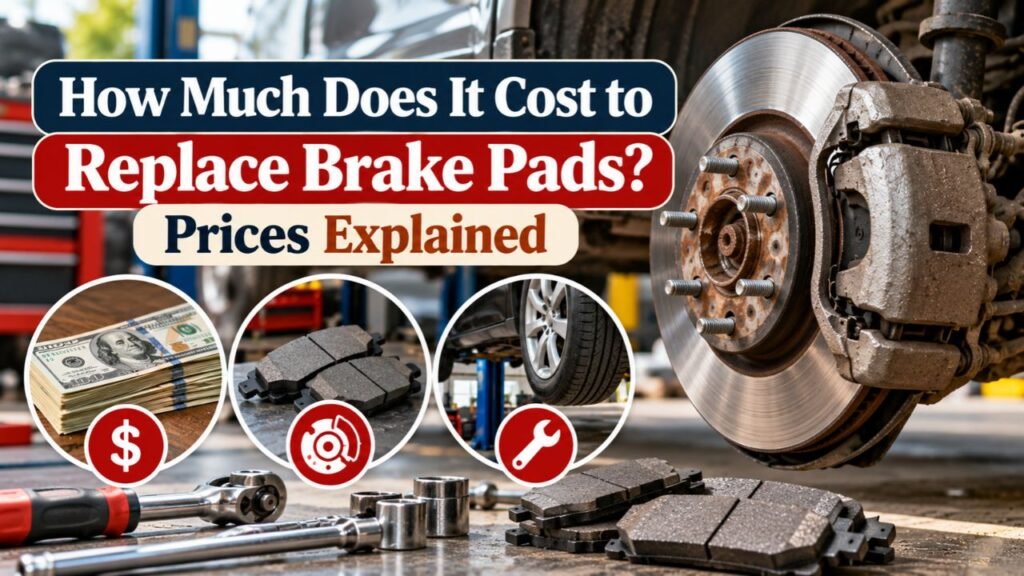
How Much Does It Cost to Replace Brake Pads? Prices Explained
Brake pad replacement typically costs about 150–400 per axle in the United States, including parts and professional labor. Around 250–400 per axle is common for many everyday vehicles, while luxury, performance, large-truck, and dealership repairs can exceed $500. Replacing both front and rear pads may cost roughly 300–800 or more.
Current national estimates show just how much prices can vary. AAA places typical brake-pad replacement at about 150–350 per axle, while RepairPal’s current estimate is roughly 335–394. Vehicle-specific Kelley Blue Book estimates also show prices ranging from the mid-$200s to more than $500 depending on the vehicle and location.
An axle means a pair of wheels. If a shop quotes $325 for front brake pads, that generally means pads on both front wheels, not one wheel.
If you are searching how much does it cost replace brake pads, the final bill depends on the vehicle, pad material, local labor rate, front versus rear brakes, electronic parking-brake equipment, and whether the rotors or calipers also need attention.
Brake pads themselves are often not the most expensive part of the job. Labor, premium components, brake wear sensors, seized hardware, and damaged rotors can raise a relatively simple pad replacement into a much larger brake repair.
The best way to judge a quote is to ask exactly what it includes: pads only, pads and hardware, rotor resurfacing, new rotors, sensors, brake-fluid service, or additional caliper work.
Average Brake Pad Replacement Cost
For a normal passenger vehicle, these ranges provide a useful starting point.
| Brake Service | Typical Price Range |
| Brake pads only, one axle | 150–400 |
| Higher-cost pad service, one axle | 400–600+ |
| Front and rear pads | 300–800+ |
| DIY pads, one axle | 30–150+ |
| Premium/performance pads | 100–300+ for parts |
| Pads and rotors, one axle | 250–600+ |
| Pads and rotors, both axles | 500–1,200+ |
| Pads, rotors, and caliper repair | 700–1,500+ depending on damage |
AAA currently gives a broad estimate of 150–350 per axle for pads alone and 250–500 per axle when pads and rotors are replaced together. RepairPal’s current average for brake-pad replacement is 335–394, illustrating how labor market and vehicle mix can push real shop pricing toward the upper end.
What Does “Per Axle” Mean?
Brake pads are normally replaced in axle sets.
One axle means:
- Both front wheels, or
- Both rear wheels
You would not normally replace the left-front pads while leaving similarly worn right-front pads in place.
Why the Range Is So Wide
A compact sedan with inexpensive aftermarket pads can cost much less than:
- Luxury sedan
- Performance car
- Heavy SUV
- Pickup truck
- European vehicle
- Vehicle with large multi-piston brakes
Local labor rates also vary considerably.
Key Takeaway: Expect roughly 150–400 per axle for a straightforward brake-pad replacement, with $300 or more becoming increasingly common once normal professional labor and quality parts are included.
How Much Does It Cost to Replace Front Brake Pads?
Front brake-pad replacement commonly falls around 150–400 per axle.
Front brakes often wear faster because the front axle handles a large share of the braking load.
Why Front Pads May Cost More
Front brake systems often have:
- Larger pads
- Larger calipers
- Larger rotors
- More heat capacity
On some vehicles, front brake components cost more than equivalent rear parts.
Front Brake Pads on Performance Cars
Performance models may use:
- Large fixed calipers
- Multiple pistons
- Specialized compounds
- Large wear sensors
- Expensive OEM hardware
A front brake-pad job can easily exceed $500 in these cases.
Front Pads on Common Sedans
Mainstream compact and midsize cars are usually near the lower-to-middle portion of the range.
Recent KBB vehicle-specific examples show that even ordinary cars can vary significantly with location and labor costs; estimates for common vehicles have ranged from roughly the mid-$200s into the $500 range.
Key Takeaway: Front pads commonly cost 150–400 per axle, but larger or performance-oriented brake systems can push the price substantially higher.
How Much Does It Cost to Replace Rear Brake Pads?
Rear brake-pad replacement is also commonly around 150–400 per axle.
It is not always cheaper than the front.
Electronic Parking Brakes Can Add Complexity
Many newer vehicles integrate the parking brake with the rear calipers.
The technician may need to:
- Put the system into service mode
- Retract electronic actuators
- Use a scan tool
- Reset the system afterward
That can add time compared with a simple rear caliper.
Screw-In Rear Pistons
Some mechanical parking-brake calipers have pistons that must be rotated while being retracted.
The labor difference is usually modest, but corroded or seized mechanisms can increase repair time.
Rear Wear Can Be Different
Some vehicles wear front pads much faster.
Others use stability-control and electronic brake systems in ways that can make rear pad wear surprisingly fast.
Key Takeaway: Rear brake-pad replacement generally costs about the same as front pads, and electronic or mechanical parking-brake systems can add labor on some vehicles.
How Much Does It Cost to Replace All Four Brake Pads?
Replacing front and rear pads generally means paying for two axle services.
A useful working range is:
300–800 for all four wheels
Higher-end vehicles can exceed:
$1,000
especially if the quote includes:
- Wear sensors
- Premium pads
- Hardware
- Additional labor
Front and Rear Do Not Always Need Replacement Together
Brake pads should be replaced across the same axle, but the front and rear axles do not necessarily need new pads at the same time.
For example:
- Front pads may be at 3 mm.
- Rear pads may still have 7 mm.
In that situation, replacing only the front axle can be reasonable if the rear components are in good condition.
Ask for Actual Pad Measurements
Instead of approving all four simply because a shop recommends brakes, ask for:
- Front pad thickness
- Rear pad thickness
- Rotor measurements
- Any visible damage
This helps distinguish required work from preventative recommendations.
Key Takeaway: Replacing pads on all four wheels commonly costs around 300–800, but front and rear pads do not have to be replaced together unless both axles are actually worn.
How Much Do Brake Pads Cost Without Labor?
A brake-pad set can cost roughly 30–150 or more per axle.
Premium and specialty pads can cost considerably more.
Organic Brake Pads
Organic materials tend to sit toward the less expensive end.
They can provide:
- Quiet operation
- Smooth braking
but may wear more quickly under demanding conditions.
Ceramic Brake Pads
Ceramic pads are common on passenger vehicles.
They are often chosen for:
- Low dust
- Quiet operation
- Smooth braking characteristics
They may cost more than basic organic pads.
Semi-Metallic Brake Pads
Semi-metallic compounds handle heat well and are common in applications involving:
- Trucks
- SUVs
- Performance driving
- Heavy braking
Pricing varies widely with vehicle and manufacturer.
OEM vs Aftermarket Brake Pads
OEM pads come from or are specified by the vehicle manufacturer.
They often cost more than budget aftermarket alternatives.
Quality aftermarket manufacturers may offer:
- Standard replacement
- Low-dust
- Heavy-duty
- Performance compounds
at several price levels.
Key Takeaway: Pads alone can cost from around $30 to well over $150 per axle, with vehicle-specific premium and performance parts going much higher.
How Much Is Labor to Replace Brake Pads?
Labor commonly makes up a significant part of the bill.
A straightforward brake-pad job often requires roughly an hour or so of shop time per axle, although exact labor allowances differ by vehicle.
AAA notes that a professional mechanic can often complete a standard pad replacement in about an hour per axle, with additional time required when rotors or hydraulic work are involved.
Local Labor Rates Matter
A shop charging:
$100 per labor hour
will produce a very different invoice from a dealership charging:
$200+ per hour
even when the mechanical procedure is similar.
Rust Adds Time
Brakes live in a harsh environment.
Technicians may encounter:
- Seized caliper bolts
- Rusted pad hardware
- Frozen slide pins
- Corroded rotor surfaces
Additional labor may be justified if parts do not disassemble normally.
Electronic Systems Can Add Labor
Modern rear brakes may need:
- Scan-tool operation
- Parking-brake service mode
- Electronic resets
which can affect the final price.
Key Takeaway: Labor can easily account for 100–300 or more of a brake-pad bill, particularly in high-labor-rate areas or when corrosion and electronic systems slow the repair.
Brake Pad Replacement Cost by Vehicle Type
Vehicle design has a large effect on pricing.
Compact Cars
Typical range:
150–350 per axle
Parts are generally smaller and widely available.
Midsize Sedans and Crossovers
Typical range:
200–400 per axle
Many everyday vehicles fall here.
SUVs
Typical range:
250–450+ per axle
Larger brake hardware can raise parts cost.
Pickup Trucks
Typical range:
250–500+ per axle
Heavy-duty models may require larger, more heat-resistant pads.
Luxury Vehicles
Typical range:
300–700+ per axle
Costs rise because of:
- OEM parts
- Specialized sensors
- Labor rates
- Large braking systems
Performance Cars
Pricing may range from a few hundred dollars to several thousand dollars.
Carbon-ceramic systems are in an entirely different cost category from normal iron-rotor passenger-car brakes.
Key Takeaway: Larger, heavier, luxury, and performance vehicles tend to cost more because their pads, calipers, sensors, and labor procedures can be more expensive.
How Much Does Brake Pad and Rotor Replacement Cost?
If the rotors also need replacement, expect the bill to rise substantially.
A broad range is:
250–600+ per axle
AAA gives a general estimate of 250–500 per axle for pads and rotors together.
Why Rotors Add So Much
You are paying for:
- Two brake pads sets for the axle
- Two rotors
- Additional removal and installation work
- Possible cleaning and hardware
Rotors themselves can range from inexpensive economy parts to expensive premium components.
You Do Not Always Need New Rotors
Rotors can sometimes remain in service if they are:
- Above minimum thickness
- Smooth enough for proper pad contact
- Free of cracks
- Free of severe scoring
- Within runout specifications
The correct decision should be based on inspection and measurement rather than automatically replacing them at every pad change.
Resurfacing May Be Possible
Some shops still machine rotors when sufficient material remains.
Replacement has become common because:
- New rotors can be relatively inexpensive.
- Modern rotors may have less material available for machining.
- Shop labor for resurfacing can approach replacement cost.
Key Takeaway: Adding rotors commonly raises a brake job into roughly the 250–600+ per-axle range, so ask for rotor measurements before approving replacement.
When Can Brake Pad Replacement Cost More Than $1,000?
A normal pad job should not automatically cost four figures, but several situations can push the total there.
Pads and Rotors on Both Axles
If all four pads and all four rotors need replacement, the bill can reach:
600–1,200+
depending on vehicle and parts.
Damaged Calipers
A seized or leaking caliper can add several hundred dollars.
If more than one caliper requires replacement, costs climb quickly.
Electronic Parking Brake Problems
A damaged EPB actuator or integrated rear caliper can be expensive.
Luxury or Performance Components
Large OEM brake systems can have high parts prices before labor is added.
Neglected Grinding Brakes
Driving after friction material is completely worn can damage:
- Rotors
- Calipers
- Hardware
A repair that started as pads can then become a major brake job.
Key Takeaway: Four-wheel brake work, damaged rotors, seized calipers, electronic parking-brake repairs, and premium components can push the total above $1,000.
Do You Have to Replace Rotors With Brake Pads?
No, not automatically.
The rotors need to be inspected and measured.
Rotor Thickness
Every rotor has a minimum service thickness.
If measured thickness is below that limit, the rotor should be replaced.
Deep Grooves
Heavy scoring can prevent the new pads from making even contact.
Cracks or Heat Damage
Cracked rotors should not remain in service.
Severe heat checking or other structural damage also needs attention.
Excessive Runout
Rotor runout can create pedal pulsation and uneven braking.
The cause should be diagnosed rather than assuming new pads will fix it.
Normal Surface Wear
A rotor with acceptable thickness and condition may not need replacement merely because new pads are being installed.
Key Takeaway: Rotor replacement should be based on thickness, surface condition, runout, and manufacturer specifications rather than automatically replacing rotors with every pad set.
What Can Increase Brake Pad Replacement Cost?
Several factors change the estimate.
Vehicle Make and Model
Parts can vary dramatically between cars.
Labor Rate
Location and shop type affect hourly labor cost.
Dealership vs Independent Shop
Dealership service may use:
- OEM components
- Factory procedures
- Brand-specific technicians
which may carry higher labor and parts pricing.
Brake Pad Material
Premium ceramic or performance pads can raise the parts bill.
Wear Sensors
Some vehicles require brake-pad wear sensors to be replaced with the pads.
Corrosion
Rust can make normal components difficult to remove.
Seized Slide Pins
A seized pin may need:
- Cleaning
- Replacement
- Caliper bracket work
Caliper Damage
A sticking or leaking caliper requires more than pads.
Rotor Condition
Adding rotors increases both parts and labor.
Key Takeaway: Vehicle design, location, shop type, pad compound, sensors, corrosion, rotor condition, and caliper problems explain most differences between brake-pad estimates.
Dealership vs Independent Shop Brake Pad Cost
Both can perform good brake work.
Dealership
Potential advantages:
- OEM pads
- Factory service information
- Brand-specific training
- Familiarity with electronic brake systems
The tradeoff is often higher pricing.
Independent Repair Shop
An independent mechanic may offer:
- Lower labor rates
- More aftermarket choices
- Different pad price levels
Recent KBB vehicle estimates show that dealer and independent prices can differ, although the cheaper option varies with the specific car and location.
Ask What Parts Are Included
A $220 quote and $350 quote may not be directly comparable if one includes:
- Budget pads only
while the other includes:
- Premium pads
- New hardware
- Wear sensor
- Cleaning and lubrication
- Longer warranty
Key Takeaway: Independent shops often provide more parts choices, while dealerships may charge more for OEM components and brand-specific service; compare what each quote actually includes.
How Much Does DIY Brake Pad Replacement Cost?
DIY replacement can reduce the cost dramatically if you already own the required tools and know how to perform brake work safely.
Parts Cost
Expect roughly:
30–150+ per axle
for many normal pad sets.
Tools You May Need
Possible purchases include:
- Floor jack
- Jack stands
- Torque wrench
- Socket set
- Caliper piston tool
- Brake cleaner
- Brake lubricant
For rear brakes, you may also need:
- Wind-back tool
- Scan tool for EPB service mode
DIY Is Not Just About Saving Money
Brakes are a primary vehicle safety system.
Incorrect work can cause:
- Loss of braking
- Loose caliper
- Damaged hose
- Uneven braking
- Wheel-fastener problems
If the procedure is beyond your experience, paying for professional labor is reasonable.
Key Takeaway: DIY can reduce a pad job to roughly the parts cost, but the savings only make sense if you have the correct tools, service information, and ability to complete safety-critical work correctly.
How Often Do Brake Pads Need Replacement?
There is no fixed mileage that applies to every vehicle.
A broad range of roughly 25,000–70,000 miles is possible depending on the vehicle and driving conditions.
City Driving
Stop-and-go traffic tends to wear pads faster.
Highway Driving
Steady highway driving involves fewer brake applications.
Vehicle Weight
Heavy SUVs and trucks place more energy into the brakes during stops.
Driving Style
Frequent hard braking increases wear.
Towing
Extra vehicle weight raises braking demand.
Pad Compound
Different friction materials have different wear characteristics.
Kelley Blue Book notes that brake-pad life can vary substantially and commonly cites roughly 25,000–50,000 miles as a normal range rather than a fixed replacement interval.
Key Takeaway: Brake-pad life varies too much for mileage alone to determine replacement; periodic inspection and actual pad thickness are better indicators.
Signs Your Brake Pads May Need Replacement
Do not wait for complete friction-material loss.
Squealing
Many pads contain a mechanical wear indicator that contacts the rotor when the pad becomes thin.
Grinding
Grinding may mean the friction material has worn away.
Continuing to drive can damage the rotors.
Brake Warning
Some vehicles have electronic pad-wear sensors.
Reduced Pad Thickness
A visual inspection or professional measurement can show how much friction material remains.
Pulling or Uneven Braking
This can indicate:
- Caliper issue
- Contamination
- Uneven pad wear
It deserves diagnosis rather than automatic pad replacement.
Longer Stopping or Abnormal Pedal Feel
Any meaningful change in braking behavior should be inspected promptly.
Key Takeaway: Squealing, grinding, warning messages, thin pad material, or changed braking behavior are reasons to inspect the braking system rather than waiting for a mileage milestone.
How to Get a Fair Brake Pad Replacement Quote
A good estimate should be specific.
Ask Whether the Price Is Per Axle
Confirm whether the quote covers:
- Front only
- Rear only
- All four wheels
Ask for Pad Thickness
Request actual measurements.
Ask About Rotor Condition
If rotors are recommended, ask for:
- Measured thickness
- Minimum specification
- Reason replacement is required
Ask Which Brake Pads Are Being Installed
Find out whether they are:
- OEM
- Ceramic
- Semi-metallic
- Economy aftermarket
- Premium aftermarket
Ask About Hardware
Some brake jobs include new:
- Clips
- Shims
- Sensors
Others charge separately.
Ask About Warranty
Compare parts and labor warranty before choosing solely by price.
Key Takeaway: A fair brake quote should clearly state which axle is being serviced, pad type, rotor condition, included hardware, labor, and warranty.
Conclusion
For how much does it cost replace brake pads, expect roughly 150–400 per axle for many U.S. vehicles when a professional shop replaces the pads without major additional repairs. Current published estimates cluster around the $300 range, though local labor and vehicle type can move the final bill considerably.
Replacing pads on both front and rear axles can cost roughly 300–800 or more. Adding rotors commonly moves the price toward 250–600+ per axle, while damaged calipers, wear sensors, electronic parking-brake components, or premium performance brakes can raise it much further.
Do not assume you need rotors just because the pads are worn. Rotors should be inspected and measured against their service specifications. At the same time, trying to save money by installing pads over badly damaged or undersized rotors is not a good repair.
Before approving the work, ask for the pad thickness, rotor measurements, parts brand, labor charge, and exact items included in the estimate. That gives you a much clearer picture of whether the quote is reasonable.
FAQs About Brake Pad Replacement Cost
How much should brake pads cost to replace?
A typical professional brake-pad replacement costs about 150–400 per axle. Around $300 or slightly more is common for many modern vehicles.
How much does it cost to replace all four brake pads?
Replacing front and rear pads commonly costs around 300–800. Luxury, performance, and large vehicles can cost more.
How much does it cost to replace front brake pads?
Expect roughly 150–400 for both front wheels on many vehicles. Large or specialized braking systems can exceed $500.
How much does it cost to replace rear brake pads?
Rear brake pads commonly cost about 150–400 per axle. Electronic parking brakes or specialized rear calipers can increase labor.
How much are brake pads without labor?
Many replacement pad sets cost around 30–150 per axle. OEM and performance pads can cost considerably more.
How much does it cost to replace brake pads and rotors?
A common range is about 250–600 or more per axle. The price depends heavily on rotor cost, vehicle type, and local labor.
Is $500 expensive for brake pads?
For pads alone on a common economy car, $500 per axle is toward the high end. It may be reasonable for a luxury vehicle, dealership service, premium parts, electronic sensors, or a high-labor-cost location.
Is it cheaper to replace brake pads yourself?
Yes. DIY replacement can reduce the cost to primarily the price of pads and supplies. Brake work is safety-critical, so DIY only makes sense if you have the proper tools, torque specifications, service procedure, and experience.