Cracked Brake Pads Indicate What? Causes, Risks, and Solutions
Cracks in a brake pad usually point to excess heat, uneven mechanical pressure, a sticking caliper, or deterioration of the friction material. A shallow hairline mark is not always the same as a deep structural crack, but a cracked pad should be inspected with the caliper, rotor, hardware, and opposite-side pad before the vehicle returns to normal use.
The friction block must stay stable while the caliper presses it against the rotor. If the material becomes brittle, flexes, or starts separating, braking can become noisy, uneven, hot, or less predictable.
Finding the cause early may keep the same fault from damaging a new set. A dragging caliper, seized guide pin, damaged hose, corroded bracket, or overheated rotor can crack replacement pads again.
U.S. crash data gives brake faults a useful safety context. FMCSA’s 2022 crash facts, using NHTSA Fatality Analysis Reporting System data, recorded a brake-system vehicle-related factor for 58 passenger vehicles involved in fatal crashes that year. That figure does not say cracked pads caused those crashes, but it shows why visible brake damage deserves a proper inspection rather than a cosmetic fix.
If you are asking what cracked brake pads indicate, the crack pattern gives part of the answer. Ferodo links small central cracks with a sticking caliper that flexes the pad backing plate, while HELLA lists high thermal stress and a sticky caliper among causes of surface cracking. Both point toward checking the brake system around the pad, not simply installing another friction block.
What stood out to me in the technical guidance is that not every visible line has the same meaning. Fine surface checking can appear after heat cycling on some pad designs, while deep cracks, crumbling, loose friction material, or separation from the backing plate are much more serious. The safest decision comes from the crack depth, location, heat signs, wear pattern, and the service guidance for that brake.
The sections below explain crack patterns, causes, warning signs, diagnosis, replacement decisions, and faults that should be corrected before new pads are fitted.
What Cracked Brake Pads Indicate in a Brake System
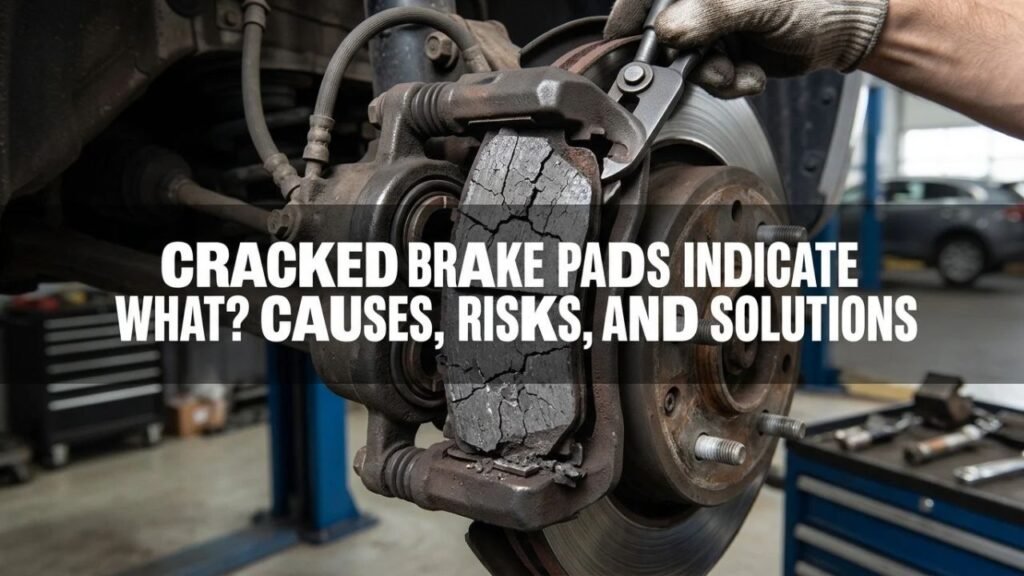
Cracked pads are usually a symptom of heat, binding, uneven loading, or material damage. The exact pattern can narrow the diagnosis.
Small Cracks Near the Center of the Pad
Small central cracks can point toward a caliper that is not moving or releasing correctly. Ferodo’s brake-pad trouble tracer states that a sticking caliper can let the piston bend the backing plate, flexing the pad enough to crack the friction material. The same condition may produce uneven wear, brake noise, pulling, and extra heat on one side of the vehicle.
That makes the caliper the first place I would inspect if one pad has central cracks and the opposite wheel looks normal. Check the piston, guide pins, pad fit in the bracket, dust boots, and signs that the brake has been dragging.
Fine Surface or Hairline Cracks
Fine vertical or surface cracks often point to thermal stress. HELLA lists intensive braking and a sticky caliper among the possible causes of small surface cracks on commercial-vehicle pads. Its guidance says hairline cracks may not create an immediate safety risk, yet it still recommends investigating the cause and replacing the pads.
Some technical references permit minor surface checking on certain brake applications, so the presence of one shallow line does not prove the pad is about to break apart. Pad design and maker limits matter. Deepening cracks, branching cracks, missing material, or a loose friction block deserve a much more cautious response.
Cracks With Burnt, White, or Brittle Material
A cracked pad that also looks burnt, chalky, white around the edges, glazed, or crumbly points toward excessive temperature.
Ferodo describes prolonged high pad temperature from intensive brake use or a pad dragging on the rotor as a cause of material deterioration. The friction material can become brittle, chip, and crack after that type of heat exposure.
Heat damage should trigger a search for the source. Repeated mountain braking may explain all pads on an axle showing similar distress. One overheated wheel makes a sticking caliper, trapped hydraulic pressure, or binding pad hardware more suspicious.
Cracks With Rust or Separation From the Backing Plate
Rust between the friction material and steel backing plate is a different problem from simple surface checking. Corrosion can weaken the bond and help lift or separate the friction block.
Ferodo notes that a pad sticking in the caliper can flex the backing plate and crack the friction material, while corrosion can worsen the condition and lead to separation. HELLA also lists mechanical and thermal delamination as pad failures that call for pad replacement and inspection of the rotor and caliper.
If the friction material is lifting, loose, or separating from the plate, I would treat the pad as failed rather than trying to judge how many miles remain.
Key Takeaway: Crack location matters: central cracks suggest caliper flex or binding, surface cracks often point to heat, and cracks with crumbling or separation point to more serious friction-material damage.
Main Causes of Cracked Brake Pads
Cracking usually develops from thermal stress, mechanical stress, corrosion, or a combination of those conditions.
Sticking Caliper Piston
A caliper piston should apply the pad and release enough pressure for the rotor to turn without constant heavy drag.
If the piston sticks, the pad may stay in contact with the rotor. That creates heat and can also place uneven force through the backing plate. Ferodo directly links cracked pads with a sticking caliper, and HELLA lists a stuck piston among faults associated with overheated brake-pad material.
Clues include one wheel running hotter, uneven pad thickness, pulling, burning odor, or one rotor showing much more discoloration than the other side.
Seized Guide Pins or Caliper Slides
Floating calipers depend on smooth guide-pin movement so both pads clamp and release evenly.
A seized pin can force one pad to carry more load or keep one side rubbing. HELLA lists sticking guide sleeves and seized caliper components among causes of heat-related pad damage and uneven wear.
A cracked pad paired with strong inner-to-outer wear difference should make guide movement part of the inspection.
Heavy or Prolonged Braking
Repeated hard stops and long downhill braking can raise pad temperature enough to damage the binder holding the friction mixture together.
If cracks appear across several pads on the same axle after towing, mountain driving, track use, or repeated heavy braking, broad thermal overload becomes more likely than a single seized caliper.
Heat damage often appears with glazing, color change, brittle edges, rotor hot spots, or a sharp burnt smell.
Pad Binding in the Bracket
Brake pads must be able to move correctly in their bracket or caliper hardware.
Rust buildup under abutment clips, distorted hardware, dirt, or an incorrect pad fit can hold the pad against the rotor. Ferodo links pad sticking with extra temperature, glazing, edge crumbling, and cracking-related faults.
Do not grind a pad excessively just to force it into a rusty bracket. Clean and restore the contact areas according to the vehicle service procedure, then confirm the replacement pad moves as specified.
Rotor Problems and Uneven Contact
A badly scored, worn, or damaged rotor can load the pad unevenly.
HELLA lists poor disc condition as a source of mechanical stress and pad material damage. Ferodo also links worn or scored discs with abnormal pad contact, noise, judder, and reduced braking quality.
Inspect rotor thickness, scoring, cracks, heat spots, and runout against the vehicle maker’s limits rather than assuming a cracked pad is the only damaged part.
Corrosion and Material Deterioration
Moisture and road salt can corrode the pad backing plate and hardware. Corrosion at the bond area can weaken support for the friction block.
Age alone does not mean every pad will crack, but corrosion, heat cycles, and long periods of storage can combine with mechanical loading to damage an older pad.
If a pad shows rust lifting the friction material away from the plate, replacement is the sensible action.
Key Takeaway: The most common causes are caliper binding, seized slides, excess heat, poor pad movement, rotor faults, and corrosion; replacing the pad without fixing the cause can lead to repeat damage.
Are Cracked Brake Pads Dangerous?
They can be. The risk depends on crack depth, location, and how firmly the friction material remains attached.
Minor Surface Checking Is Different From a Deep Crack
Small surface cracks can appear from thermal expansion on some pad designs. HELLA notes that pad slots are sometimes used to control cracks caused by temperature-based expansion, which shows that heat-related stress is a normal design concern.
That does not mean every cracked passenger-car pad should stay in service. A shallow surface line needs a different judgment from a deep crack that reaches an edge, opens under load, or appears beside loose material.
Deep Cracks Can Lead to Chipping or Separation
Once the material becomes brittle, pieces may chip from the friction block. Ferodo describes overheated pad material as prone to deterioration, abnormal wear, chipping, and cracking. HELLA lists delamination and edge spalling as damage that can reduce braking quality and calls for pad replacement.
Less friction material contacting the rotor can also create uneven loading and more heat.
A Cracked Pad May Be Warning About Another Fault
The crack itself may not be the only risk. A sticking caliper that caused the crack can keep overheating the rotor and fluid, wear one pad rapidly, pull the vehicle during braking, or damage new pads.
That is why I would not treat a cracked pad as an isolated wear item until the caliper and rotor have been checked.
Key Takeaway: Fine surface checking may be less urgent on some applications, but deep cracks, loose material, chipping, separation, or signs of a dragging brake call for prompt repair.
Signs That Cracked Pads Need Immediate Attention
A visible crack becomes more concerning when other symptoms appear with it.
Grinding, Knocking, or Repeated Clicking
Noise can come from many brake faults, but grinding with visible pad damage may mean the friction material is failing, loose, or no longer contacting the rotor evenly.
A knock or click that began after pieces of friction material broke away also deserves inspection before normal driving continues.
Vehicle Pulls During Braking
Pulling can occur when braking force differs from side to side.
Ferodo lists pulling as one of the effects associated with cracked pads caused by caliper sticking. A seized piston, contaminated pad, hose problem, or uneven rotor can create a similar symptom.
One Wheel Is Much Hotter
A wheel that becomes much hotter than its partner after ordinary driving may have a dragging brake.
Do not touch a hot rotor or caliper with bare skin. Compare symptoms carefully and have the system inspected if you smell burning, see smoke, or suspect constant brake drag.
Missing Chunks or Loose Friction Material
Crumbled edges, large missing pieces, or material separating from the backing plate move the problem beyond cosmetic surface checking.
Bendix guidance summarized for commercial brakes says pads with major surface damage should be replaced, and HELLA also calls for replacement when material is chipped, crumbling, or delaminating.
Heat Marks or Heavy Glazing
Blue rotor areas, burnt pad edges, glassy friction material, or a strong overheated-brake smell point toward temperature damage.
The cause may be hard use, a caliper that does not release, or another mechanical fault. New pads should not be installed until that cause has been checked.
Key Takeaway: Cracks combined with pulling, grinding, excess wheel heat, missing material, separation, or clear overheating signs deserve fast inspection and usually pad replacement.
How to Diagnose Cracked Brake Pads
Diagnosis should answer two questions: how badly is the pad damaged, and what made it crack?
1. Compare Both Wheels on the Axle
Inspect the same brake components on the opposite side.
If one wheel shows cracking and high heat while the other looks normal, a local caliper, guide, hose, bracket, or rotor problem becomes more likely.
If every pad shows similar heat distress, driving conditions, friction-material choice, or broad brake loading may deserve more attention.
2. Compare Inner and Outer Pad Wear
Measure both pads at the same wheel.
A large difference between inner and outer thickness can point toward a piston, slide, or pad-movement problem. Ferodo links uneven wear within an axle set with sticking guide pins or pistons.
3. Inspect the Crack Pattern
Look for:
- Fine shallow surface lines
- A central crack
- Cracks reaching an edge
- Crumbling around the crack
- Rust under the friction block
- A crack running near the backing plate
- Loose or lifted friction material
Do not pry at a friction block to “test” it. If it already looks loose or separated, replace the set.
4. Check Caliper Movement
Confirm the caliper piston and slides operate according to the vehicle service procedure.
A seized guide pin, swollen boot, corroded bracket, damaged piston, or pad jammed in the hardware can create repeat cracking even after new pads are installed.
5. Inspect the Rotor
Check the rotor for deep scoring, heavy rust, heat spots, cracks, abnormal wear, and thickness below specification.
A damaged rotor can create poor pad contact and fresh mechanical or thermal stress.
6. Check for Hydraulic Release Problems
A brake hose can sometimes allow pressure to apply the caliper yet restrict release if it fails internally. That can mimic a seized caliper by keeping the brake partly applied.
A technician can compare hydraulic release, piston movement, and wheel drag to separate hose trouble from a mechanical caliper fault.
Key Takeaway: Diagnose the whole corner of the brake system: compare pads, inspect the crack, test caliper movement, check the rotor, and rule out hydraulic drag before fitting new parts.
Should Cracked Brake Pads Be Replaced?
In most passenger-car situations, visible structural cracking is a sound reason to replace the pads and inspect the cause.
The main gray area is light surface checking. Some technical guidance accepts shallow heat checks in specific applications, while other brake makers still recommend replacement once surface cracks are found. That difference is why vehicle and pad-maker limits should control the decision.
Replace the Pads if the Crack Is Deep or Growing
Replace the pad set if a crack is clearly deep, reaches an edge, sits beside loose material, or appears to extend toward the backing plate.
Do the same if the material is crumbling, separating, heavily burnt, or missing in chunks.
Replace Pads in Axle Sets
Brake pads are normally replaced as a complete axle set so both sides use matching friction material with similar thickness and behavior.
Do not replace one cracked pad and leave an old mate on the opposite side unless the specific service procedure says that is acceptable.
Fix the Cause Before Installing New Pads
A new pad placed into a sticking caliper can suffer the same damage.
Service or replace seized hardware, repair hydraulic faults, correct rotor problems, and make sure pads move correctly in their brackets. Ferodo’s remedy for cracked pads includes servicing the caliper and replacing the pad set, rather than replacing the pad alone.
Key Takeaway: Deep or structural cracks call for pad replacement, and the caliper, rotor, hardware, and hydraulic release should be checked before the new set goes in.
How to Prevent Brake Pads From Cracking Again
Prevention starts with correcting heat and movement problems rather than choosing a different pad at random.
Keep Calipers and Hardware Moving Freely
During brake service, inspect guide pins, boots, abutment hardware, pad fit, and piston condition.
Use only the lubricant and locations specified for the brake design. Too little maintenance can leave hardware binding, while misplaced grease can contaminate friction surfaces.
Address Dragging Brakes Quickly
A burning smell, hot wheel, vehicle pull, or wheel that does not spin as expected after brake release can point toward drag.
Constant friction creates the temperature that damages pads, rotors, seals, and nearby parts.
Use Engine Braking on Long Descents
On long downhill grades, selecting an appropriate lower gear can reduce continuous brake use when the vehicle maker permits that driving technique.
Repeatedly riding the brake pedal for a long descent keeps heat flowing into the same pads and rotors.
Bed New Pads as Directed
Pad makers often specify a bedding procedure so the friction surfaces mate correctly and develop a stable transfer layer.
Follow the directions supplied with the pad set or vehicle service information. An aggressive heat cycle on brand-new pads can create poor friction behavior or thermal damage on some compounds.
Key Takeaway: Prevent repeat cracking by fixing brake drag, maintaining caliper movement, controlling heat on long descents, and bedding the new pads according to their instructions.
Conclusion
Cracked brake pads indicate more than ordinary wear in many cases. The most common clues point toward excess heat, a sticking caliper, uneven pressure, rotor trouble, corrosion, or deterioration of the friction material.
The crack pattern matters. A small shallow surface line is different from a deep crack that reaches an edge, sits beside crumbling material, or appears with separation from the backing plate. Pulling, grinding, excess wheel heat, burnt material, or uneven pad wear makes the condition more concerning.
My first check would be the caliper and pad movement, especially if only one wheel has cracked pads. A replacement set will not last if a seized piston, slide pin, bracket, hose, or damaged rotor keeps creating the same stress.
If the crack is deep, the pad is loose or crumbling, or braking behavior has changed, avoid stretching the service life. Have the brake assembly inspected and repair the cause before returning the vehicle to normal use.
FAQs About Cracked Brake Pads
Can you drive with cracked brake pads?
A tiny surface heat check does not always mean immediate pad failure, but you cannot judge every crack safely from appearance alone. Deep cracks, missing material, separation, grinding, pulling, or an overheated wheel call for prompt repair. If braking feels weak or abnormal, do not continue normal driving.
Do cracked brake pads mean the caliper is bad?
They can. Ferodo specifically links small cracks in the center of a pad with a sticking caliper that flexes the backing plate. Heat from a dragging caliper can also make friction material brittle. Heavy braking, rotor trouble, corrosion, and other mechanical stress can cause cracking too.
Can overheating crack brake pads?
Yes. Prolonged high temperature can degrade the pad binder and make the friction material brittle. Ferodo and HELLA both identify thermal stress as a source of cracking or related pad damage. Check for a dragging brake, severe driving conditions, and rotor heat damage before installing another set.
Are small hairline cracks in brake pads normal?
Small surface cracks can occur from heat cycling on some brake-pad designs and may not create an immediate failure risk. The acceptable amount depends on the brake application and manufacturer limits. A deep, spreading, edge-reaching, or backing-plate crack should not be treated as harmless surface checking.
Should I replace brake pads if only one pad is cracked?
Replace pads according to the axle-set procedure for the vehicle rather than swapping one friction block in isolation. More important, find out why only one pad cracked. A sticking piston, seized guide, pad binding in the bracket, rotor fault, or restricted hose may be concentrating heat and force at that wheel.
Can a warped rotor cause brake-pad cracking?
A rotor with poor surface condition, abnormal runout, deep scoring, or other damage can create uneven pad contact and mechanical stress. HELLA lists poor disc condition among causes associated with pad material damage. Measure and inspect the rotor against the vehicle maker’s limits before fitting new pads.
What is the difference between a cracked pad and pad separation?
A cracked pad has fractures within the friction material while the material may still be attached to the backing plate. Separation means the friction block is lifting or detaching from that plate. Separation is a more serious structural failure and calls for replacement plus inspection of heat, corrosion, caliper movement, and rotor condition.
Can new brake pads crack?
Yes. New pads can crack if the caliper sticks, the pad binds in the bracket, the rotor creates abnormal contact, the brake overheats, installation is incorrect, or the pad has a material or manufacturing defect. A newly cracked pad should trigger diagnosis rather than another pad-only replacement.