What Are Organic Brake Pads? Materials, Pros, Cons, and Best Uses
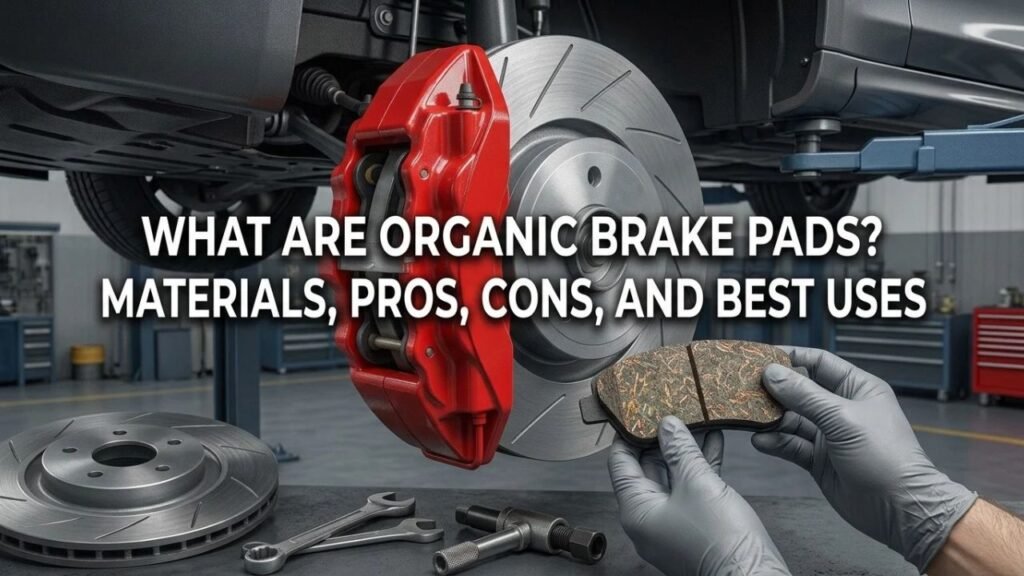
Organic brake pads are soft friction pads made mainly from fibers, fillers, friction modifiers, and heat-resistant resin instead of a high percentage of metal. They are usually quiet, gentle on brake rotors, and suited to normal street driving, but they tend to wear faster and tolerate repeated high-temperature braking less well than harder pad compounds.
That balance matters when choosing replacement pads. A quiet, low-cost pad can work well on a commuter car, yet the same friction material may be a poor match for regular towing, mountain descents, repeated hard stops, or performance driving where brake temperatures rise much higher.
Choosing a pad that matches the vehicle can give you predictable pedal feel, controlled noise, reasonable rotor life, and braking characteristics close to what the car was built around. Simply buying the hardest or most expensive pad does not automatically produce a better brake system.
The U.S. vehicle fleet also makes replacement brake choices increasingly relevant. S&P Global Mobility reported that the average U.S. light vehicle reached 12.8 years old in 2025, with about 289 million light vehicles in operation. Older vehicles naturally create continuing demand for wear-item service, including brake pads and rotors.
So, what are organic brake pads in practical terms? They are commonly called non-asbestos organic, or NAO, pads and use mixtures that may contain rubber, carbon, glass or fiberglass, aramid fibers, fillers, and resin. The exact formula is proprietary and varies between manufacturers and vehicle applications.
What stood out to me during the research is that the word “organic” can be misleading. It does not mean the pad is simply made from natural plant-based material. Modern NAO friction compounds are engineered composites that can contain synthetic fibers and many other ingredients chosen for friction, strength, noise control, and heat behavior.
The sections below explain what organic pads contain, how they stop a vehicle, their strengths and limitations, how they compare with ceramic and semi-metallic pads, and which driving conditions suit them best.
What Are Organic Brake Pads Made Of?
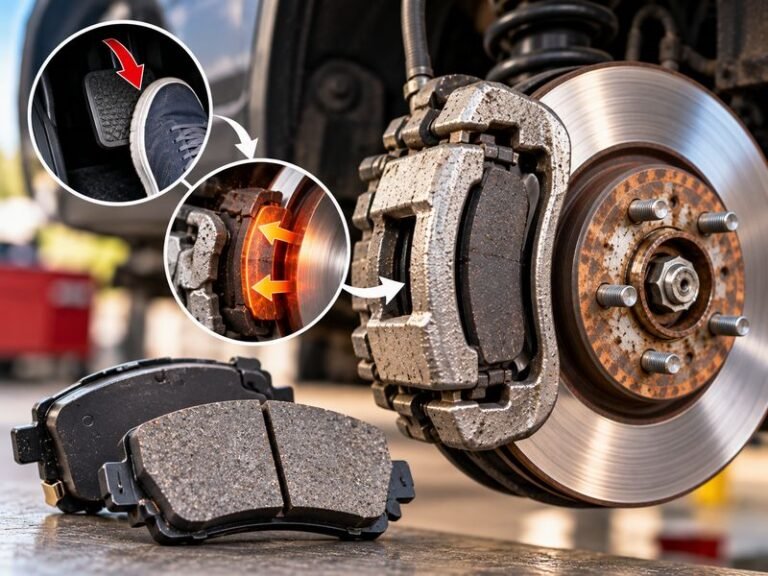
Organic brake pads are composite parts. Manufacturers combine several materials because no single ingredient can provide friction, strength, heat resistance, wear control, and acceptable noise by itself.
The finished friction material is bonded to a steel backing plate and shaped to fit a specific caliper.
Reinforcing Fibers Give the Pad Structure
Reinforcing fibers help the friction material remain intact as the pad experiences pressure, vibration, and repeated heating and cooling.
Common NAO ingredients can include:
- Glass or fiberglass
- Aramid fibers
- Carbon-based materials
- Rubber
- Natural organic fibers
- Other synthetic reinforcing fibers
Bendix describes NAO formulations using synthetic glass fibers, aramid fibers, and natural organic fibers as reinforcing materials. ADVICS also lists rubber, carbon, glass, and fiberglass among materials used in organic friction compounds.
The exact mix is not universal. Two pads both sold as organic may behave differently because their fiber blend, resin, fillers, abrasives, and friction modifiers are different.
Resin Holds the Friction Compound Together
A heat-resistant resin acts as the binder.
During pad manufacturing, the ingredients are mixed, shaped, compressed, and cured so they form a solid friction block. The binder has to hold that mixture together while the pad repeatedly presses against a hot rotor.
The word “organic” is partly connected to this resin-based friction-material family. It should not be interpreted as meaning the product contains only naturally occurring materials.
Fillers and Friction Modifiers Control Pad Behavior
Brake friction is more complicated than simply making a rough surface.
Manufacturers add fillers and friction modifiers to change characteristics such as:
- Friction level
- Wear rate
- Noise
- Heat behavior
- Pad strength
- Rotor interaction
- Pedal feel
The formulation may contain many individual ingredients, and the recipe is normally specific to the friction-material supplier.
This explains why two organic pads can produce different amounts of dust, noise, wear, and brake feel even if both carry the NAO label.
Key Takeaway: Organic pads are engineered composites made from fibers, fillers, friction modifiers, and resin; the exact recipe changes from one manufacturer and vehicle application to another.
How Do Organic Brake Pads Work?
Organic pads stop the vehicle in the same basic way as ceramic and semi-metallic pads.
When you press the brake pedal, hydraulic pressure moves the caliper piston. The pads clamp against the rotating brake rotor, creating friction that converts vehicle motion into heat.
Friction Between the Pad and Rotor Slows the Wheel
The pad surface presses against both sides of the rotor.
Friction resists rotation, so the wheel slows. The tires then transfer that braking force to the road.
This process generates heat every time you brake. How well the friction material behaves as temperature rises is one of the major differences between organic, ceramic, and metallic pads.
Organic Compounds Favor Normal Street Temperatures
Organic compounds are generally well suited to everyday street braking where temperatures stay within the range expected for ordinary passenger-car use.
Their softer composition can produce smooth engagement and restrained noise.
A Porsche technical bulletin filed in NHTSA’s database describes NAO material as widely used in the North American market and associates it with strong noise, vibration, and harshness characteristics, low wheel dust, and good lining wear. The same document notes reduced friction performance at high temperature as a reason Porsche uses another friction type for its higher-performance requirements.
Excess Heat Can Push an Organic Pad Past Its Preferred Range
Repeated hard braking creates far more heat than a few ordinary city stops.
If a pad compound becomes too hot, its coefficient of friction can drop. This condition is commonly called brake fade.
The pedal may still feel firm while braking force becomes weaker because the pad and rotor interface is no longer producing the same friction.
That is one reason organic pads are usually a better fit for ordinary passenger vehicles than repeated severe-duty braking.
Key Takeaway: Organic pads create friction exactly like other disc-brake pads, but their softer friction mixtures are generally aimed at normal street temperatures rather than repeated high-heat braking.
Advantages of Organic Brake Pads
Organic pads remain useful because several of their characteristics fit everyday transportation very well.
They are not simply an outdated version of ceramic or metallic pads.
They Can Be Quiet
Soft friction materials tend to transmit less harsh vibration than some more aggressive metallic compounds.
Wagner describes NAO pads as softer than most other pad types and links that softness with quieter braking.
Pad design still matters. Shims, chamfers, slots, rotor condition, caliper hardware, bedding, and vehicle suspension can all influence brake noise.
An organic pad is not guaranteed to stay silent.
They Are Usually Gentle on Brake Rotors
A relatively soft pad compound can be less abrasive against the iron rotor than some aggressive metallic formulas.
That can be attractive on an ordinary commuter where smooth operation and rotor life matter more than repeated high-temperature stopping.
Rotor wear still varies by pad formula. A poor-quality organic pad, contaminated brake, or dragging caliper can cause problems regardless of the friction-material category.
They Often Cost Less
Organic pads are commonly positioned as an economical replacement option.
For a light passenger vehicle used mainly for local trips, normal commuting, and highway travel, spending extra for a severe-duty friction material may provide little practical advantage.
Price should not be the only selection criterion. Correct fitment and suitability for the original brake system come first.
Their Pedal Behavior Can Suit Street Driving
Many organic formulas are designed around comfortable street use.
They can provide progressive braking response rather than the aggressive initial bite associated with some performance compounds.
For daily traffic, that smoother response can be pleasant and easy to control.
Key Takeaway: Organic pads can offer quiet operation, mild rotor wear, comfortable street behavior, and a lower purchase price, which fits many light-duty passenger vehicles.
Disadvantages of Organic Brake Pads
The same soft friction characteristics that make organic pads comfortable can create drawbacks.
Heat handling and wear life are the two main areas to examine.
Organic Pads Can Wear Faster
Softer friction material is consumed as the pad rubs against the rotor.
Wagner notes that NAO pads can wear faster than harder friction types, while ADVICS also identifies quicker wear as a characteristic of organic compounds.
There is no universal mileage figure for organic pad life. Vehicle weight, front-to-rear brake bias, traffic, terrain, pad size, rotor condition, caliper movement, and driving habits can change life by thousands of miles.
They Are Not the Best Match for Repeated High Heat
Hard braking from high speed creates a large amount of thermal energy.
Towing a trailer, carrying heavy loads, driving down long grades, or repeatedly braking hard can expose pads to temperatures beyond the conditions seen in normal commuting.
Semi-metallic compounds usually handle heavy thermal loads better because their metal content transfers heat differently and supports severe-duty friction characteristics.
Brake Dust Varies by Formula
Organic pads are sometimes described as low-dust, while other technical sources point out that softer organic material can create more visible dust as it wears.
Both statements can appear because NAO is a broad material family rather than one fixed compound.
A modern premium NAO formula may produce restrained dust, while a basic organic pad may leave more dark residue. The vehicle, rotor, friction recipe, and driving cycle all influence the result.
I would not choose a pad solely from a broad claim that every organic compound is clean or every organic compound is dusty.
Shorter Pad Life Can Offset a Lower Purchase Price
A less expensive pad is not automatically less expensive over the whole time you own the vehicle.
If a softer compound wears much sooner in your driving conditions, you may pay for brake service more often.
For light commuting, that tradeoff may still make sense. A heavy SUV or towing vehicle may benefit more from a friction material built around greater heat capacity and longer severe-duty wear.
Key Takeaway: The main compromises are faster potential wear and lower tolerance for repeated high-temperature braking, so organic pads are less attractive for heavy or aggressive use.
Organic vs. Ceramic vs. Semi-Metallic Brake Pads
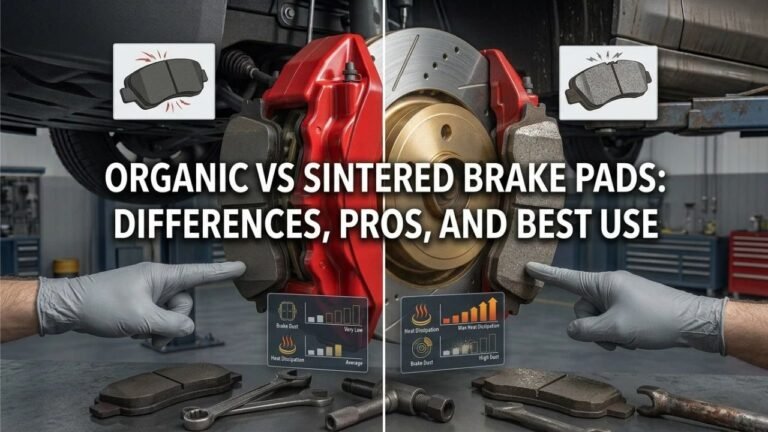
Organic, ceramic, and semi-metallic pads can all stop a road vehicle properly when the pad is designed for that application.
The difference lies in how each material balances noise, wear, dust, heat, cost, and pedal response.
| Feature | Organic / NAO | Ceramic | Semi-metallic |
| Typical street noise | Low | Low | Can be higher |
| Rotor friendliness | Generally good | Generally good | Can be more abrasive |
| Pad wear | Can be faster | Often slower in normal street use | Often strong wear life |
| Heat tolerance | Best for light-to-moderate street use | Broad street temperature range | Strong under higher heat |
| Brake dust | Varies by formula | Usually light and less visible | Often darker and more visible |
| Cost | Often lower | Usually higher | Mid-range varies widely |
| Common use | Commuters, lighter vehicles | Passenger cars, premium street use | Trucks, SUVs, performance and severe use |
The table describes common tendencies rather than rules for every product.
Organic vs. Ceramic Brake Pads
Ceramic pads use ceramic-based fibers and other ingredients rather than relying on a traditional soft organic formulation.
They are popular because many designs combine low noise, low visible dust, and long street wear.
Ceramic pads generally cost more than basic organic pads. They also are not automatically the correct upgrade for every vehicle.
Some factory brake systems are tuned around a specific friction compound. If the original pad type provides the pedal response and temperature behavior the vehicle requires, changing material can alter brake feel.
Organic vs. Semi-Metallic Brake Pads
Semi-metallic pads contain a much larger metal fraction.
ADVICS describes common semi-metallic compounds as containing roughly 30% to 70% metal, including materials such as steel, iron, or copper, combined with other ingredients.
The metal content gives these pads strong heat-transfer characteristics and makes them attractive for trucks, higher loads, repeated hard braking, and some performance uses.
The tradeoff can include more noise, more visible dust, and increased rotor abrasion compared with a softer organic pad.
Which Material Is Better?
There is no single material that wins for every vehicle.
For a quiet commuter with modest brake temperatures, an OE-style organic or NAO pad can be a sensible fit.
For drivers focused on low visible dust and longer street wear, ceramic may be attractive.
For towing, heavy loads, performance driving, or repeated heat, a suitable semi-metallic compound may make more sense.
My preference is to start with the vehicle maker’s friction specification and then choose an aftermarket pad designed to match that application.
Key Takeaway: Organic favors comfort and light-duty use, ceramic focuses heavily on refined street behavior, and semi-metallic compounds are often chosen where higher thermal loads are expected.
Who Should Use Organic Brake Pads?
Organic pads fit best when the vehicle and driving conditions do not create extreme brake temperatures.
A small or midsize passenger vehicle used for ordinary transportation is the clearest example.
Daily Commuters Are a Strong Match
Typical commuting includes moderate-speed stops, traffic lights, local roads, and highway driving.
These conditions generally give brakes time to cool and do not repeatedly push the friction material to severe temperatures.
If the vehicle originally uses an NAO-style compound, replacing it with a quality equivalent can preserve familiar pedal feel and noise behavior.
Light Vehicles Suit Their Characteristics
Wagner specifically describes NAO pads as a good fit for lighter vehicle applications that do not require frequent hard braking.
Compact cars, sedans, hatchbacks, and some crossovers can fit that profile.
Vehicle weight alone does not determine the pad choice. Brake size, original equipment specification, engine output, tire grip, and manufacturer calibration matter too.
Heavy Towing and Repeated Mountain Braking May Call for Another Compound
A tow vehicle has to slow the mass of the vehicle plus the trailer load.
Long downhill grades can also heat the friction brakes repeatedly with limited cooling time.
In those situations, a pad designed for higher thermal loads may provide a better match than a basic organic compound.
The same logic applies to track driving and repeated aggressive street braking.
Key Takeaway: Organic pads make the most sense for normal commuting and lighter-duty street use, while towing, mountain driving, and performance use often call for a higher-heat friction material.
How Long Do Organic Brake Pads Last?
There is no reliable mileage number that applies to every organic pad.
Claims such as “organic pads last exactly 20,000 miles” ignore too many variables.
Driving Conditions Change Pad Life
Frequent city stops usually consume more friction material per mile than steady highway travel.
Long descents, heavy cargo, trailer use, aggressive braking, and dense traffic can shorten pad life.
A driver who anticipates stops and uses moderate pedal pressure may see a very different wear rate from someone driving the same model in constant stop-and-go traffic.
Front and Rear Pads May Wear at Different Rates
Many vehicles put more braking load on the front axle because weight transfers forward during deceleration.
That can cause front pads to wear faster even if all four corners use similar friction material.
Modern stability control, electronic brake-force distribution, brake-based traction systems, and regenerative braking can alter the pattern.
Measure the actual pad thickness rather than assuming a fixed front-to-rear schedule.
Brake Problems Can Shorten Life Dramatically
A seized slide pin, sticking caliper piston, pad binding in the bracket, hydraulic restriction, or parking-brake fault can keep a pad rubbing against the rotor.
That type of wear is not a material limitation.
If one pad or one wheel is much thinner than its opposite-side partner, inspect the brake system before installing another set.
Key Takeaway: Organic pad life cannot be predicted from material type alone; traffic, vehicle design, heat, braking habits, and caliper condition can change the wear rate substantially.
Are Organic Brake Pads Safe?
Yes, a properly designed organic brake pad is safe when it is correct for the vehicle and used within the conditions the brake system was designed to handle.
“Organic” does not mean weak braking.
Brake-system compatibility matters more than selecting a friction-material category from a generic comparison chart.
Use the correct part number for the exact vehicle, axle, brake package, and model year. Check the rotor condition, caliper movement, hardware, and brake fluid condition during service.
There is also a brake-dust safety issue worth treating seriously. EPA states that some automotive brake and clutch parts still in circulation may contain asbestos, more so among certain older or imported parts, and the material cannot always be identified visually. EPA advises against practices that spread brake dust into the air.
Safety Tip: Do not blow accumulated brake dust away with compressed air. Use accepted brake-service dust-control procedures, and treat unidentified older friction material cautiously.
How Can You Tell If Brake Pads Are Organic?
Do not rely on friction-material color.
Modern brake compounds can look similar even when their chemistry is different. ADVICS specifically warns that color is no longer a dependable way to distinguish ceramic, NAO, and semi-metallic friction materials.
The better methods are:
- Check the brake-pad packaging.
- Look up the exact part number in the manufacturer’s catalog.
- Read the product specification.
- Check the vehicle’s original brake specification.
- Ask the pad manufacturer when the catalog description is unclear.
If the existing pads are already installed and have no readable identification, visual inspection alone may not reveal the exact compound.
That is another reason I would select replacement pads from the vehicle application rather than try to identify old friction material by appearance.
Conclusion
What are organic brake pads? They are resin-bonded friction pads built mainly from fibers, fillers, modifiers, and other non-asbestos materials rather than a high percentage of metal. They are commonly grouped under the NAO name and are designed largely around comfortable street braking.
Their strongest traits are quiet operation, gentle rotor interaction, smooth brake feel, and commonly lower purchase cost. Their main limits are faster potential wear and less tolerance for repeated high-temperature use compared with friction materials designed for harsher brake loads.
For a normal commuter, a quality organic pad specified for the vehicle can be a sensible replacement. For regular towing, heavy hauling, mountain descents, or repeated aggressive stops, I would check the manufacturer’s approved pad options and consider a compound built around higher thermal demands.
The material label is only part of the decision. Correct fitment, rotor condition, caliper operation, pad quality, and the vehicle’s original brake design should carry more weight than choosing organic, ceramic, or semi-metallic from the name alone.
FAQs About Organic Brake Pads
Are organic brake pads the same as NAO brake pads?
In common automotive terminology, organic pads are usually referred to as non-asbestos organic, or NAO, brake pads. NAO identifies modern friction materials developed without the asbestos historically used in many older brake linings. Exact formulas differ between manufacturers, so two NAO pads may not have identical ingredients or braking characteristics.
Are organic brake pads better than ceramic pads?
Neither type is automatically better. Organic pads can suit light-duty commuting, quiet operation, and budget-focused replacement. Ceramic pads are often selected for low visible dust, long street wear, and refined noise behavior. Use the material approved for the vehicle and match it to the temperatures and loads the brakes regularly see.
Do organic brake pads wear out faster?
They can. Organic friction material is generally softer than many ceramic or semi-metallic formulas, so pad wear can be faster. Actual service life also changes with vehicle weight, city traffic, braking style, road grade, rotor condition, caliper movement, and front-to-rear brake balance.
Do organic brake pads create a lot of dust?
Dust output varies. Some NAO formulations are engineered for low dust, while softer basic organic pads may shed more visible material as they wear. Ceramic compounds commonly produce lighter, less noticeable wheel dust. The exact pad formula matters more than a broad claim about every organic product.
Are organic brake pads good for towing?
Basic organic pads are generally not the first choice for frequent heavy towing because towing raises brake temperature and workload. A truck or SUV used for regular towing may call for a higher-heat compound specified for that application. Follow the vehicle and pad manufacturer’s fitment guidance.
Are organic brake pads quiet?
They are commonly among the quieter friction choices because their softer composition tends to transmit less harsh vibration. Noise can still come from poor bedding, rough rotors, missing shims, worn hardware, contamination, or a sticking caliper, so pad material alone cannot guarantee silent braking.
Do organic brake pads contain asbestos?
Modern NAO pads are specifically identified as non-asbestos organic pads, but EPA states that some automotive brake components still in circulation may contain asbestos, including some older or imported parts. Do not assume an unidentified used pad is asbestos-free from appearance alone, and avoid creating airborne brake dust.