Symptoms of No Brake Fluid: Signs You Should Never Ignore
The most serious symptoms of no brake fluid include a brake pedal that sinks toward the floor, very weak braking, a red brake warning light, visible fluid leaks, and a sudden increase in stopping distance. If the brake fluid reservoir is empty or nearly empty, you should treat it as a potentially serious hydraulic brake failure rather than a normal maintenance issue.
Brake fluid carries hydraulic pressure from the master cylinder to the brake calipers or wheel cylinders. Without enough fluid, the system may lose pressure and allow air to enter the brake lines, making it difficult or impossible to apply the brakes normally.
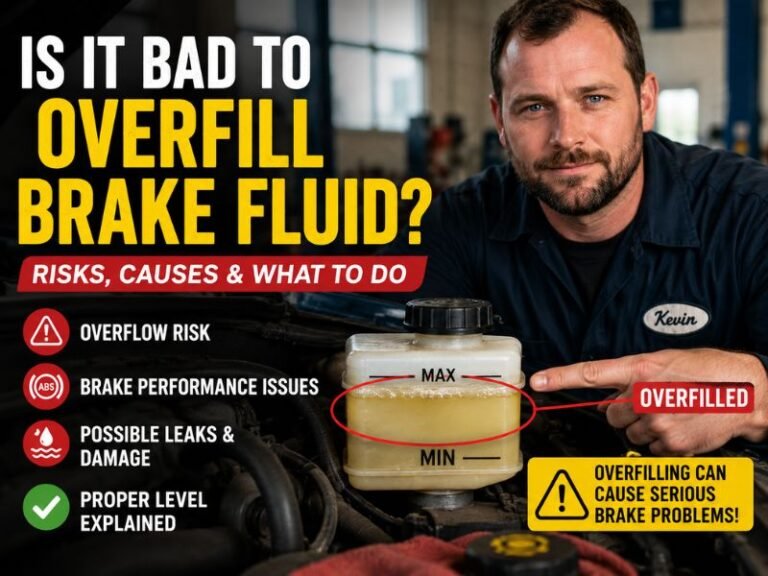
Ford advises that brake fluid should remain between the MIN and MAX marks and recommends having the vehicle checked if it falls below MIN. Toyota also treats a low brake fluid warning as a reason to stop the vehicle safely and have the braking system inspected.
If I find an empty brake fluid reservoir, I do not simply refill it and consider the problem fixed. You need to find out where the fluid went, repair the fault, and make sure the hydraulic system is free of air before the vehicle returns to normal driving.
What Happens If There Is No Brake Fluid?
Your regular brakes depend on hydraulic pressure.
When you press the brake pedal, a piston inside the master cylinder pushes brake fluid through brake lines and flexible hoses. That pressure moves the caliper pistons or wheel cylinders, which apply the brake pads or shoes.
If the system loses most or all of its brake fluid, there may not be enough liquid to transmit that pressure correctly.
Air can also enter the system. Unlike brake fluid, air compresses easily, so pressing the pedal may simply compress trapped air instead of applying strong pressure at the wheels.
The result can be:
- very long brake pedal travel
- a soft or spongy pedal
- weak braking
- uneven braking
- partial or complete loss of normal braking
Modern vehicles commonly use split hydraulic circuits, so one part of the system may sometimes retain some braking after a hydraulic failure. You should never rely on that as a reason to keep driving.
Your parking brake may use a mechanically or electronically separate system, but it is not a replacement for properly functioning service brakes.
6 Common Symptoms of No Brake Fluid
1. Brake Pedal Goes to the Floor
One of the most alarming signs is a brake pedal that goes to the floor with little resistance.
Normally, you should feel hydraulic resistance as the pedal travels downward. If a large amount of brake fluid has escaped, the pedal may move much farther than usual before anything happens.
You might pump the pedal and temporarily get some resistance, only for it to become soft again.
A pedal going to the floor can also be caused by other serious problems, including a failed master cylinder, major hydraulic leak, or large amount of air in the brake lines.
If your pedal suddenly drops close to the floor, you should not continue normal driving.
2. Very Weak or No Braking Response
Severe brake fluid loss can dramatically reduce braking force.
You may press the pedal and notice that the vehicle continues moving much farther than expected. In extreme situations, pressing harder may produce very little braking response.
This is an emergency condition.
If you experience a major loss of braking while driving, focus on controlling the vehicle and getting it stopped in the safest way possible. Once stopped, do not drive it again until the brake system has been inspected and repaired.
Adding fluid at the roadside does not prove that the system is safe.
3. Brake Warning Light Comes On
Many vehicles monitor brake fluid level or hydraulic brake system conditions.
A red brake warning light may indicate low brake fluid, a brake system malfunction, an engaged parking brake, or another issue depending on the vehicle.
NHTSA’s hydraulic brake requirements have included brake system indicators for conditions such as low brake fluid level or hydraulic failure.
Toyota, for example, states that its red brake system warning can indicate low brake fluid or a brake-system malfunction and advises stopping the vehicle safely.
Do not ignore a red brake warning simply because the vehicle still seems to stop.
Check your owner’s manual for the exact meaning of the warning on your model.
4. Visible Brake Fluid Leak
An empty reservoir means the fluid has gone somewhere.
Brake fluid normally does not disappear through ordinary engine operation like gasoline or engine oil consumption.
A leak may appear:
- underneath the vehicle
- behind or inside a wheel
- around a brake caliper
- along a brake hose
- around a steel brake line
- near the master cylinder
- inside a drum brake assembly
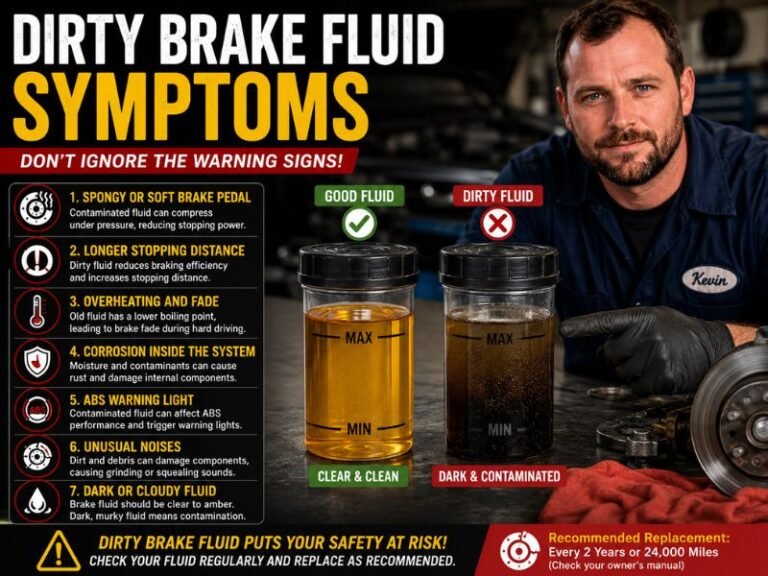
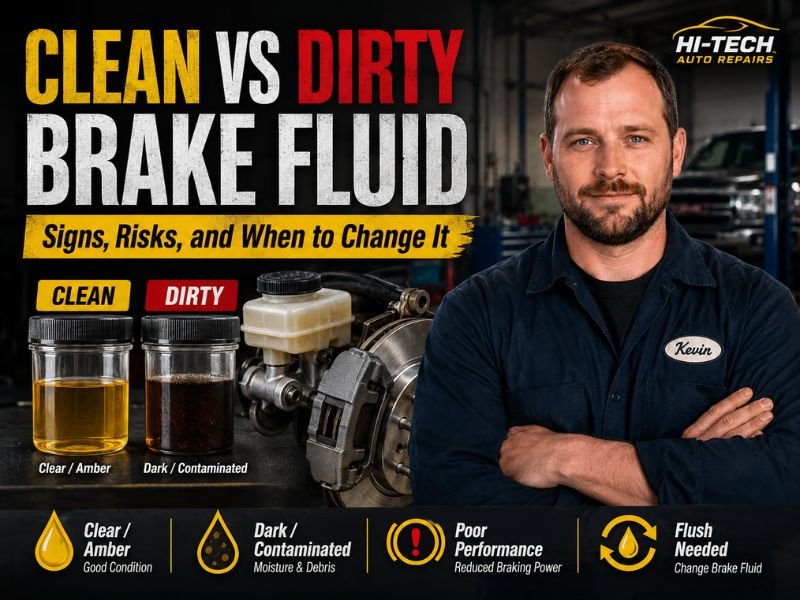
Fresh brake fluid is commonly clear to light amber, although its appearance varies with product and age.
Leaks around a wheel can sometimes be mistaken for other automotive fluids. If you are unsure, avoid touching or tasting any fluid and have the source identified properly.
5. Soft or Spongy Brake Pedal
The reservoir does not have to be completely empty before pedal feel changes.
Once the fluid level becomes low enough for air to enter the hydraulic system, the pedal may feel soft, springy, or spongy.
You might also notice that pumping the pedal makes it temporarily firmer.
That can happen because pumping compresses the air and moves some remaining fluid through the system.
However, pumping is not a repair.
After the leak has been fixed, the system usually needs to be properly bled if air has entered the brake lines.
6. Increased Stopping Distance
Loss of hydraulic pressure can make your vehicle take much longer to stop.
You may need to push the pedal farther or harder than normal, and braking may feel unpredictable.
This is particularly dangerous during emergency braking because you may not have the stopping force you expect.
A longer stopping distance can also be caused by worn pads, poor tires, overheated brakes, or other mechanical problems.
But when increased stopping distance appears together with a low or empty reservoir, you should treat hydraulic fluid loss as a priority.
Why Would a Car Have No Brake Fluid?
A reservoir usually becomes empty because the brake system has developed a leak or has been neglected while losing fluid.
Leaking Brake Line
Steel brake lines run underneath many vehicles and are exposed to water, road salt, debris, and corrosion.
A rusted line may eventually develop a small hole or rupture.
Depending on the location and severity, fluid may leak slowly for weeks or escape rapidly when you press the brake pedal.
If you live in an area where roads are heavily salted during winter, inspecting older steel brake lines is especially important.
Damaged Flexible Brake Hose
Flexible hoses connect the rigid brake lines to moving suspension and brake components.
They can deteriorate with age, become damaged, or develop leaks around fittings.
A cracked hose may allow fluid to escape whenever hydraulic pressure rises.
If you notice wetness around a brake hose, it should be inspected rather than simply tightened without diagnosis.
Leaking Brake Caliper
Disc brake calipers contain pistons and seals that hold hydraulic pressure.
A damaged piston seal or leaking bleeder screw can allow brake fluid to escape near the wheel.
You may notice wetness on the caliper, fluid inside the wheel, or fluid running down the tire area.
Brake fluid on the pads or rotor is also a serious contamination issue. A leak must be repaired, and contaminated friction components may require replacement.
Leaking Wheel Cylinder
Vehicles with drum brakes may use hydraulic wheel cylinders.
A leaking wheel cylinder can release fluid inside the brake drum, where the leak may not immediately create an obvious puddle under the vehicle.
You may instead notice poor braking, a falling reservoir level, or fluid-contaminated brake shoes.
This is one reason a leak can exist even when you do not see fluid on the driveway.
Master Cylinder Leak
The master cylinder can leak externally or develop internal hydraulic problems.
An external leak may appear where the master cylinder connects to the brake booster or around its seals.
Some leaks can be harder to see without removing or inspecting surrounding components.
A failing master cylinder may also produce a sinking brake pedal even when there is still fluid in the reservoir.
Repeated Topping Off Without Repair
One of the worst habits is repeatedly adding brake fluid without asking why the reservoir keeps getting low.
Topping it off may make the level look normal again, but it does not repair a leaking line, hose, caliper, wheel cylinder, or master cylinder.
If you have added brake fluid more than once because the level keeps dropping, you need to find the cause.
Can Worn Brake Pads Cause an Empty Reservoir?
Worn brake pads can make the reservoir level gradually decrease, but they normally should not make it completely empty.
As disc brake pads wear thinner, the caliper pistons extend farther outward to keep the pads close to the rotors.
More fluid remains inside the calipers, so the reservoir level can slowly fall.
This is one reason you should inspect pad condition before automatically topping off a slightly low reservoir.
However, there is a major difference between slightly lower fluid from pad wear and an empty reservoir.
If I see a reservoir that is completely or nearly dry, I look for a hydraulic leak rather than blaming normal pad wear.
You should do the same.
A rapidly falling fluid level is not normal brake pad behavior.
What Does an Empty Brake Fluid Reservoir Mean?
An empty reservoir means the hydraulic system may already contain air.
That changes the repair considerably.
You cannot always restore the brakes by pouring fluid into the reservoir because air may remain trapped in the master cylinder, lines, ABS hydraulic unit, calipers, or wheel cylinders.
The system may need to be:
- inspected for leaks
- repaired
- filled with the correct brake fluid
- properly bled
- checked for a firm pedal
- tested for additional leakage
Some modern ABS and electronically controlled brake systems require specific bleeding procedures or a scan tool.
The correct process varies by vehicle.
If you are not comfortable repairing hydraulic brakes, this is a job where professional service is usually the safer choice.
Can You Just Add Brake Fluid and Keep Driving?
No, not if the reservoir was empty or the fluid level dropped because of an unexplained leak.
Adding brake fluid may temporarily restore some hydraulic pressure, but the fluid can simply leak out again.
More importantly, air may already be trapped inside the system.
You might refill the reservoir and find that the pedal still feels soft or goes too far toward the floor.
Even if it feels better initially, the underlying leak can reopen under pressure.
Toyota notes that brake fluid can absorb moisture and advises using the correct fluid and proper service procedures.
If you discover an empty reservoir, the proper approach is:
- locate the leak
- repair the failed component
- add the specified fluid
- bleed the hydraulic system
- verify that no leaks remain
- confirm normal pedal feel and braking
Do not treat topping off as a repair.
What Should You Do If Your Brake Fluid Is Empty?
Step 1: Do Not Continue Driving Normally
If the reservoir is empty and the pedal feels abnormal, the vehicle should not be driven on public roads.
A tow is far safer than trying to reach a repair shop with questionable brakes.
Step 2: Confirm the Fluid Level
Park on level ground and look at the reservoir.
Ford states that fluid between MIN and MAX is acceptable and advises having the vehicle checked when the level is below MIN.
If you cannot see any fluid in the reservoir, assume the system needs inspection.
Step 3: Look for Obvious Leaks
Without crawling under an unsafe vehicle, look for wet areas around the wheels and underneath the car.
Also inspect the visible master cylinder and reservoir area.
Finding a puddle does not necessarily tell you which component failed, but it can provide an important clue.
Step 4: Avoid Randomly Adding Fluid Types
Do not pour in whatever brake fluid happens to be available.
Check the reservoir cap or owner’s manual for the required specification.
Using the wrong fluid can create another problem on top of the original leak.
Step 5: Have the Vehicle Towed When Braking Is Weak
If the pedal is soft, sinks, or braking response is poor, towing is the appropriate choice.
Trying to drive slowly does not remove the risk of suddenly needing an emergency stop.
Step 6: Repair and Bleed the System
In the shop, I would identify and repair the source of the fluid loss before bleeding the system.
Once the repair is complete, the hydraulic circuit must be free of air and the pedal should feel firm and consistent before the vehicle is considered ready for normal use.
Can No Brake Fluid Damage the Brake System?
Running the hydraulic system extremely low or dry can create additional complications.
The most immediate issue is air entering the brake lines.
If the master cylinder runs dry during a leak or repair, bleeding the system may become more difficult because air can become trapped inside the cylinder.
On vehicles with ABS, air may also enter the hydraulic control unit. Some systems require a scan-tool-assisted bleeding procedure to remove it properly.
The absence of fluid does not automatically mean every brake component is destroyed.
The amount of damage depends on why the fluid disappeared, how long the condition existed, and whether contaminated components were operated without proper hydraulic pressure.
The priority is repairing the leak and restoring the hydraulic system correctly rather than repeatedly refilling it.
When Is No Brake Fluid an Emergency?
An empty brake fluid reservoir should always be taken seriously, but certain symptoms make the situation an immediate emergency.
Do not continue driving if:
- the brake pedal goes to the floor
- braking response is very weak
- the vehicle will not stop normally
- the red brake warning light stays on with braking problems
- you see an active brake fluid leak
- stopping distance suddenly increases
- the vehicle pulls severely while braking
- the reservoir is empty and the pedal feels abnormal
Toyota specifically advises stopping safely when the brake system warning indicates low brake fluid or a brake-system malfunction.
When braking performance is uncertain, arrange a tow rather than testing the brakes in traffic.
FAQs About Symptoms of No Brake Fluid
Can a Car Stop With No Brake Fluid?
If the hydraulic brake system truly has no usable brake fluid, normal braking can be severely reduced or lost.
Some vehicles have split hydraulic circuits that may preserve partial braking after one circuit fails, but you should never depend on that.
An empty reservoir requires immediate diagnosis.
Why Is My Brake Fluid Reservoir Suddenly Empty?
A sudden drop usually points toward a hydraulic leak.
Possible sources include a ruptured brake line, damaged hose, leaking caliper, wheel cylinder, or master cylinder.
You need to locate the leak before adding fluid and returning to the road.
Can Low Brake Fluid Make the Pedal Go to the Floor?
Yes.
If the fluid gets low enough for air to enter the hydraulic system, the pedal can become extremely soft or travel toward the floor.
A failed master cylinder or major leak can produce similar symptoms.
Will Adding Brake Fluid Restore My Brakes?
It may restore some pressure temporarily, but it does not repair the cause of the fluid loss.
If air entered the system, the brakes may also need to be bled after the leak is repaired.
Can Brake Fluid Leak Without Leaving a Puddle?
Yes.
A wheel cylinder can leak inside a brake drum, and some leaks may only occur when the brake pedal creates hydraulic pressure.
Small leaks can also collect on components rather than dripping directly onto the ground.
Is an Empty Brake Fluid Reservoir Dangerous?
Yes.
It can indicate a major leak and possible loss of hydraulic braking pressure.
Do not treat an empty reservoir as a routine top-off situation.
Conclusion
Recognizing the symptoms of no brake fluid can help you respond before a hydraulic problem turns into a complete loss of braking.
A pedal that sinks toward the floor, weak braking response, a red brake warning light, visible leaks, a spongy pedal, and increased stopping distance are all signs that deserve immediate attention.
If I find an empty brake fluid reservoir, I treat the missing fluid as evidence of a problem that needs to be located, not as a simple maintenance issue.
You should stop driving if braking performance has changed, find and repair the source of the fluid loss, use the correct brake fluid, and properly bleed the hydraulic system if air has entered.
Most importantly, do not rely on topping off an empty reservoir and continuing to drive. Your brake system needs to hold fluid and hydraulic pressure reliably every time you press the pedal.