Should You Always Use Parking Brake? Hills, Flats, and Safety
Yes, you should generally use the parking brake every time you park, even on level ground. It provides a separate way to hold the vehicle still, reduces reliance on the transmission’s parking mechanism, and makes your parking routine more consistent. The important exceptions involve certain freezing conditions, vehicle service, and situations where the manufacturer’s instructions call for a different setup.
Drivers of automatic cars often assume shifting into Park is enough. Manual-transmission drivers may leave the car in gear and skip the handbrake. Either method can help keep a stationary vehicle from rolling, but the parking brake adds protection rather than replacing the transmission setting. This matters on steep hills, slight driveway slopes, and parking spaces that look flatter than they are.
There are also questions about wear: Can frequent use damage the brakes? Should an electronic parking brake be treated differently? What happens if the brake sticks? This guide explains when regular use is recommended, how to park properly with either transmission, what special conditions deserve caution, and how to recognize a parking brake that needs attention.
Should You Always Use Parking Brake Even on Flat Ground?
For ordinary parking, using the parking brake is the recommended default whether the ground is flat or sloped. A level-looking parking lot can still have drainage grades, and a vehicle may move if it is not secured correctly. Setting the brake takes only a moment and gives you another restraint against unintended movement.
On an automatic vehicle, select Park as well. On a manual, leave the transmission in the gear specified in the owner’s manual, typically first or reverse, rather than relying only on the parking brake. The combination is more dependable than treating either device as the sole means of securing the car.
There is no need to engage the parking brake at every traffic light or during every brief stop while you remain in the driver’s seat. Those are driving stops, not parking. Keep the service brake pressed or use a properly understood Auto Hold feature if equipped. Apply the parking brake when you actually secure the vehicle for parking, such as when leaving the driver’s seat or switching it off.
Why Flat Parking Spaces Still Deserve a Parking Brake
Even a small slope can become noticeable after you release the foot brake. An automatic car may settle slightly against its transmission parking pawl. A manual car may creep if it was left in neutral without a brake. A consistent habit also makes it less likely that you will forget to use the brake when you eventually park somewhere steep.
The goal is not to make every parking situation dramatic. It is to provide a second layer of security with a system designed to hold a stationary vehicle. If the parking brake cannot hold the car, that is a repair issue, not a reason to ignore it indefinitely.
Why Park Alone Is Not the Same as Applying the Parking Brake
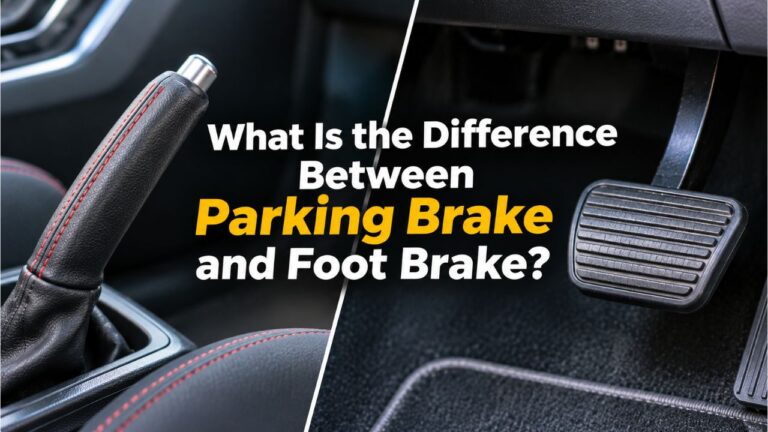
Automatic Transmission: Parking Pawl Versus Wheel Brakes
In many automatic transmissions, selecting P (Park) engages a mechanical parking pawl that prevents a transmission component from rotating. The parking brake works farther downstream, typically holding the rear wheels through a cable-operated or electrically actuated brake mechanism. These are different restraints serving the same overall parking goal.
When a car on an incline settles against the pawl, shifting out of Park may become difficult or produce a clunk. Setting the parking brake before releasing the foot brake can reduce how much vehicle weight rests against the pawl. That does not mean the pawl will be damaged every time you park without the brake; it is designed for its intended job. Using both systems simply avoids placing all responsibility on one mechanism.
Ford’s official parking brake owner-manual guidance instructs drivers of the covered vehicle to fully set the parking brake and select Park to avoid rollaway. Your own manual determines the precise sequence and controls.
Manual Transmission: A Gear Is Backup, Not a Substitute
A manual-transmission car can resist rolling when parked in an engaged gear with the engine off. But that resistance depends on the drivetrain and does not serve as a replacement for a properly functioning parking brake. Never leave the car in neutral and rely on the parking brake alone as a universal parking method.
Follow the manufacturer’s gear recommendation, which may differ by vehicle or slope. The parking brake holds the wheels while the selected gear adds another measure of protection. Keep the clutch fully released after turning off the engine so the transmission is actually engaged.
When Using the Parking Brake Matters Most
Parking Uphill or Downhill
A slope increases the force trying to move a parked vehicle. Set the parking brake firmly, secure the transmission, and turn the front wheels in the appropriate direction so a rolling vehicle is less likely to enter traffic. On a steep grade, properly positioned wheel chocks provide another safeguard.
The California DMV’s current hill-parking guidance explains that a downhill vehicle should have its front wheels turned toward the curb, while an uphill vehicle with a curb should have them turned away. Without a curb, turn toward the road edge so the car would roll away from moving traffic. Always follow any different local requirements and conditions.
Parking on a Driveway or Uneven Ground
A driveway can appear almost flat from the driver’s seat while still having enough slope for a car to roll. Gravel, wet pavement, and uneven surfaces can add uncertainty. Use the parking brake along with Park or the correct gear, and avoid leaving a vehicle where a small movement would put a person or property at risk.
If you are parking near a garage door, wall, sidewalk, or another vehicle, keep the service brake applied until the parking brake and transmission are both secured. Do not use a bumper, wall, or curb as a substitute for a functioning brake.
Parking a Loaded Vehicle or Towing a Trailer
Cargo and trailers can increase the load a parking system must resist, particularly on slopes. Follow the vehicle and trailer manufacturer’s parking instructions, including any specified trailer brakes, wheel chocks, and transmission or transfer-case positions. A passenger-car parking brake alone may not be intended to hold a heavily loaded combination on a hill.
For a trailer, place chocks where required before uncoupling and never assume the tow vehicle’s parking brake will secure a disconnected trailer. If the parking brake slips under a reasonable load, have it inspected rather than pulling the lever harder or relying on a higher gear.
How to Apply the Parking Brake Correctly Every Time
The exact sequence depends on the vehicle, but these steps offer a reliable starting point. Use the owner’s manual if it specifies a different order, especially for an electronic shifter or automatic parking brake.
Step 01: Stop Completely and Keep the Foot Brake Pressed
Bring the car to a complete stop in the intended space and maintain pressure on the regular brake pedal. This prevents rolling while you set the other controls. Check that the car is properly positioned and that there is enough clearance before shutting it down.
Step 02: Engage the Parking Brake While the Vehicle Is Stationary
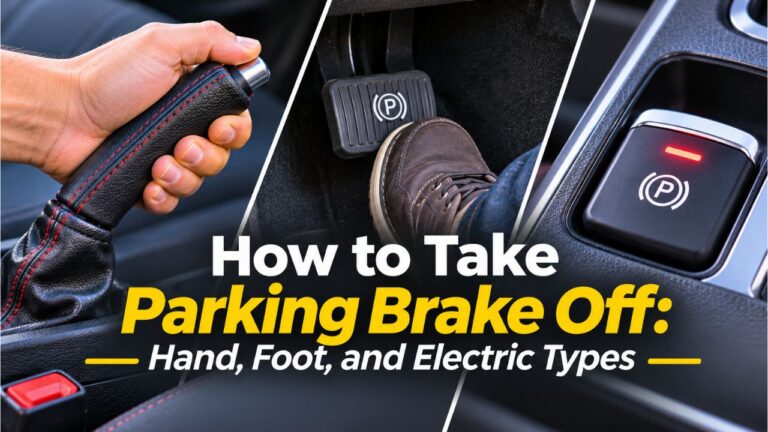
Pull the handbrake lever, press the parking-brake pedal, or operate the electronic switch as instructed. Use enough force to engage a manual mechanism fully, without yanking an already tight lever. On vehicles with an electronic parking brake, look for the confirmation indicator rather than assuming a motor sound proves engagement.
Step 03: Secure the Transmission and Release the Foot Brake Carefully
Select Park in an automatic or the recommended gear in a manual. With both restraints in place, ease off the regular brake and check that the car stays stationary. On a slope, this helps the parking brake take the load rather than allowing the vehicle to roll abruptly against the automatic transmission’s parking pawl. Follow the manual if your car applies the brake automatically when Park is selected.
Step 04: Switch Off, Check the Indicators, and Exit Safely
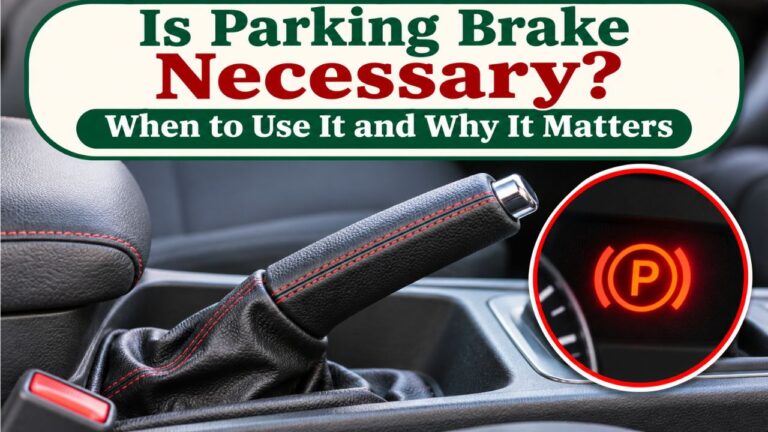
Turn the vehicle off, check its parked status, and take the key or electronic key when leaving. If the parking brake warning is flashing or an error message appears, do not assume the system is secured. Keep the vehicle from rolling and arrange the proper inspection. Before leaving, check that children or passengers cannot accidentally release the brake or change the transmission setting.
Is It Bad to Use the Parking Brake Every Day?
Normal, correct parking-brake use does not inherently damage the system. The mechanism is intended to be operated regularly. Infrequent use is not a guarantee of longer life, either: on some cable-operated systems, lack of movement combined with road salt and corrosion can contribute to sticking parts.
There will still be wear over time. Cables, linkages, parking-brake shoes, caliper mechanisms, switches, and electric actuators can fail or need servicing. The correct response is routine inspection and appropriate repair, not avoiding the brake during ordinary parking.
Does the Parking Brake Wear Out Your Brake Pads?
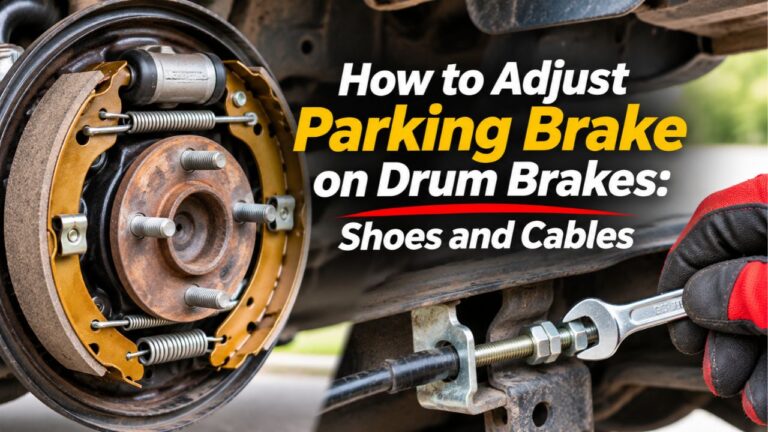
A properly applied parking brake holds a stopped vehicle without repeated sliding friction. That is different from dragging the brake while driving. Depending on vehicle design, the parking brake may use rear disc-brake components or separate small drum shoes housed inside the rear rotors. Wear depends on condition and design, not simply the number of normal parking applications.
Do not move the car with the parking brake engaged. Dragging it can generate heat, damage components, and reduce braking performance. If a warning stays on or the car resists movement, stop and find the cause.
What About an Electronic Parking Brake?
An electronic parking brake performs the same basic parked-vehicle function using electric actuators. Some models apply automatically when you shift into Park or turn the vehicle off. Others require manual engagement, or the automatic function must first be enabled.
Check the indicator every time rather than assuming the feature activated. Auto Hold, which temporarily keeps the brakes applied at traffic lights, is not a universal substitute for the parking brake when leaving a vehicle unattended.
When You Should Not Follow the Everyday Parking-Brake Routine
Wet Brakes in Severe Freezing Conditions
In extreme cold, water or packed snow around the rear brakes can freeze an applied mechanism in place. The risk is more relevant when brakes are wet and temperatures are expected to drop below freezing. Some manufacturers specifically instruct drivers not to leave the parking brake engaged under these conditions.
For example, Hyundai’s 2026 winter-driving instructions explain that a parking brake can freeze when ice accumulates or the rear brakes are wet. Its alternative procedure involves Park and wheel chocks, with the brake released after securing the vehicle. Use the instructions for your own model; do not skip the brake on an incline unless an approved alternative safely holds the vehicle.
Car Washes, Towing, and Brake Maintenance
A conveyor car wash may require Neutral with the parking brake released so the wheels can roll. Towing or transport can require a special mode, particularly for electronic shifters. Rear brake service may require an electronic parking-brake maintenance mode before caliper work.
These are controlled procedures, not ordinary unattended parking. Follow the specific instructions, and keep the vehicle secured appropriately. Never release the parking brake on a slope without another reliable method of preventing movement.
A Faulty Brake That Will Not Apply or Release
If the brake is seized, an electronic fault is displayed, or the cable is broken, do not force the control. A system that cannot hold the car needs repair. A system that cannot release may require towing or a manufacturer-approved recovery procedure. Choose a safe location and use chocks as appropriate while arranging service.
How to Know Whether Your Parking Brake Needs Repair
A parking brake should engage predictably and keep the stationary vehicle from moving under the conditions for which it was designed. Warning signs include excessive lever travel, an unusually loose pedal, failure to hold on a modest slope, grinding sounds, a flashing EPB warning, or rear brakes that remain hot or drag after release.
Do not test a questionable brake by deliberately allowing the car to roll down a hill. A technician can check cable adjustment, rear brake hardware, electronic actuators, and relevant warning codes under controlled conditions. If the car moves after you believe it is parked, keep your foot on the service brake, resecure it, and have the fault corrected before leaving it unattended.
FAQs About Should You Always Use Parking Brake
Should I Use the Parking Brake in an Automatic Car?
Yes. Select Park and apply the parking brake during normal parking. They are separate restraints, and using both reduces reliance on the transmission alone.
Is the Parking Brake Necessary on a Flat Road?
It is still recommended. Parking areas can have small unnoticed slopes, and using the brake creates a consistent routine. The exception is a specific condition where the manufacturer advises a different safe parking method.
Does Using the Parking Brake Every Day Damage the Transmission?
No. Correct parking-brake use does not harm the transmission. Applying it before releasing the service brake may reduce the load placed on an automatic transmission’s parking pawl on an incline.
Should I Set the Parking Brake at a Red Light?
Usually not. Keep the service brake applied during ordinary short traffic stops, or use an approved Auto Hold feature. The parking brake is primarily for securing a parked vehicle.
Can I Leave the Parking Brake Off in Freezing Weather?
Only when your vehicle’s instructions recommend that approach and you can secure the car safely with the specified transmission position and wheel chocks. Do not use freezing weather as a reason to leave an unsecured vehicle on a slope.
Make the Parking Brake Your Default Parking Habit
If you are asking should you always use parking brake, the practical answer is yes during normal parking, whether you drive an automatic or manual transmission. Set it while the vehicle is stopped, secure the transmission, and confirm the car remains stationary before walking away. It is especially important on hills, driveways, and other places where rolling could cause harm.
The word always still has sensible limits. Severe freezing conditions, approved service procedures, or a malfunction may require a different method. Follow your specific owner’s manual, use wheel chocks when directed, and repair a defective brake rather than leaving the vehicle relying on a single restraint.