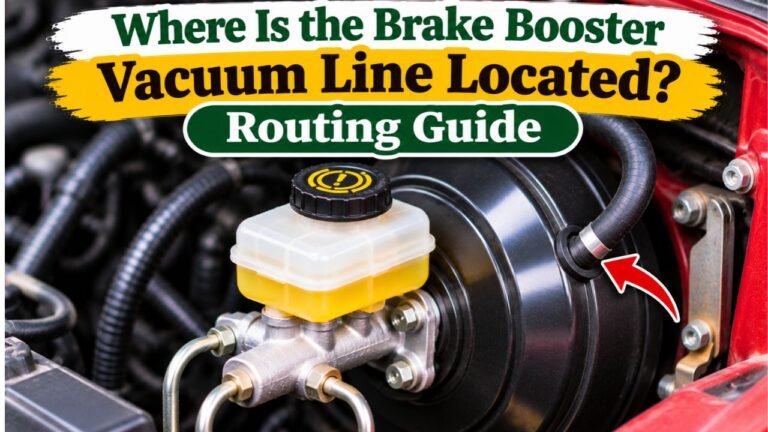
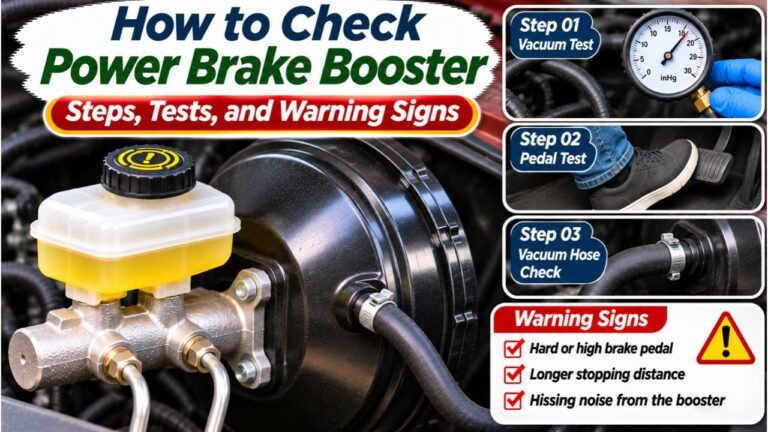
Can a Bad Brake Booster Cause Brakes to Stick? Causes and Fixes
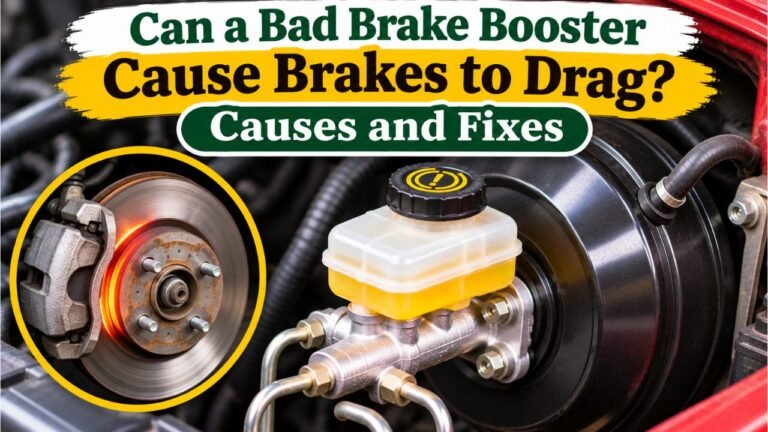
Yes, a bad brake booster can cause brakes to stick or drag, although this is less common than a seized caliper or another hydraulic problem. A binding booster mechanism, faulty return action, or an incorrectly positioned booster pushrod can prevent the master cylinder from releasing fully. The brakes may remain partly applied after you lift your foot from the pedal.
A typical vacuum leak has a different effect: it reduces power assistance and makes the pedal harder to press. That distinction matters because replacing a booster for every sticking-brake complaint can leave the real fault untouched. Brake hoses, master-cylinder ports, pedal hardware, and parking-brake components can create similar symptoms.
Sticking brakes also produce damaging heat. A car may feel sluggish, pull to one side, develop a burning smell, or become progressively harder to move. This guide explains how booster-related brake drag happens, what symptoms point toward it, how to recognize other likely causes, which checks are safe while parked, and what a proper repair involves.
Can a Bad Brake Booster Cause Brakes to Stick?
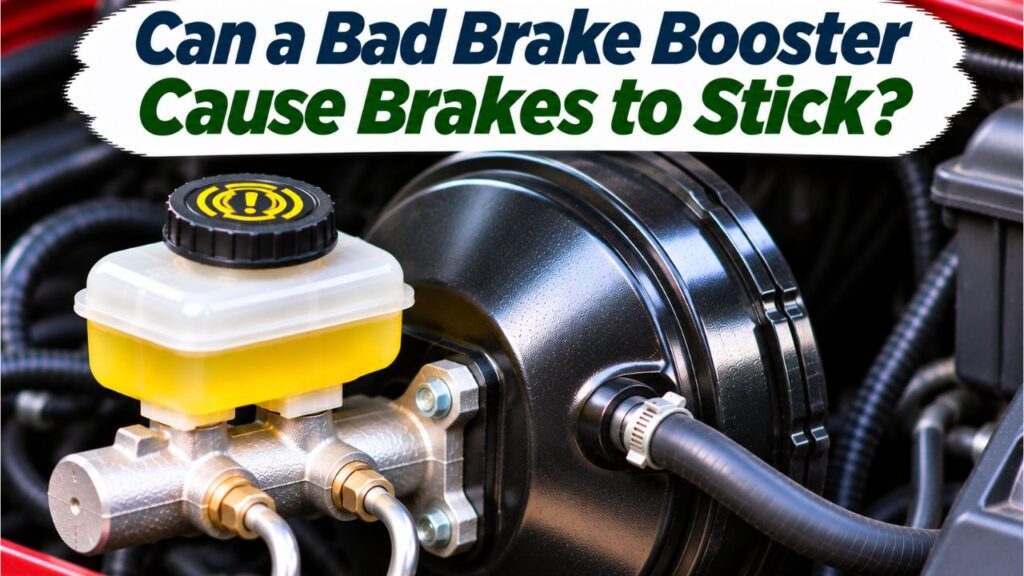
Yes, but the specific failure matters. A vacuum brake booster normally adds force to the master cylinder when you press the pedal, then releases that force when the pedal returns. If part of its mechanical or internal control mechanism remains engaged, it can keep pressure on the master cylinder even after the driver stops braking.
A booster that will not release is different from a booster that will not assist. Loss of vacuum usually leaves a hard pedal; failure to release can leave the wheel brakes rubbing against their rotors or drums. Some vehicles use hydraulic or electronic assistance instead, so the failure patterns and testing procedures differ.
A booster-related problem is more plausible when several wheels drag together, the pedal fails to return normally, or trouble begins immediately after booster or master-cylinder replacement. None of those signs is conclusive by itself.
How a Brake Booster Can Keep the Brakes Applied
Booster Pushrod Is Too Long or Has No Clearance
The booster output pushrod transfers force to the master-cylinder piston. When the pedal is released, that piston must return far enough to uncover a small compensation port connecting the hydraulic circuit to the reservoir. This allows pressure to equalize and heated fluid to expand without continuing to apply the brakes.
If the pushrod is too long, the piston can remain slightly depressed and cover that port. Residual hydraulic pressure then holds the brakes on. Ford’s 1993 Mustang workshop manual specifically identifies an overlong booster pushrod as a cause of brake drag. That guidance concerns the documented Ford design; adjustment methods and allowable clearances differ between vehicles.
This problem can appear after fitting a replacement master cylinder, installing the wrong booster, or changing an adjustable pushrod without the specified gauge. An original, correctly assembled pushrod should not be adjusted casually.
Internal Booster Valve or Return Mechanism Sticks
Inside a traditional vacuum booster, a control valve manages air pressure across a diaphragm. Springs and mechanical parts help the assembly return when the pedal is released. A binding valve, jammed mechanism, or defective return component may delay release or retain unwanted force.
That failure is possible, but it should not be assumed simply because the vehicle has power brakes. The technician needs to rule out the pedal linkage and master cylinder before condemning the sealed booster assembly.
Brake Pedal or Linkage Cannot Return Completely
A sticking pedal pivot, improperly adjusted brake-light switch, misplaced floor mat, or binding linkage can hold the input rod slightly forward. The result may resemble an internal booster failure because the master cylinder never returns fully.
Check the driver’s footwell for obvious obstructions, but do not alter the linkage or brake-switch adjustment by guesswork. Brake-pedal free play and switch position may be safety-critical on vehicles with electronic controls.
Why Sticking Brakes Can Get Worse as They Heat Up
When a pad continuously rubs a spinning rotor, friction generates heat. The rotor and nearby brake fluid get hotter, and brake fluid expands. If a covered master-cylinder compensation port prevents the fluid from returning to the reservoir, hydraulic pressure can build further.
This can create a cycle: more pressure produces more rubbing, which generates still more heat. The vehicle may drive normally when cold and then become harder to move after repeated stops. After cooling, the brakes might release enough to hide the problem temporarily.
The Moss Motors technical guide to brakes that won’t release explains the role of trapped hydraulic pressure and lists booster adjustment, blocked compensation ports, hoses, and seized components among possible causes. Its model examples are for classic MG vehicles, but the underlying fluid-return principle helps explain brake drag elsewhere.
Symptoms of Booster-Related Brake Drag
Car Feels Sluggish After Releasing the Pedal
The engine may seem to work harder than usual, and the car may slow noticeably when you release the accelerator. This can happen when the brakes remain slightly applied. It is not unique to booster trouble; dragging parking brakes and wheel-bearing problems can also create resistance.
More Than One Wheel Becomes Abnormally Hot
If the booster prevents the master cylinder from returning, multiple wheels can be affected because hydraulic pressure remains in one or more circuits. Excessive heat may produce a sharp odor, smoke, or discolored rotors.
Never touch a rotor, caliper, or wheel to check its temperature after suspected brake drag. These parts can cause severe burns, and overheating brakes may be unsafe even when they have cooled.
Brake Pedal Stays Down or Returns Slowly
A pedal that hesitates on its way back to its resting position is an important clue. The cause may be inside the booster, at the pedal pivot, or in another part of the linkage. A pedal that returns normally does not completely rule out trapped hydraulic pressure.
Brakes Seem to Release After Parking
If the brakes tighten while driving but loosen after a long stop, accumulated heat or trapped pressure may be involved. This pattern does not establish whether the booster, master cylinder, or hose is responsible. Do not keep driving to reproduce it.
Bad Brake Booster vs. Other Causes of Sticking Brakes
A single dragging wheel more often suggests a local problem than a booster that acts on the master cylinder. The brake system must be inspected as a whole before ordering parts.
| Suspected Problem | Common Pattern | What Separates It |
| Booster pushrod or return fault | Multiple wheels may drag; pedal may not fully return | Check pedal and master-cylinder return using service procedures |
| Sticking caliper piston or slide pins | Often one wheel; uneven pad wear | Inspect caliper movement and hardware |
| Internally restricted brake hose | One wheel or one circuit may stay applied | Professional hydraulic pressure testing identifies restriction |
| Blocked master-cylinder compensation port | Brakes tighten as fluid warms | Pressure cannot return normally to reservoir |
| Parking-brake cable or mechanism | Usually rear-wheel drag | Check parking-brake release and hardware |
| Drum-shoe or wheel-cylinder binding | Usually affected drum wheel | Inspect shoe adjustment and wheel-cylinder operation |
For a common alternative, AutoZone’s guide to sticking brake calipers describes how seized caliper pistons or slide hardware can cause pulling, uneven wear, and overheating. Those symptoms overlap with brake-booster complaints, but the repairs are different.
Does Drag at All Four Wheels Prove the Booster Is Bad?
No. All-wheel drag raises suspicion of a shared component, such as the pedal linkage, booster pushrod, or master-cylinder return passages. However, circuit layout varies, and unusual ABS hydraulic faults can also affect pressure release. A skilled inspection must establish where the resistance originates.
If only one wheel is hot, start by considering its caliper, hose, parking-brake mechanism, or drum hardware. This is a useful diagnostic direction, not an absolute rule.
Safe Checks When Brakes Seem to Stick
These are stationary observations, not instructions to repair or road-test unsafe brakes. If the vehicle is pulling, smoking, resisting motion, or showing a brake warning, stop safely and arrange towing.
Step 01: Note When the Drag Appears
Record whether the symptom occurs immediately after starting, after several brake applications, or only when the vehicle is warm. Note whether recent work involved the booster, master cylinder, pedal, or brake lines. A problem appearing just after component replacement makes fitment and pushrod clearance worth checking.
Step 02: Check the Pedal’s Return
With the car securely parked and engine off, look for an obvious obstruction around the brake pedal. Observe whether it sits at its normal resting position. Do not pull hard on the pedal or modify the return spring, linkage, or brake-light switch.
Step 03: Look for Visible Brake Problems
From outside the vehicle, inspect for smoke, fluid spots, damaged hoses that are safely visible, and unusual stains near the wheels. If the brakes were hot, allow them to cool naturally without touching or spraying them with water.
Step 04: Separate Brake Drag From Loss of Assist
A hard pedal with little assistance often indicates a vacuum supply or booster-assist fault. Wheels that remain braked after you release the pedal suggest a return, mechanical binding, or trapped-pressure problem. Both conditions deserve diagnosis, but their causes are not interchangeable.
Step 05: Arrange a Full Brake-System Inspection
Tell the shop which wheels seemed affected and whether the symptom changed with temperature. Do not disconnect the booster vacuum hose, loosen brake lines, or open bleeder screws as a DIY road test. Doing so can compromise braking or introduce air into the hydraulic system.
How a Mechanic Confirms Whether the Booster Is Responsible
A qualified technician checks pedal free play and return, the brake-light switch position, the booster-to-master-cylinder pushrod dimensions, and whether the master cylinder fully returns. Manufacturer-specific gauges and procedures may be needed.
With the vehicle safely supported, the technician can establish which wheels drag and whether residual hydraulic pressure is present. Approved isolation tests can distinguish a master-cylinder return restriction from a hose or caliper problem. This is not simply a matter of replacing the part closest to the pedal.
The technician also evaluates vacuum supply and booster valve operation where applicable. On hydraulic boosters, hybrids, and integrated electronic braking systems, diagnostic equipment and service precautions may differ substantially.
How to Fix Brakes That Stick Because of a Bad Booster
The repair depends on the verified fault. If an incorrect adjustable pushrod holds the master-cylinder piston partly applied, the technician should restore the manufacturer-specified clearance and confirm full piston return. Some pushrods are not field-adjustable and require the correct matched components instead.
An internally binding or damaged sealed booster may need replacement. If the brake pedal or switch is obstructing return, that mechanism must be corrected. If the actual cause is a restricted hose, blocked master cylinder, or seized caliper, replacing the booster will not solve it.
After repair, check the hydraulic system for leaks and trapped air, confirm correct pedal travel, and inspect pads, rotors, seals, and hoses for overheating damage. Repairs involving opened hydraulic circuits require the vehicle’s specified bleeding procedure. Verification of safe brake release should be completed before normal driving.
Is It Safe to Drive With Sticking Brakes?
No. Driving with brakes that fail to release can be dangerous. Excessive friction can overheat rotors, damage pads and seals, reduce braking effectiveness, and potentially cause a fire. A vehicle that pulls or suddenly slows can also be difficult to control.
If you notice a burning smell, smoke, unusual resistance, or a wheel that appears overheated, stop somewhere safe. Do not test the vehicle by driving farther or try to free the brakes by accelerating against them. Have the vehicle inspected and transported rather than assuming cooling has repaired the fault.
FAQs About Can a Bad Brake Booster Cause Brakes to Stick
Can a Vacuum Leak in the Brake Booster Make Brakes Drag?
Usually, a vacuum leak causes reduced brake assistance and a hard pedal rather than sustained hydraulic pressure. A separate sticking valve or linkage problem can produce dragging, so the actual mechanism must be checked.
Can an Incorrect Booster Pushrod Cause All Four Brakes to Lock Up?
Yes, in some hydraulic layouts. A pushrod that prevents the master cylinder from fully returning can trap pressure and affect multiple wheel brakes, particularly as the system heats up.
Why Do My Brakes Stick Only After Driving for a While?
Heat can worsen drag when hydraulic pressure cannot return to the reservoir. A restricted hose, blocked master-cylinder compensation port, or incorrect pushrod setting are among the possibilities.
Can a Bad Brake Booster Make One Front Brake Stick?
It is possible for symptoms to appear unevenly, but a single dragging front wheel more often points to a local caliper, slide, or hose issue. Inspect that wheel before assuming the booster has failed.
Will Replacing the Brake Booster Fix Sticking Brakes?
Only if the booster or its associated fitment and return mechanism is the confirmed cause. Replacing it will not repair a seized caliper, restricted hose, or a master cylinder that cannot release pressure.
Why Proper Brake Release Matters More Than Replacing the Booster
Can a bad brake booster cause brakes to stick? Yes, when its mechanism or pushrod prevents the master cylinder from releasing normally. Yet ordinary vacuum leaks more often create a hard pedal, and many sticking-brake complaints originate at the wheels or in the hydraulic system instead.
Watch for slow pedal return, abnormal rolling resistance, several hot wheels, or brakes that tighten as they warm. Those patterns help direct diagnosis but do not identify a failed part with certainty.
Have the brake system inspected before replacing components, and do not drive when the brakes remain applied. Correcting the actual cause and verifying complete brake release is the safest way to restore dependable stopping performance.