Can You Weld Brake Rotors: When It Works and What to Check First
Yes, you can weld brake rotors, but it is almost never a safe or lasting repair for a rotor that is worn out, cracked, or damaged.
The article below explains the specific conditions where welding might be considered, the serious risks involved, and what you must check before ever attempting it. You will learn why most professionals refuse this repair, what happens to the metal during welding, and the critical steps to take if you are evaluating a rotor for welding.
Consider two contrasting situations. In the first, a DIY mechanic notices a small cosmetic rust pit on the rotor hat and thinks a quick weld will prevent future corrosion. In the second, a driver has a severely warped rotor causing violent pedal pulsation and hopes a weld can resurface the friction surface. A rushed decision in either case could overlook the fundamental reason the rotor failed in the first place. The first situation might not need any repair at all, while the second situation demands a replacement, not a weld. This article will help you tell the difference before you waste time or compromise your safety.
**What Welding Actually Does to a Brake Rotor**
Brake rotors are typically made from gray cast iron. This material is chosen for its excellent heat absorption, thermal conductivity, and wear resistance. However, cast iron is brittle and highly sensitive to rapid temperature changes. When you apply intense heat from a welding arc, you create a localized heat-affected zone. This zone undergoes metallurgical changes that alter the hardness and crystalline structure of the iron.
The most immediate problem is thermal shock. If the rotor is cold and you strike an arc, the sudden expansion can cause micro-cracks that spread invisibly through the metal. Even if the weld itself looks sound, the surrounding area is now weaker than before. As the rotor heats up during normal braking, these micro-cracks can grow into larger fractures. The result is a catastrophic failure where the rotor separates or shatters while driving.
Another issue is distortion. Welding introduces concentrated heat that makes the rotor warp. A rotor must have a perfectly flat, parallel friction surface. Any distortion from welding will cause brake pedal pulsation, uneven pad wear, and reduced braking efficiency. You might fix one crack only to create a worse problem with the rotor’s geometry.
**When Welding Brake Rotors Might Be Considered**
There is a narrow set of circumstances where welding a brake rotor is not about repairing the friction surface. Some enthusiasts weld mounting tabs or brackets onto the rotor hat for custom applications. Others might weld a rotor to a hub assembly for a show car or a low-speed off-road vehicle. In these cases, the weld is not load-bearing for the braking function. The rotor still needs to be replaced if the friction surface is worn, but the weld is only for attachment purposes.
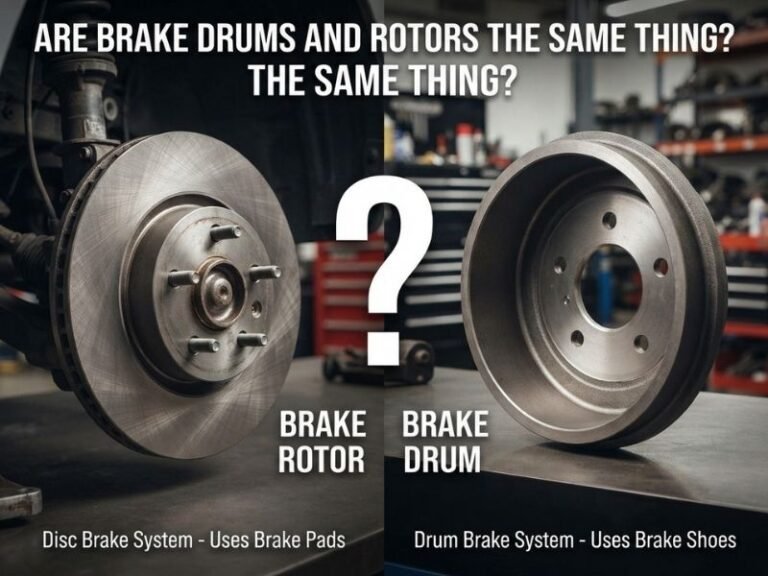
Another rare case involves repairing a cracked mounting ear on a parking brake drum-in-hat rotor. Some vehicles have a small drum brake integrated into the rear rotor. If the parking brake shoe anchor or a spring mount breaks, a skilled welder might attempt a repair. This is still risky because the heat can warp the entire rotor. It is only worth considering if the rotor is otherwise in perfect condition and a replacement is unavailable or extremely expensive.
For the vast majority of drivers, welding a rotor to fix a vibration, a scored surface, or a crack is not a legitimate repair. The rotor is a wear item. It is designed to be replaced when it reaches its minimum thickness or shows signs of damage. Welding it back into service ignores the fact that the metal is already fatigued from countless heat cycles.
**Critical Checks Before Any Weld**
If you are still considering welding a rotor, you must perform several inspections. The first check is the rotor’s minimum thickness. Every rotor has a minimum thickness specification cast into the hat. If the rotor is already near or below this number, welding is pointless. The rotor does not have enough material left to safely dissipate heat. You would be welding a part that is already at the end of its service life.
The second check is for existing cracks. A small surface crack might look repairable, but cracks in cast iron often run deeper than they appear. Use a magnifying glass and a wire brush to clean the area thoroughly. If you see any crack that extends from the bolt holes, the hub, or the friction surface edge, the rotor is scrap. Do not attempt to weld it.
The third check is the rotor’s runout. You need a dial indicator to measure lateral runout. If the rotor wobbles more than the manufacturer’s specification, welding will not fix the underlying hub issue or the rotor’s distortion. You would be welding a part that is already out of tolerance.
**The Preheating and Cooling Process**
If you pass all the checks and decide to proceed, the welding process is not simple. You cannot just grab a standard MIG welder and start laying beads. Cast iron requires preheating to reduce thermal shock. The rotor should be heated slowly in an oven or with a torch to around 500 to 1200 degrees Fahrenheit. This preheat allows the weld to cool more evenly and reduces the risk of cracking.
After welding, the part must cool extremely slowly. Burying the rotor in a bucket of dry sand or wrapping it in ceramic welding blankets helps slow the cooling process. If you let it cool in open air, the rapid temperature drop will create hard, brittle spots that can crack under stress. This slow cooling process can take several hours. Rushing it will undo all your careful work.
The choice of filler metal matters too. You need a nickel-based electrode or a specialized cast iron rod. Standard steel wire will not bond properly with cast iron. The weld will likely peel off or crack. Even with the correct rod, achieving a perfect bond requires skill and experience. If you have never welded cast iron before, this is not the project to learn on.
**Why Replacement Is the Standard Recommendation**
The automotive industry does not recommend welding rotors for a simple reason: liability. A brake rotor is a critical safety component. If it fails, you lose braking power. The cost of a new rotor is usually between $30 and $150 for most passenger vehicles. The cost of a welding failure is potentially a crash. From an economic and safety standpoint, replacement is always the better option.
Even a high-performance or exotic car rotor, which can cost hundreds of dollars, is not typically welded. Many high-end rotors are made from carbon-ceramic composites or other specialized alloys. These materials cannot be welded at all. They must be replaced or resurfaced by the manufacturer. Attempting to weld them will ruin the rotor and could create dangerous debris.
**What to Check Before You Decide**
Before you make any decision, look at the rotor’s condition honestly. Check for a deep blue or purple discoloration, which indicates the rotor has been overheated. Overheating changes the microstructure of the iron and makes it brittle. A rotor that has been severely overheated is not a candidate for welding. It is a candidate for the scrap bin.
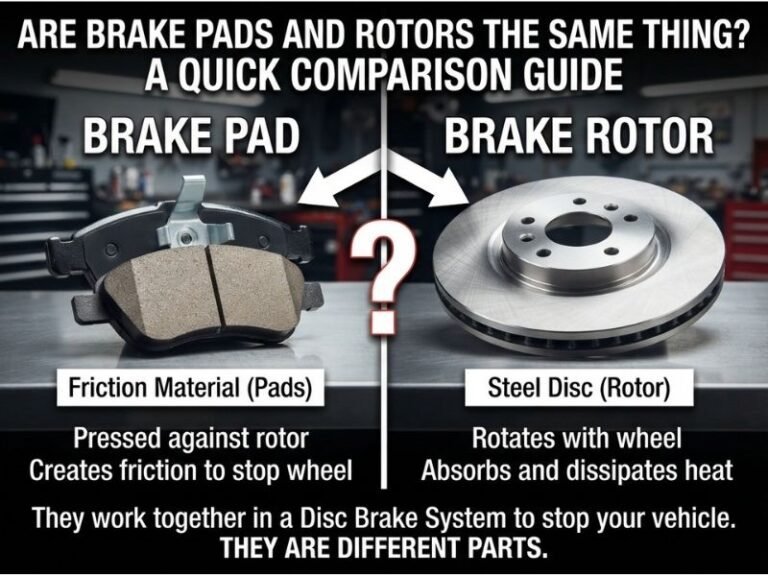
Also, inspect the brake pads. If the rotor is damaged, the pads are likely worn unevenly or contaminated. Replacing the rotor without addressing the pads will lead to premature wear and poor braking. A complete brake job, including new pads and possibly new hardware, is the correct approach.
**The Bottom Line on Welding Brake Rotors**
Welding a brake rotor is a specialized, high-risk procedure that only makes sense in rare, non-structural applications. For any rotor that is worn, warped, cracked, or overheated, welding is not a repair. The heat from welding introduces new stresses and weaknesses that make the rotor less safe than it was before. The time and money spent on welding supplies and labor far exceed the cost of a new rotor. If you value your safety and the safety of others on the road, replace the rotor. If you are working on a custom project where the rotor is not used for braking, welding may be acceptable, but you must still follow proper preheating and cooling procedures to avoid cracking. Always consult a professional mechanic if you are unsure about the condition of your braking system.
Critical Safety Risks of Welding Brake Rotors
The most immediate reason welding brake rotors is inadvisable comes down to **metallurgical integrity**. Most modern rotors are made from gray cast iron, which contains free graphite flakes that make the material highly weldable in a structural sense, but the process introduces localized heat that creates hard, brittle spots called martensite. These hardened zones are prone to cracking under the extreme thermal cycling of braking, where rotor temperatures can swing from ambient to over 1,000°F in seconds.
Beyond cracking, welding compromises the rotor’s **friction surface flatness**. Even a skilled welder will cause slight distortion, and any runout greater than 0.002 inches will produce a pulsating brake pedal and uneven pad wear. You cannot reliably machine a welded rotor true because the weld filler material has different hardness than the parent cast iron, causing the cutting tool to deflect and leave a wavy surface.
When People Attempt It and Why It Fails
Common scenarios include repairing a cracked mounting ear, filling a rusted-through ventilation slot, or reattaching a separated parking brake drum surface on a combination rotor. In each case, the weld itself may hold initially, but the surrounding heat-affected zone becomes the new weak point. The rotor is a **consumable, safety-critical component** designed to be replaced, not repaired, and most vehicle manufacturers explicitly prohibit any welding on the braking friction surface.
Even if the weld appears sound, you face the problem of **residual stress**. Cast iron has poor ductility, so as the weld cools and contracts, it pulls against the rigid rotor structure, creating micro-cracks that propagate during normal braking. A rotor that fails at highway speed can cause complete brake loss, wheel separation, or a violent vibration that compromises steering—none of which are acceptable risks for saving the cost of a new rotor.
Practical Alternatives to Welding
If you have a cracked rotor, the correct solution is straightforward: **replace it**. Rotors are relatively inexpensive, typically ranging from $30 to $150 each for most passenger vehicles, and the labor to swap them is similar to the time you would spend attempting a weld and subsequent machining. For rare or classic cars where new rotors are unobtainable, the only safe repair is to find a used rotor in good condition or have a custom unit machined from billet—never to weld the original.
For minor surface rust or scoring, you do not need welding either. A simple **resurfacing** on a brake lathe (if the rotor still meets minimum thickness) or a thorough cleaning with a wire brush is sufficient. If the rotor is warped, the fix is replacement or machining, not welding.
The only legitimate use of welding near a brake rotor is on the **non-rotating hub assembly** or caliper mounting bracket, and even then, you must remove the rotor first and use proper preheating and slow cooling procedures.
How to Inspect a Rotor That Has Been Welded
If you have inherited a vehicle with a previously welded rotor, do not assume it is safe. Begin by visually inspecting the weld area for **hairline cracks** using a magnifying glass or dye penetrant test. Then, mount a dial indicator on the rotor face to check lateral runout; any reading above 0.003 inches indicates distortion that will cause pedal pulsation.
Next, measure the rotor thickness at eight points around the circumference using a micrometer. Variations greater than 0.001 inches indicate uneven wear or warping that welding cannot correct. Finally, check the **minimum thickness specification** stamped on the rotor hat—if the rotor is already near or below this limit, it must be discarded regardless of weld condition.
When in doubt, replace the rotor; the cost of a new part is trivial compared to the potential consequences of a brake failure.
Conclusion: Welding Brake Rotors Is Never a Safe Repair
In summary, welding brake rotors is a dangerous, ineffective practice that compromises the structural and thermal properties of a critical safety component. The heat from welding creates brittle zones, distortion, and residual stress that lead to premature cracking and brake failure. Always replace a damaged rotor with a new or professionally resurfaced unit, and treat any suggestion to weld a rotor as an unacceptable shortcut.
Your safety and that of your passengers depend on brake components that are free from weld-induced defects.