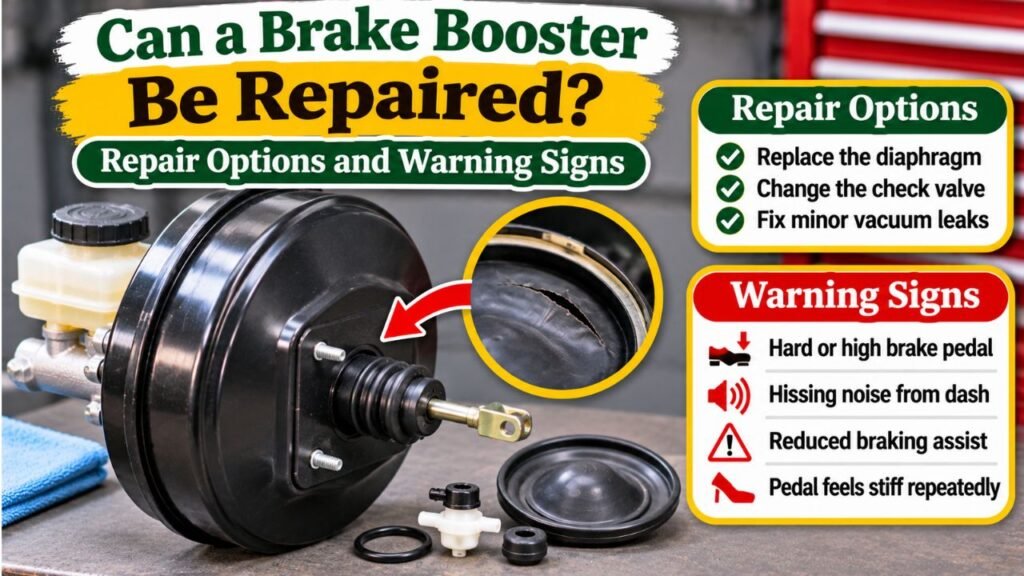
Can a Brake Booster Be Repaired? Repair Options and Warning Signs
Yes, a brake booster can sometimes be repaired, but replacing a failed booster assembly is usually the safer and more practical solution. External problems, such as a cracked vacuum hose or faulty one-way check valve, may be fixed without replacing the booster. Some internal vacuum and hydraulic boosters can also be professionally rebuilt, but many factory units are not intended for routine internal repair.
That difference matters when a brake pedal suddenly becomes hard, a hissing noise develops, or braking requires more leg effort. Replacing a perfectly good booster won’t help if the actual fault is a split hose, low vacuum supply, or a failing master cylinder. On the other hand, trying to patch a leaking internal diaphragm can leave a dangerous braking problem unresolved.
The right decision depends on the booster design, the location of the failure, parts availability, and the vehicle manufacturer’s instructions. This guide explains which components can be repaired, how a professional rebuild differs from a simple external fix, what symptoms to check, and when a complete replacement makes better sense.
Can a Brake Booster Be Repaired or Must It Be Replaced?
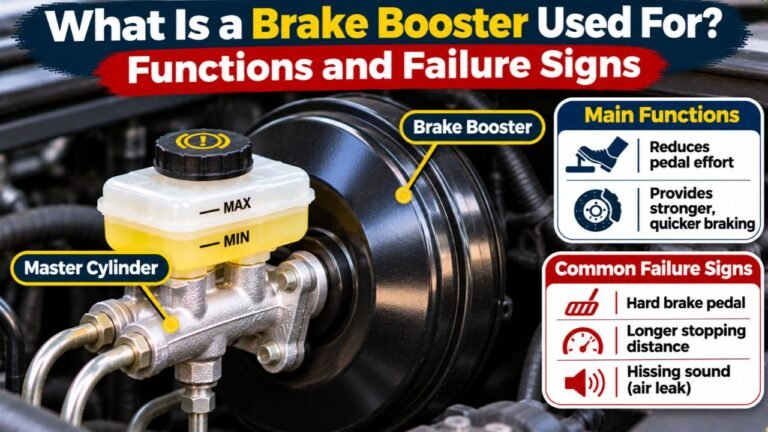
A brake booster adds power assistance to the driver’s pedal force. In a common vacuum-assisted system, the booster sits between the brake pedal linkage and master cylinder. Vacuum and atmospheric pressure act on an internal diaphragm to help move the master cylinder pushrod. If assistance disappears, the hydraulic brakes may still operate, but pressing the pedal can require much greater force.
The word repair can mean two different things. One is repairing the supporting components that allow the booster to work, such as the vacuum supply hose, its one-way valve, or a replaceable seal at the hose connection. The other is opening the booster housing and rebuilding the internal mechanism. These are very different jobs.
NAPA’s brake booster replacement guide explains that vacuum and hydraulic boosters can sometimes be rebuilt with replacement diaphragms or seals. It also notes that rebuilding involves disassembly and careful reassembly, making a remanufactured unit or professional service a more practical choice for many owners.
Which Brake Booster Problems Can Be Fixed Without Replacement?
Cracked or Disconnected Vacuum Hose
A vacuum booster needs a dependable vacuum source. A loose, cracked, or collapsed hose can cause a hard pedal, hissing, or rough idle. Replacing the damaged part with the correct vacuum-rated hose and fittings can restore normal assistance.
Faulty One-Way Vacuum Check Valve
The check valve helps retain vacuum in the booster when engine vacuum decreases or the engine stops. If it leaks or sticks, assisted braking may disappear too quickly after shutdown. Depending on the design, the valve sits in the booster shell, in a grommet, or within the hose assembly.
Where the manufacturer supplies it separately, the valve can usually be replaced without opening the booster. Some vehicles require replacing the complete hose-and-valve assembly. Installation direction matters because the valve must permit the intended airflow while resisting reverse flow.
Leaking Check Valve Grommet or Connection
The rubber grommet where the check valve enters the booster may harden or crack. A poor seal lets outside air enter and reduces available vacuum. If that grommet is separately serviceable and the booster opening is undamaged, a correctly matched replacement may restore the seal.
Vacuum Pump or Supply Problems
Some vehicles use a dedicated vacuum pump. A failed pump or leaking supply connection can imitate booster failure. A technician can compare the available vacuum with the vehicle specification before deciding what to replace.
Can an Internal Vacuum Brake Booster Be Rebuilt?
Some vacuum boosters are rebuildable, but most everyday repairs replace the complete assembly rather than open its shell. A rebuild may involve a diaphragm, internal air valve, reaction components, seals, and other parts. The work requires compatible components, accurate assembly, and verification that the repaired unit holds vacuum and delivers the intended assistance.
A typical stamped-steel booster housing is not designed to be opened casually. Its internal return spring can remain under considerable force. Cutting, bending, or prying open a crimped shell can damage its structural integrity and create an injury risk. Patching a torn diaphragm with adhesive is not an acceptable brake repair.
Can a Hydraulic Brake Booster Be Repaired?
A hydraulic brake booster, often called a Hydro-Boost unit, uses pressurized hydraulic fluid rather than engine vacuum to provide braking assistance. It is found in some trucks, vans, and other applications. It is not the same as the hydraulic brake master cylinder: the booster provides assist, while the master cylinder produces pressure for the wheel brakes.
Some hydraulic boosters can be professionally rebuilt with seals or other approved parts. Leaking external hoses and fittings may also be serviced separately. However, internal valve wear, housing damage, or unavailable components can make complete replacement the more dependable option.
Hydraulic booster diagnosis requires checking the steering or dedicated hydraulic supply as well as the booster. A weak pump, low fluid level, restricted hose, or system leak may imitate booster failure. Certain systems also store pressure after the engine has stopped, so their service procedure must be followed before any line is disconnected.
Do not open a pressurized hydraulic booster or accumulator without the manufacturer’s specified depressurization procedure. An ordinary vacuum booster pedal test does not establish whether a hydraulic or electronically controlled assist unit is healthy.
Signs a Brake Booster May Need Repair or Replacement
Brake Pedal Feels Unusually Hard
A hard pedal with reduced assist is a classic booster-related complaint. A vacuum leak, defective check valve, inadequate vacuum source, or internal failure may be responsible. This symptom is different from a pedal that travels unusually far or feels spongy, which often points toward air or another hydraulic issue.
Hissing Noise While Pressing the Brake Pedal
A brief airflow sound may be normal, but a persistent or unusually loud hiss near the pedal or firewall can indicate a vacuum leak. Check whether it continues while the pedal is held and inspect the vacuum hose for similar sounds.
Rough Idle or Engine Stalling During Braking
On an engine-vacuum system, a significant booster or supply leak may allow unmetered air into the intake. That can contribute to rough idle or stalling, especially when the brake is pressed. Not every rough idle is a brake booster problem, however. Engine-management faults and other vacuum leaks can have similar effects.
Brake Fluid Appears Near or Inside the Booster
Brake fluid at the master cylinder-to-booster joint often indicates a leaking master cylinder rear seal. Fluid entering a vacuum booster may damage internal components, so the master cylinder leak must be fixed and the booster inspected. The vacuum booster is not supposed to contain brake fluid.
How to Check a Suspected Brake Booster Before Replacing It
These checks apply only to conventional engine-vacuum boosters when the manufacturer’s instructions permit them. Perform them while parked on level ground, with the transmission secured and wheels chocked. They are screening checks, not a substitute for a full brake diagnosis.
Step 01: Check the Pedal With the Engine Off
With the engine switched off, press and release the brake pedal several times. The pedal should usually become firmer as stored vacuum assistance is used up. This helps establish the unassisted pedal feel before the next check.
A pedal that sinks continuously under steady pressure, a rapidly dropping reservoir level, or a visible fluid leak may indicate a hydraulic fault. Stop testing and arrange professional service rather than assuming the booster is the cause.
Step 02: Hold the Pedal and Start the Engine
Keep steady pressure on the brake pedal, then start the engine if the vehicle uses a conventional vacuum booster. A functioning booster with adequate vacuum typically causes the pedal to move downward slightly as assistance becomes available.
If the pedal does not move, the booster may be faulty, but low vacuum supply or a defective check valve can produce the same result. The Mitsubishi brake booster operation check describes this pedal response and instructs technicians to examine the hose, check valve, and booster when the result is abnormal.
Step 03: Observe Whether the Booster Holds Assistance
With the engine running, press and hold the pedal, then switch the engine off while maintaining steady pressure. On many conventional systems, pedal height should remain substantially stable for the interval specified by the manufacturer. A pedal that rises noticeably can suggest loss of vacuum assistance.
Step 04: Inspect the Hose and Check Valve
Turn the engine off and inspect accessible vacuum plumbing for splits, loose joints, oil damage, and collapsed sections. Look closely at bends, connections, and the valve grommet. Do not tug forcefully on plastic fittings or spray flammable products around a running engine to search for leaks.
Step 05: Confirm Vacuum Supply and Identify the Failed Part
If the basic tests suggest lost assistance, a shop can measure vacuum at the appropriate test point and follow the manufacturer’s diagnostic sequence. Adequate supply with failed booster performance points more strongly toward an internal unit fault. Inadequate supply directs attention toward hoses, pumps, or the engine.
Repair or Replace a Brake Booster: Which Is the Better Choice?
| Confirmed Problem | Typical Repair Choice | Reason |
| Cracked vacuum supply hose | Replace the correct hose | Booster may be functional |
| Failed removable check valve | Replace valve or hose assembly | Often externally serviceable |
| Leaking replaceable valve grommet | Replace specified grommet | Restores external vacuum seal |
| Torn internal diaphragm | Replace or professionally rebuild booster | Requires internal disassembly and testing |
| Damaged or corroded booster housing | Replace complete assembly | Reliable structural sealing is uncertain |
| Serviceable hydraulic booster seal leak | Specialist rebuild or replacement | Depends on design and available parts |
A professionally remanufactured booster can be a reasonable alternative to a new unit when a reputable replacement is available. Match the exact part number or approved application, including mounting pattern, pedal linkage, pushrod configuration, and relevant sensors. A visually similar booster may not provide the same fit or braking response.
How Much Does Brake Booster Repair Cost?
The least expensive correction may be a hose, valve, or grommet replacement. A complete booster replacement can cost much more because the assembly may be expensive and mounting hardware may be difficult to reach under the dashboard.
Price also depends on whether the vehicle has a conventional vacuum booster, hydraulic assist, or an integrated electronic braking unit. Related work may include fixing a master cylinder leak, replacing damaged hydraulic lines, or performing required fluid bleeding and calibration. For older or unusual vehicles, specialist rebuilding and shipping can change the total substantially.
Ask for an itemized estimate separating the diagnosis, replacement part, labor, and related repairs. More importantly, ask what test confirmed that the booster itself failed. A quote that does not distinguish internal failure from a simple vacuum supply problem may be missing an important diagnostic step.
What Should Be Checked During Brake Booster Replacement?
Inspect the Master Cylinder Before Fitting the New Booster
Check the master cylinder mounting area for brake fluid seepage and other signs of damage. O’Reilly Auto Parts’ brake booster replacement instructions specifically warn that a leaking master cylinder can let brake fluid into the booster and damage the replacement. The underlying leak must be corrected during the repair.
Verify Pushrod Fit and Pedal Linkage
Booster mounting and linkage details vary by model. A replacement must have the correct pushrod dimensions, mounting arrangement, retaining hardware, and pedal connection. Incorrect clearances can contribute to brake drag, poor response, or incomplete master cylinder release.
Use the factory adjustment specifications rather than attempting to make the pedal feel better by guessing at pushrod length. Some vehicles also require checking the brake light switch or pedal position sensor after the linkage is disturbed.
Perform the Required Brake System Checks
After repair, verify the vacuum or hydraulic supply, pedal return, assist operation, and brake warning indicators. If the hydraulic circuit was opened, bleed it according to the vehicle instructions. Some ABS and electronic systems need a scan tool or other special procedures.
FAQs About Can a Brake Booster Be Repaired?
Can You Repair a Brake Booster Diaphragm?
Sometimes a specialist can replace the diaphragm during a complete rebuild. A torn diaphragm should not be patched in place; most everyday repairs use a new or remanufactured booster assembly.
Can a Bad Brake Booster Check Valve Be Replaced Separately?
Often, yes. Some check valves pull out of a grommet, while others are integrated into the hose. Check the parts catalog and service instructions for your specific vehicle.
Does a Hard Brake Pedal Always Mean the Booster Is Bad?
No. Low engine vacuum, a cracked supply hose, a failed check valve, or a vacuum pump problem can cause the same symptom. Testing the supply and booster helps avoid an unnecessary replacement.
Can You Drive With a Bad Brake Booster?
Do not continue driving with suspected loss of brake assistance. The vehicle may take much greater pedal force to stop, and the underlying fault may not be limited to the booster. Arrange an inspection or towing as appropriate.
Does Replacing a Brake Booster Require Bleeding the Brakes?
Not always. If the master cylinder remains connected and the hydraulic circuit stays sealed, hydraulic bleeding may not be necessary. If brake lines are opened, follow the vehicle’s bleeding procedure before driving.
Choosing a Reliable Fix for a Failing Brake Booster
So, can a brake booster be repaired? Yes, when the failure involves a replaceable hose, check valve, grommet, or an internal assembly that a qualified rebuilder can service. But an internally failed factory-sealed booster is usually best replaced with a properly matched new or remanufactured unit.
The most useful first step is to identify whether the problem is the booster or its vacuum or hydraulic supply. Confirm the diagnosis, correct related leaks, and verify normal brake operation after the work. If pedal effort or stopping performance has changed, do not drive until the braking system is safe.