
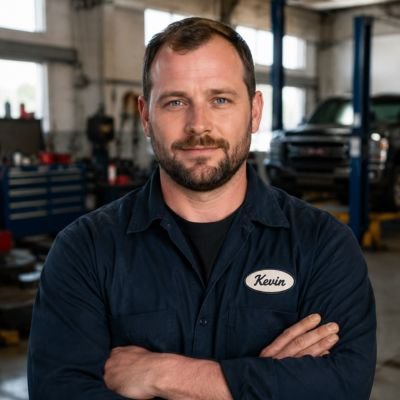
Hi, I’m Kevin Kiggins, the author behind Hi-Tech Auto Repairs.
I’ve always been interested in understanding how vehicles work, why problems happen, and what it actually takes to fix them properly. Over time, that interest developed into a combination of hands-on automotive repair experience and automotive writing.
Today, I use that experience to create practical, easy-to-understand content for car owners who want to learn more about their vehicles, diagnose common problems, and handle basic repairs and maintenance with more confidence.
My main focus is helping DIY car owners. I know that automotive problems can quickly become frustrating, especially when you are dealing with unfamiliar warning lights, strange noises, starting problems, brake issues, electrical faults, or a part that suddenly stops working.
That is why I try to explain every topic in a simple and straightforward way.
I write about cars, trucks, and SUVs, covering everything from routine maintenance and common mechanical problems to vehicle parts, troubleshooting, replacement decisions, and repair-related questions.
My Approach to Automotive Repair Content
When I write a repair or troubleshooting guide, I try to look at the problem the same way I would approach a vehicle in real life.
I start with the symptoms.
What is the vehicle doing? When does the problem happen? Is there a warning light? Is there a strange sound, smell, vibration, leak, or change in performance?
From there, I look at the most likely causes and try to separate the simple possibilities from the more serious ones.
I believe good troubleshooting should be logical. Replacing parts without understanding the actual problem can waste both time and money.
That is why I try to help readers understand not only what might be wrong, but also why a particular problem happens and what should be checked first.
Hands-On Experience Meets Research
My content is based on a combination of practical automotive experience, careful research, and real-world troubleshooting principles.
Automotive technology continues to change. Modern vehicles include complex electronics, sensors, computer-controlled systems, advanced safety features, and increasingly sophisticated engines and transmissions.
Because of that, I do not believe anyone should rely only on old repair habits.
When researching a topic, I compare technical information, manufacturer guidance, repair procedures, common failure patterns, and other reliable automotive references whenever they are relevant.
My goal is to turn that information into something useful for everyday vehicle owners.
I do not want you to finish reading an article with more questions than you had when you started.
What I Write About
On Hi-Tech Auto Repairs, I cover a wide range of automotive topics.
You will find guides about engine problems, brakes, batteries, alternators, starters, suspension systems, steering components, tires, fluids, filters, cooling systems, sensors, electrical problems, warning lights, and many other vehicle components.
I also write about symptoms that drivers commonly notice.
For example, you may be wondering why your vehicle is shaking, why the engine is overheating, why the battery keeps dying, why your brakes are making noise, or why a warning light appeared on the dashboard.
Instead of simply giving you a list of possible causes, I try to explain how those causes relate to the symptoms you are experiencing.
That makes it easier to understand what should be inspected first.
Helping DIY Car Owners
I created Hi-Tech Auto Repairs primarily for people who want to understand and maintain their own vehicles.
You do not have to be a professional mechanic to learn how your car works.
Many maintenance tasks, inspections, and basic troubleshooting steps can be understood by ordinary vehicle owners when they are explained properly.
At the same time, I believe it is important to know your limits.
Some automotive repairs involve heavy components, high temperatures, pressurized systems, fuel, high electrical current, airbags, lifting a vehicle, or other serious safety risks.
Whenever a repair goes beyond normal DIY work, getting help from a qualified automotive professional is usually the smarter decision.
There is nothing wrong with doing a job yourself when you have the proper knowledge, tools, and experience. There is also nothing wrong with taking your vehicle to a professional when the repair requires specialized equipment or advanced diagnosis.
The important thing is making an informed decision.
Why I Created Hi-Tech Auto Repairs
One of the biggest problems I see with automotive information online is that it can be either too technical or too vague.
Some articles sound like they were written only for experienced mechanics.
Others simply list several possible causes without explaining what they actually mean.
I wanted Hi-Tech Auto Repairs to be different.
My goal is to create automotive content that feels like helpful advice from someone who genuinely wants you to understand the problem.
I try to avoid unnecessary technical language. When an automotive term is important, I explain it in plain English.
I also try to give readers a realistic understanding of what they can check themselves and when professional diagnosis may be necessary.
Accuracy Matters to Me
Vehicles are complicated machines, and inaccurate repair information can lead to unnecessary expenses or even safety problems.
That is why accuracy is important to me.
Before publishing automotive content, I try to carefully review the technical details and make sure the information is useful, logical, and easy to understand.
I also recognize that vehicles can vary significantly between manufacturers, models, engines, and model years.
A repair procedure that works for one vehicle may not be exactly the same for another.
Whenever vehicle-specific information matters, I encourage readers to check their owner’s manual, service information, manufacturer recommendations, or other reliable documentation related to their particular vehicle.
I Believe in Diagnosing Before Replacing
One principle I strongly believe in is simple:
Do not replace a part just because it might be the problem.
Many automotive symptoms can have several different causes.
For example, a vehicle that will not start does not automatically need a new battery. The problem could involve the battery connections, starter, alternator, ignition system, fuel system, wiring, or another component.
The same idea applies to many other vehicle problems.
Proper diagnosis can save you from replacing perfectly good parts.
In my troubleshooting guides, I try to encourage a step-by-step approach so you can narrow down the problem before spending money unnecessarily.
My Goal
My goal with Hi-Tech Auto Repairs is not to make automotive repair sound complicated.
It is to make it understandable.
I want you to feel more confident when maintaining your vehicle, discussing a repair with a mechanic, purchasing replacement parts, or investigating a problem yourself.
Even when you decide not to perform the repair personally, understanding what is happening with your vehicle can help you ask better questions and make better decisions.
I believe every vehicle owner should have a basic understanding of the machine they depend on every day.
That is exactly what I hope to help you build through Hi-Tech Auto Repairs.
Thanks for visiting the site and taking the time to read my work.
I hope the guides here make your next repair, maintenance job, or troubleshooting problem a little easier.